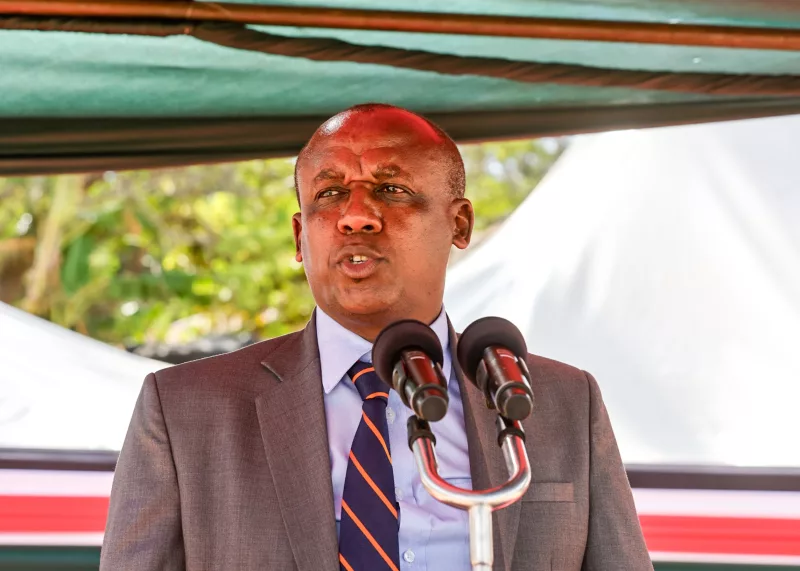
 The National Liberal Party (NLP) leader Dr. Augustus Kyalo Muli (right) at a past event/HANDOUT
The National Liberal Party (NLP) is steadily gaining political ground in the Ukambani region, emerging as a serious contender alongside Kalonzo Musyoka’s long-dominant Wiper Patriotic Front.
Party officials say NLP has registered more than 200,000 members across Ukambani, with Kitui County alone accounting for about 130,000 members.
The growing numbers have increasingly put the youthful party in the same conversation as Wiper, which for decades has enjoyed near-total political dominance in Machakos, Kitui and Makueni counties.
Political observers attribute the party’s rapid growth to its youthful branding, aggressive grassroots mobilisation and expanding local networks across the three counties.
The rise has been spearheaded by party leader Dr. Augustus Kyalo Muli, who has intensified on-the-ground engagement while also leveraging traditional clan structures to consolidate support.
Beyond formal party politics, Muli’s influence is reinforced by his position as patron of the Anzauni clan, one of the largest clans in Ukambani with an estimated 400,000 members.
In February 2024, the Akamba Clan Governing Council of Elders formally installed him as the clan’s leader, further entrenching his standing in the region’s socio-political landscape
.
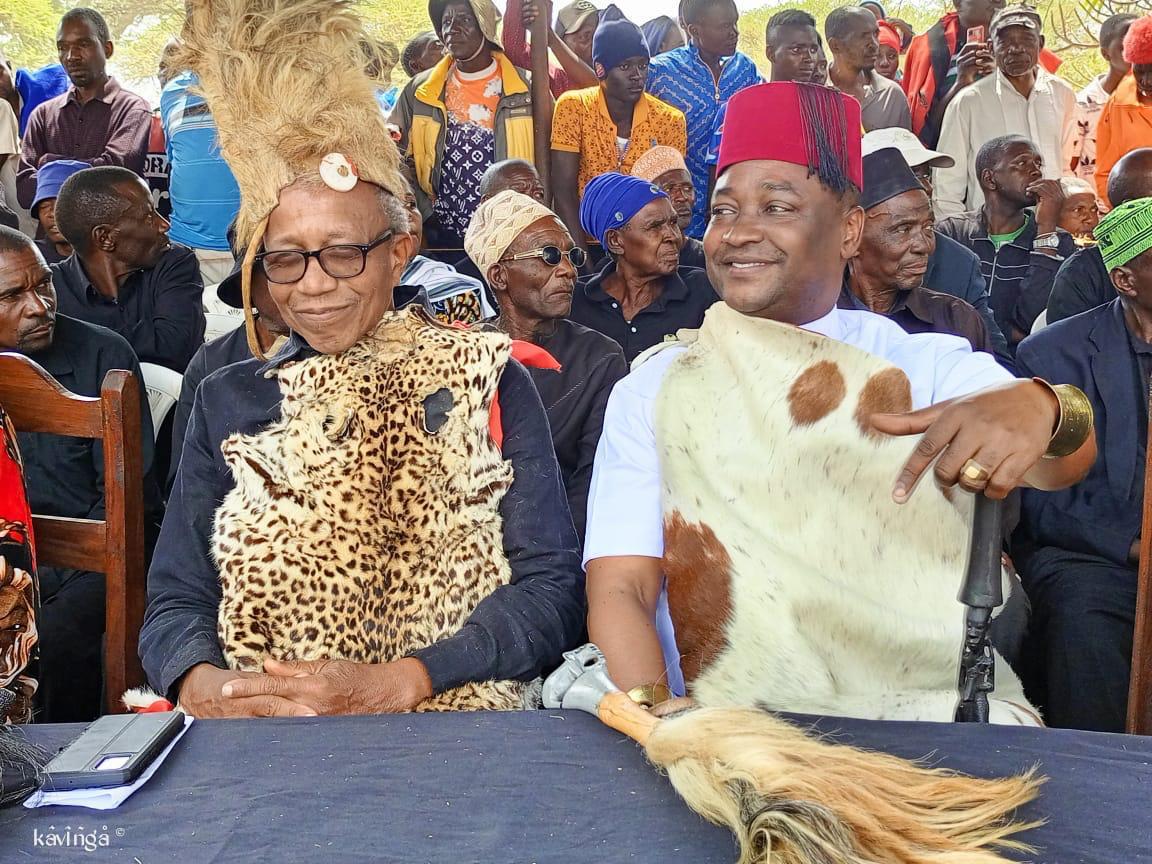
 The National Liberal Party (NLP) leader Dr. Augustus Kyalo Muli (centre) at a past event/HANDOUT
Analysts argue that the convergence of party membership and clan loyalty gives Muli a potentially formidable voting bloc estimated at between 500,000 and 800,000 votes—a figure that could significantly alter coalition negotiations at the national level.
Currently, NLP is aligned with the Azimio la Umoja coalition, which gives Muli a platform to negotiate within broader national politics even as he consolidates his regional base.
For decades, former Vice President Kalonzo Musyoka has been the undisputed political kingpin of Ukambani, using Wiper’s dominance to maintain relevance in successive national political formations.
However, the rise of NLP has raised fresh questions about whether Ukambani politics is on the cusp of a leadership transition.
“If NLP continues its upward trajectory, Muli could secure a place at the negotiating table, potentially positioning himself for a running mate slot or a senior appointment,” said political commentator Fred Sasia.
Sasia noted that the emergence of NLP reflects evolving voter attitudes within the region.
“While Kalonzo remains a formidable figure, the emergence of Augustus Muli introduces competition that could reshape the region’s bargaining power in national politics,” he added.
As the 2027 elections draw closer, the contest between Wiper and NLP is expected to intensify, with Ukambani voters once again poised to play a critical role in determining who speaks for the region at the national stage.
Ideologically, NLP is seeking to distinguish itself as a centrist, reform-oriented alternative in Kenya’s crowded political space.
The party has pitched its message around liberal democratic values, constitutionalism and accountable governance, appealing particularly to urban voters, young professionals and sections of the middle class frustrated with personality-driven and ethnic-based politics.