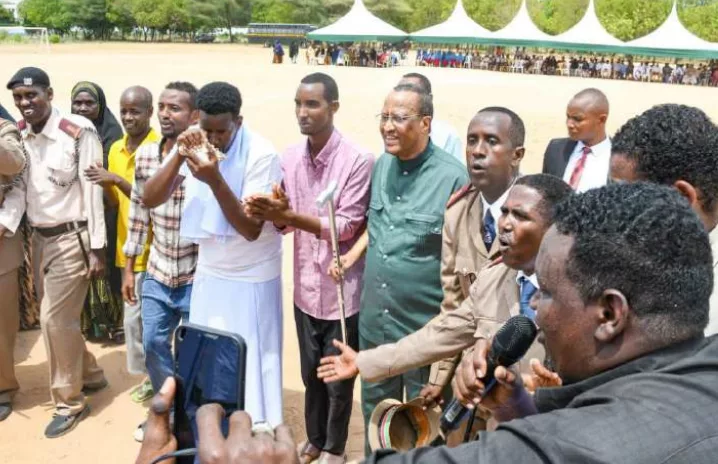
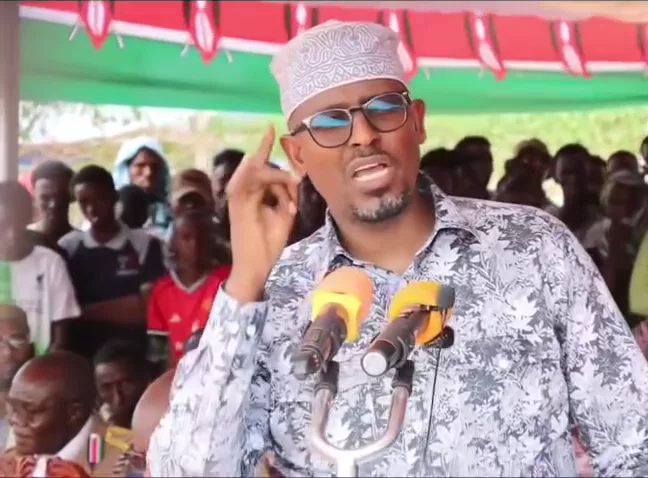
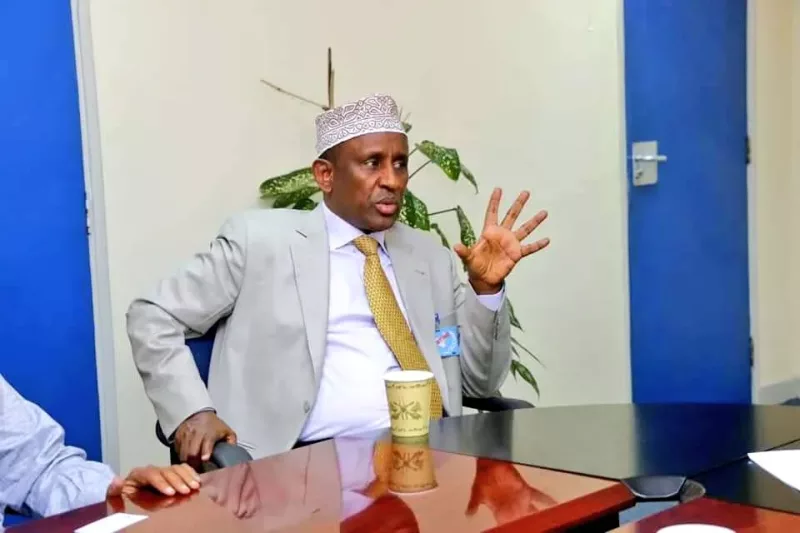
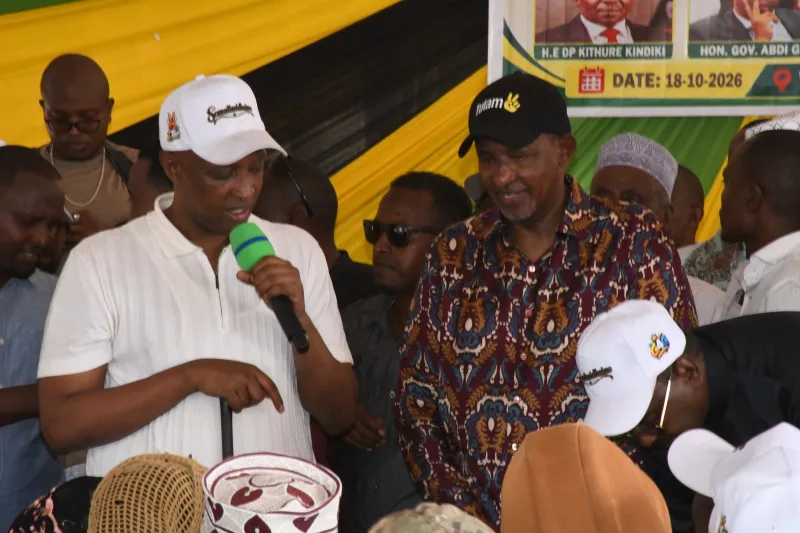
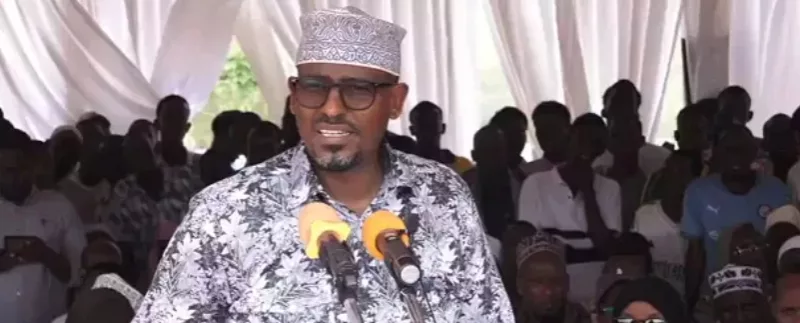
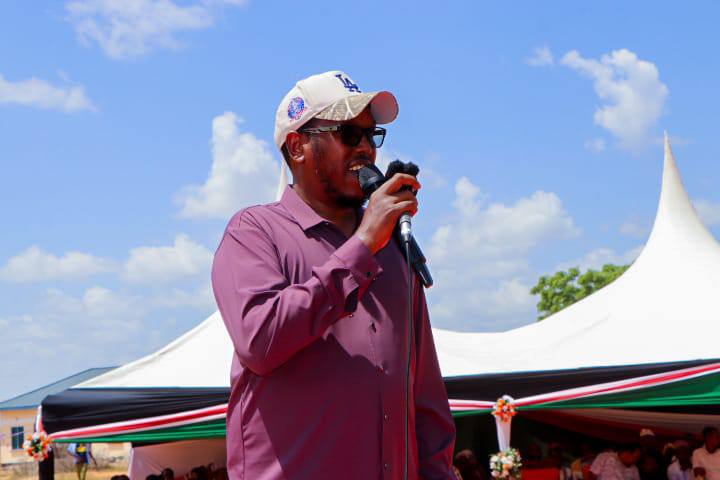
 Fafi MP Salah Yakub speaking in Galmagala Secondary School./STEPHEN ASTARIKO
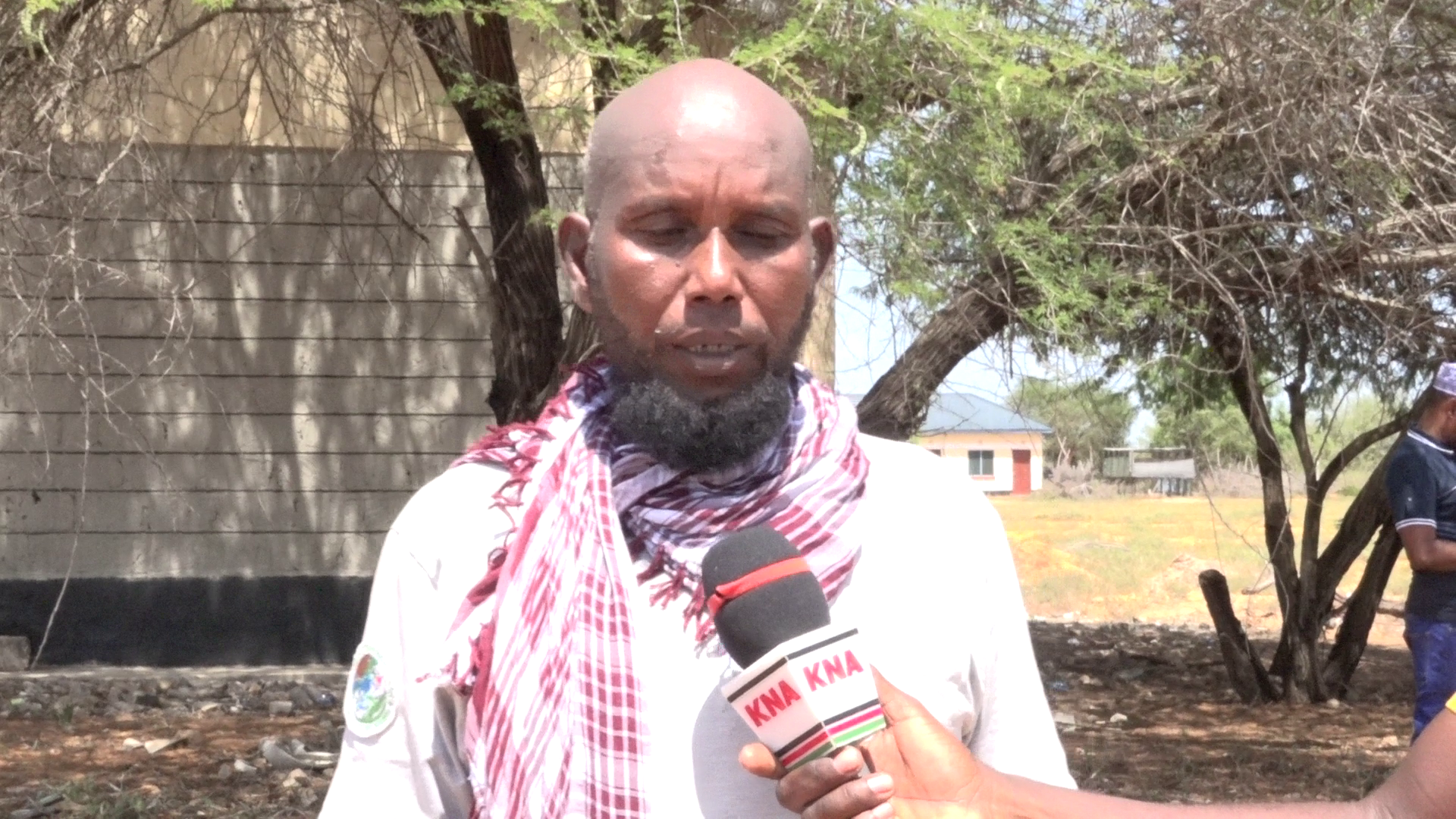 Ahmed Ore, a parent and a beneficiary of the Fafi
constituency zero school fee programme./STEPHEN ASTARIKO
Ahmed Ore, a parent and a beneficiary of the Fafi
constituency zero school fee programme./STEPHEN ASTARIKO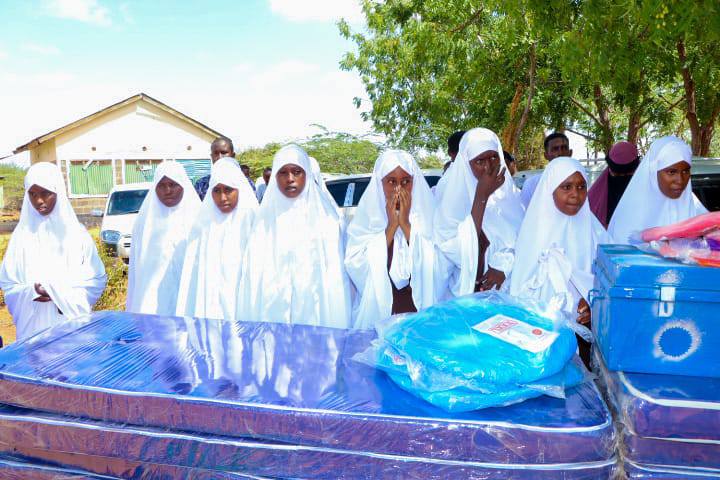 Students from Fafi girls standing next to their school items brough by the Fafi Constituency CDF./STEPHEN ASTARIKO
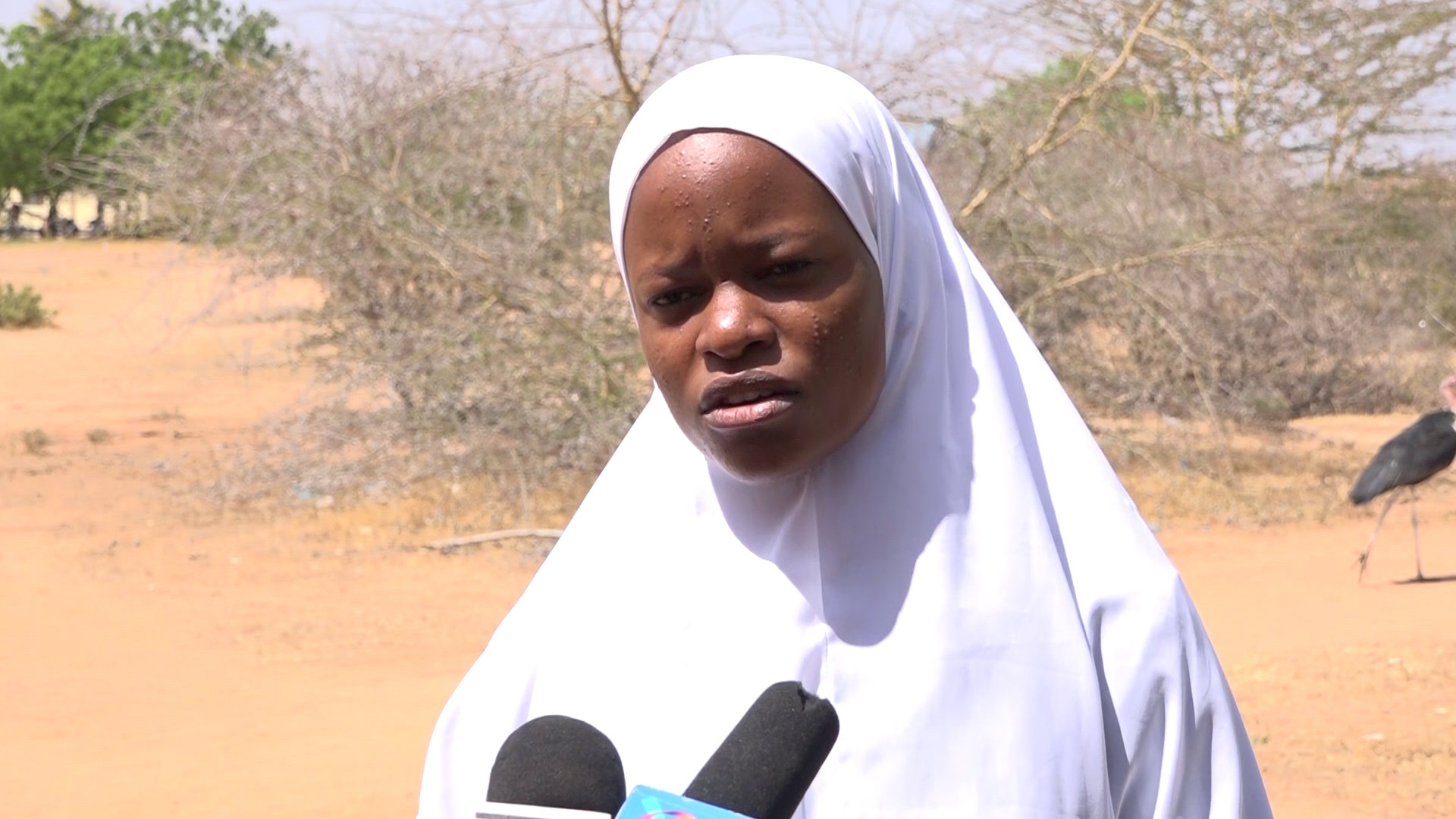 Nasra Sarafina a student at Fafi Girls Secondary School./STEPHEN ASTARIKO
Education in Fafi Constituency has undergone a remarkable transformation over the past four years following the introduction of a zero school fees secondary education programme by Fafi Member of Parliament Salah Yakub.
The initiative, launched in 2023, has not only boosted student enrollment but also improved academic performance and significantly eased the financial burden on parents in the drought-prone region.
There are a total of seven secondary schools: three boys’ schools and one girls’ school. The other three are mixed schools.
The programme, which fully caters for secondary school fees through the Constituency Development Fund (CDF), has been widely praised by parents, teachers, education stakeholders, and students alike.
It was introduced against the backdrop of persistent droughts in Northeastern Kenya, where many families traditionally rely on livestock as their main source of income.
For years, parents in Fafi and the wider northeastern region have been forced to sell livestock to educate their children. However, recurring droughts have decimated herds, pushing many households into poverty and making school fees unaffordable for most families.
Apart from drought and a lack of teachers, the constituency has also had to grapple with insecurity orchestrated by Al-Shabaab militants, which has seen teachers flee and schools close, leaving the education sector in the area near collapse.
Speaking in Galmagala during the third edition of the Fafi Secondary School Bursary launch for the 2025/2026 academic year, MP Salah Yakub said the initiative was driven by the need to ensure a 100 per cent transition rate from primary to secondary school.
“When I first announced that under my leadership no child would stay at home because of school fees, many people did not believe it was possible,” said Yakub. “Even after we started implementing it, there was still a lot of pessimism.”
He noted that consistency and collaboration were key to the programme’s success.
“We stayed on course, and slowly even the doubting Thomases began to believe that it was doable. We brought school heads on board because they are the ones who would ensure the programme either succeeds or fails. We supported them by ensuring that school fees for every child are paid on time,” he said.
Under the programme, funds are directly disbursed to the respective schools to guarantee uninterrupted learning and effective implementation of the free education programme.
Beyond tuition, the MP explained that the programme covers other essential needs, including full school uniforms, mattresses, boxes, textbooks, pens, geometrical sets, sanitary pads and other necessities.
“We have made a deliberate decision to invest in education. Without this initiative, our assessment showed that the education sector in this constituency would collapse, and we did not want to reach that point,” Yakub added.
Parents say the programme has been a lifeline. Ahmed Ore, a pastoralist and father of eight, has three children currently in secondary school. He recalls the hardship he endured before the programme was introduced.
“Before free education, my children were constantly sent home due to lack of school fees,” Gure said. “We depend on livestock, but the perennial drought killed many of my animals and made our situation worse.”
“I have been turned into a destitute. Ask yourself, how can I pay school fees when I am struggling to feed my children?” he posed.
Gure singled out the programme for easing his burden completely.
“I want to sincerely thank the MP for coming through for us at our hour of need. In the case of my son, who is now in Form Four at Bura East Boarding School, I don’t even buy soap because CDF provides everything. It sounds unreal, but that is the truth,” he said.
Teachers have also witnessed the impact firsthand. Isacka Wamboya, a teacher at Shill Secondary School, said enrolment has risen sharply since the programme began.
“We are now receiving students from neighbouring counties such as Tana River and Garissa who are requesting to join our schools because of the zero school fees programme,” Wamboya said. “This has significantly uplifted education standards in this area.”
Students themselves attest to the life-changing nature of the initiative. Hussein Abdi, a Form Four student at Galmagala Secondary School, said the programme rescued his family from despair.
“When I joined secondary school, things were very bad. My brother, who was also in Form Four, was always sent home for fees. At some point, he even contemplated dropping out of school altogether. The programme was a game changer for our family,” he said.
His sentiments were echoed by Nasra Sarafina, also a Form Four student at Galmagala Secondary School, who said the initiative has revived her dream of studying medicine at university — a dream she once thought was unattainable.
School administrators report infrastructural strain due to rising enrolment. Shaban Koja, the deputy principal at Galmagala Secondary School, said the school population has grown significantly.
“Our student numbers have increased so much that we were forced to request an additional dormitory from the MP to accommodate more learners, and he delivered,” Koja said.
The programme has also been credited with advancing girl-child education in the region. Nominated MCA and girl-child education crusader Katra Iman said school fees had long been a major barrier for girls.
“Girl-child education in this region still faces many challenges, and school fees used to be one of the biggest,” Iman said. “Since the introduction of this programme, enrolment numbers have gone up. As leaders, we have been pushing parents to take advantage of this opportunity and enrol their daughters in school.”
She lauded the MP for what she termed a “noble and transformative idea.”
As Fafi Constituency continues to grapple with economic and climatic challenges, the zero school fees programme stands out as a powerful intervention that is not only keeping children in school but also reshaping the future of education in the region.
The programme has also incorporated students undertaking teaching courses at Garissa Teachers Training College, where a total of 79 students from the constituency are being fully sponsored through CDF.
The MP said this is meant to address the issue of teacher shortages, which have been a perennial problem in the area.