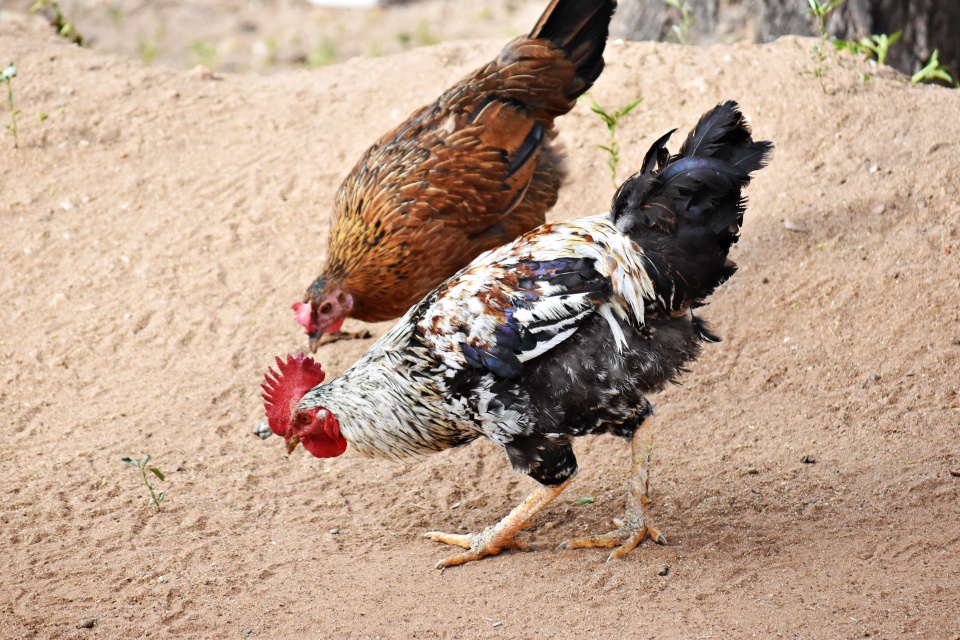
 Indigenous chicken whos
genetics, the county government of Kitui is seeking to boost/Musembi Nzengu.
Indigenous chicken whos
genetics, the county government of Kitui is seeking to boost/Musembi Nzengu.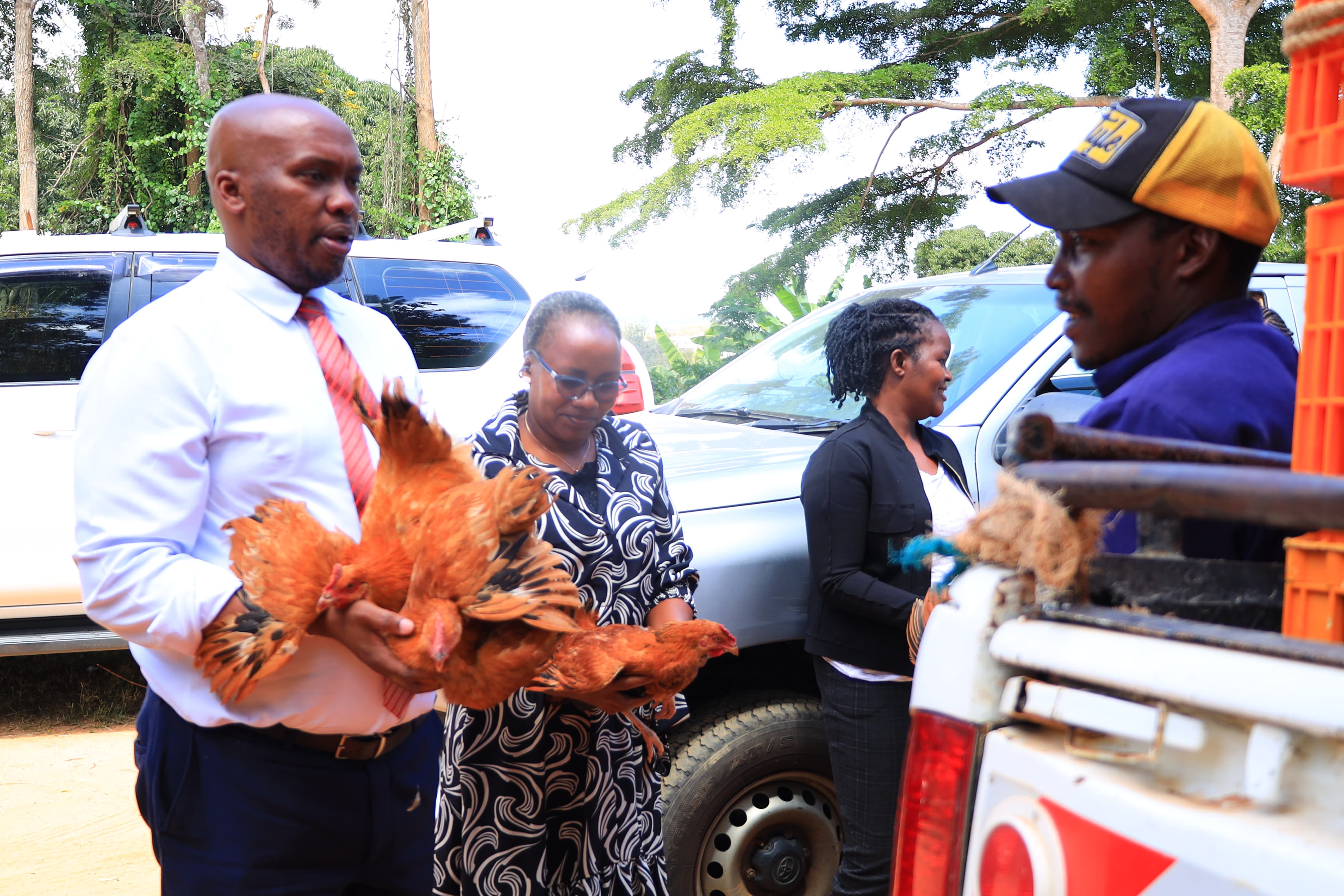 Kitui CEC for agriculture and livestock Stephen Mbaya Kimwele admires some of the cocks to be distributed to farmers for poultry improvement on Wednesday/Musembi Nzengu.
Poultry farmers in Kitui county are set to benefit from a
countywide poultry genetic improvement programme rolled out by the Department
of Agriculture and Livestock to boost productivity and household incomes.
The initiative targets indigenous poultry and seeks to
strengthen food and nutrition security across the county. According to the 2019
National Population and Housing Census, Kitui county has more than 1.3 million
indigenous birds, kept by about 58 per cent of households.
The initiative gathered momentum on Wednesday after the
Agriculture and Livestock executive Stephen Kimwele received the first batch of
improved breeding cockerels at the county livestock offices in Kitui town,
ahead of their distribution.
In the first phase, organised poultry farmer groups in Kitui
South, East, West and Rural will benefit.
“The programme specifically targets organised farmer groups,
with a strong focus on women and youth, to promote inclusive participation and
economic empowerment,” Kimwele said.
He said livestock remains a critical pillar of Kitui’s
socio-economic development, contributing to income generation, employment and
household nutrition. Poultry farming, he added, plays a key role among
smallholder farmers due to its low start-up costs, short production cycle and
quick returns.
However, Kimwele said indigenous poultry face productivity
challenges despite their resilience.
“While well adapted to local conditions, indigenous birds
are characterised by slow growth, poor feed conversion, late maturity and low
egg and meat yields, which limit their commercial potential,” he said.
To address these gaps, the county government has prioritised poultry genetic improvement as a strategic intervention under its development agenda and the 2025-26 performance contracting framework.
Under the programme, 800 improved breeding cockerels will be
distributed across all eight subcounties and 40 wards, with each ward receiving
20 cockerels through two organised farmer groups.
The intervention is expected to increase productivity, boost
household incomes and promote the commercialisation of poultry farming in the
long term.
Kimwele said the programme aligns with Governor Julius
Malombe’s development blueprint — The Kitui Promise — which prioritises food
security and agricultural transformation. He urged farmers to join savings and
credit cooperatives to access financing, extension services and reliable
markets.
INSTANT ANALYSIS
Kitui county’s poultry genetic improvement programme targets a critical productivity gap in indigenous poultry, which, despite their resilience, offer low yields and slow growth. By distributing improved breeding cockerels through organised farmer groups, with special focus on women and youth, the initiative promotes inclusive economic empowerment while boosting food and nutrition security. The structured approach, linking genetics, cooperative membership and extension support, could catalyse commercialisation and higher household incomes. However, success will depend on sustained training, feed availability and market access. If effectively implemented, the programme positions smallholder poultry farming as a low-cost, high-impact avenue for livelihood enhancement and agricultural transformation.