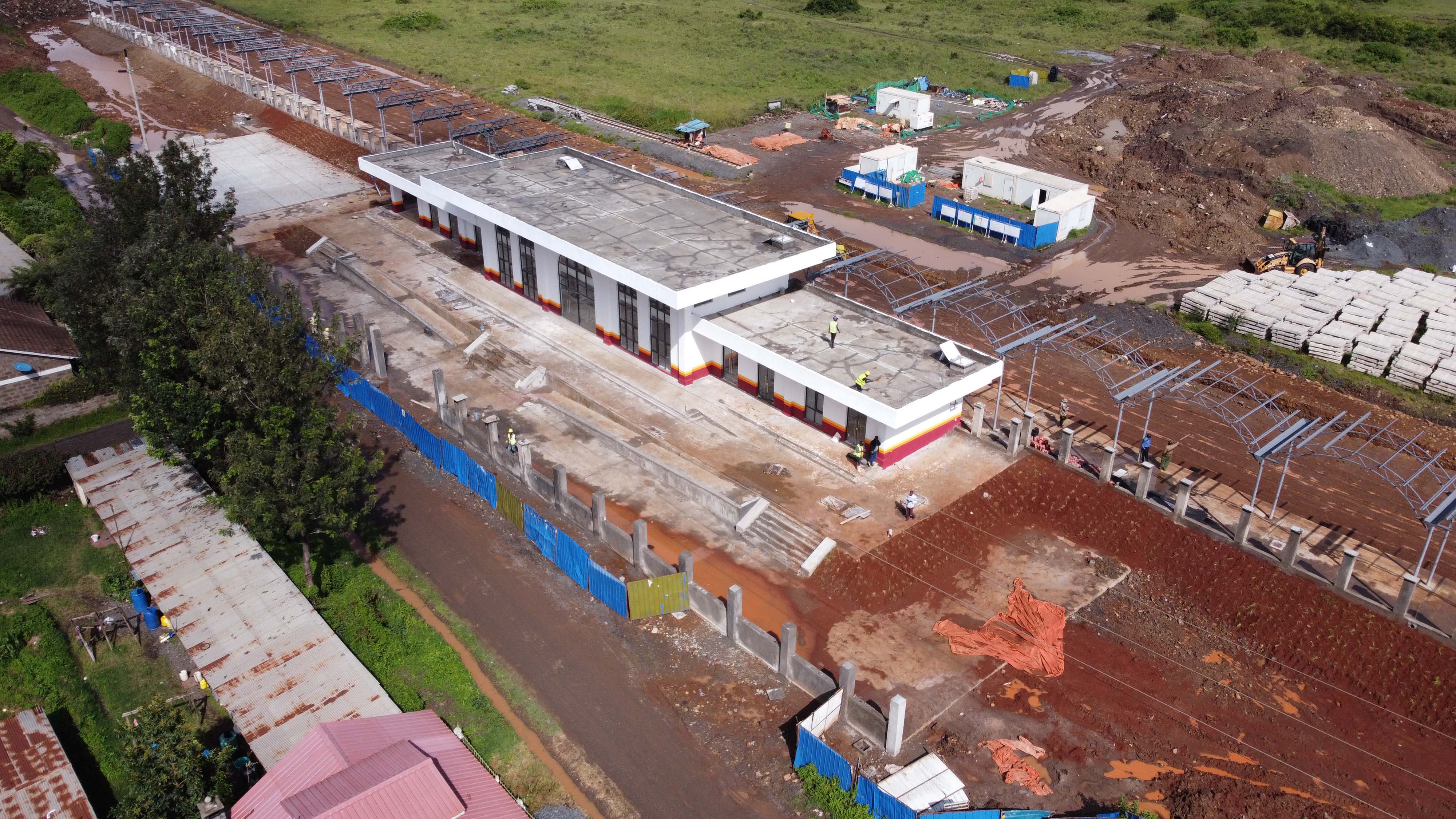
 An aerial of the Riruta-Ngong Commuter Gauge Railway/ MINA
The High Court has temporarily halted construction of the proposed Ngong–Riruta railway line after issuing interim conservatory orders against Kenya Railways Corporation and several state agencies, pending the hearing of a constitutional petition filed by Busia Senator Okiya Omtatah.
Justice Bahati Mwamuye, sitting in Nairobi on Tuesday, issued the orders after finding that the respondents had failed to comply with court directions to file and serve their responses by December 30, 2025, without offering a satisfactory explanation.
“I am satisfied that proper service was effected and that the respondents have not disclosed any reason why they did not file responses as directed by this court,” Justice Mwamuye observed.
The petition was filed by Omtatah against Kenya Railways Corporation and other state agencies, challenging the legality and constitutionality of the project.
"An interim conservatory order be and is hereby issued restraining the 1st, 2nd, 3rd, 4th, 5th, 9th and 10th respondents jointly and severally, and whether directly or through their employees, agents, servants, contractors, associated entities, from continuing implementing, financing, or progressing the construction of the impugned Ruiru-Ngong commuter railway project,” he ruled.
Further allocations or disbursements were restrained from being made outside approved budgetary allocations, pending the hearing and determination of the application.
During the hearing, the counsel appearing for Kenya Railways told the court that they were not ready to proceed.
He argued that their failure to file responses stemmed from a separate conservatory order issued by the High Court in Nakuru, which suspended the engagement of private law firms by public entities.
The counsel submitted that Kenya Railways, being a statutory corporation, had been unable to formally instruct external counsel without risking contempt of the Nakuru court order issued by Justice Samuel Mukira.
He informed the court that applications had since been filed to vacate the Nakuru orders, which are scheduled for mention on January 30.
“We are unable to comply so that we do not find ourselves in a position of conflict,” Oraro said, urging the court to issue directions and allow time for compliance.
However, Charles Kanjama, appearing for the petitioners, dismissed the explanation, arguing that the Nakuru order related to contractual engagements and did not bar legal representation in court.
He urged the court, if inclined to adjourn the matter, to preserve the substratum of the petition by maintaining the status quo.
Kanjama further submitted that Kenya Railways has in-house legal counsel and could not rely on the Nakuru orders as a justification for non-compliance.
Omtatah himself told the court that the respondents’ explanation amounted to an excuse rather than a valid reason, noting that the timelines issued by Justice Mwamuye predated the Nakuru orders.
While declining to interpret the Nakuru orders, Justice Mwamuye held that the respondents’ failure to meet court timelines justified interim relief.
The matter was adjourned, with the conservatory orders remaining in force pending further directions from the court.
The ruling effectively pauses construction activities on the Ngong–Riruta railway as the legal challenge proceeds.