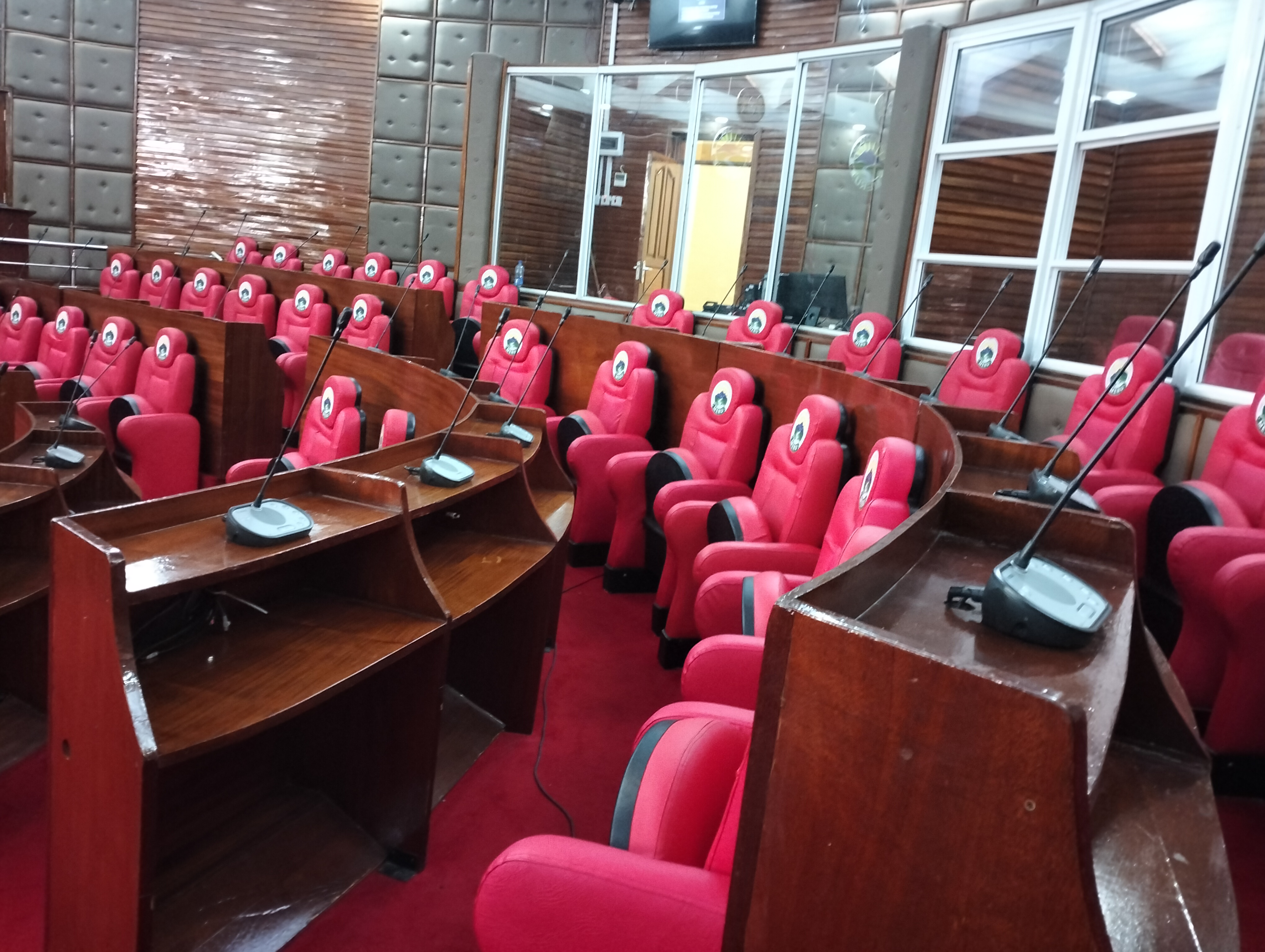
The Meru County Assembly on Thursday approved the Nkubu Municipality Charter, effectively elevating Nkubu to become the newest municipality in Meru County and unlocking the prospect of expanded urban planning, service delivery, and investment.
The approval sets in motion the final administrative steps required to operationalise the municipality.
County officials indicated that Meru Governor Kawira Mwangaza is expected to appoint a Municipal Board and a Municipal Manager in the coming days, as prescribed under Kenya’s Urban Areas and Cities Act.
Assembly members backing the measure said the transition will give Nkubu greater institutional capacity to manage rapid growth, infrastructure pressure, and service needs.
The move positions Nkubu as the third major town in the county after Meru and Maua, and is expected to strengthen governance, service delivery, and investment attraction as the area adjusts to rising commercial and residential demand.
“Nkubu town is one of the three largest towns in Meru County. That is Meru town, Maua then Nkubu. In terms of the power of the voters, the polling stations around Nkubu town is around 15,000 voters. This means that the area requires a lot of services for the voters provided by the municipalities,” MCA Kiogora Matae told the Assembly.
He added that Nkubu had lagged behind other centres in securing municipal recognition, saying the charter would help resolve administrative gaps that have challenged local planning since devolution.
Local leaders and stakeholders welcomed the upgrade, arguing that municipal status will equip Nkubu with the structures and resources needed to manage rapid growth.
“Nkubu has evolved into a key urban centre, and this charter gives it the tools to govern and plan like one,” one official said.
“We expect better coordination on issues such as roads, water, waste management, and business licensing.”
Under the new structure, a Municipal Board will play oversight roles in planning, budgeting, and policy, while a Municipal Manager will oversee day-to-day administration.
The county government has not set a formal timeline for appointments, though officials indicated that the process will move quickly to avoid implementation delays.
The MCA noted that emerging towns across the region have sought municipal credentials in recent years to keep pace with demographic shifts and commercial expansion, often as part of county-level urbanisation strategies.
Nkubu town now joins that trajectory, with proponents anticipating enhanced service delivery, stronger regulation, and a more predictable environment for private sector investment.
Elevation from a town to a municipality signals that an urban centre has reached a level of demographic, economic, and infrastructural growth that requires a more specialised system of governance.
Municipal status introduces formal organs such as a Municipal Board or Council and a Municipal Manager or Administrator, mandated to plan, regulate, budget, and coordinate urban services more professionally than a standard town administration.
The transition also raises expectations for improved public services, including solid waste management, water and sanitation, roads and traffic systems, business licensing, spatial planning, and local economic development.
Municipalities are granted clearer authority over zoning, land use, and development control, enabling them to shape growth patterns, guide investments, and manage public spaces more effectively.
The designation strengthens resource mobilisation by allowing municipalities to prepare dedicated budgets and raise own-source revenues through permits, fees, and rates, while also enhancing access to intergovernmental grants.
These changes tend to improve the regulatory environment for private sector activity and make municipalities more attractive to investors and developers.
Beyond administrative and financial considerations, the shift aligns fast-growing towns with national and county urbanisation strategies, acknowledging ongoing demographic and commercial expansion and ensuring that urban services, infrastructure, and governance frameworks keep pace with that growth.