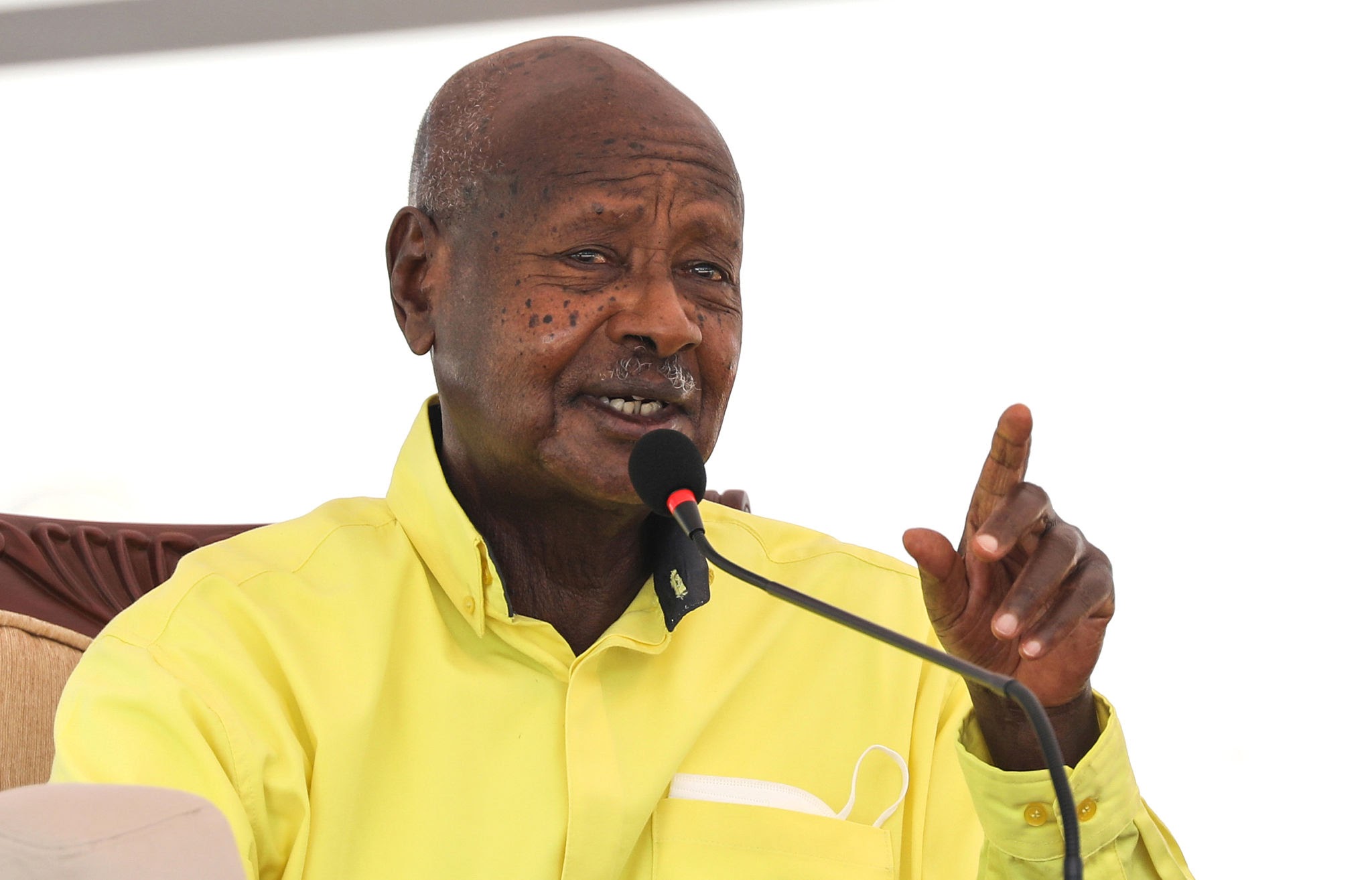
 Uganda President Yoweri Museveni./FILE
Uganda's communications commission has eased the nationwide internet and mobile service shutdown for select institutions offering critical services even as broader restrictions remain in place during the election period.
The regulator said the shutdown followed a security recommendation to curb misinformation, electoral fraud and incitement to violence.
“All of these could undermine public order, national security and the integrity of the electoral process,” UCC said in a statement on Wednesday.
While public internet access and some mobile services remain suspended, the authority said entities supporting essential systems have now been granted exemptions to operate.
The Uganda Communications Commission (UCC) said the measure is designed to prevent disruptions that could compromise public order and national security during voting.
However, the commission stressed that exemptions would only apply to services considered vital for state and institutional functions.
“Any internet-based services that are not life-saving or critical, and can reasonably be deferred, will regrettably remain suspended for the duration of this period,” the statement read.
Companies that believe their products or platforms qualify for critical status have been instructed to apply for reconsideration.
“Institutions or service providers that believe their services are of a critical nature but have not been exempted may formally write to UCC for reconsideration by the Inter-Agency Security Committee,” the notice said.
The regulator acknowledged that the shutdown, one of the most far-reaching communications restrictions in the region in recent years would inconvenience citizens and businesses but asked for public cooperation.
“We recognise the inconvenience this temporary measure is likely to cause and thank the public for their patience and understanding,” UCC added.
On Tuesday, the Uganda Communication Commission ordered a ' temporary' shutdown of internet until further notice.
The shutdown orders came 48 hours before the Uganda General Elections set for Thursday, January 15, 2026.
“The suspension is effective 13th January 2026, at 1800hrs and will remain in force until a restoration notice is issued by UCC. During this period, all non-essential public internet traffic must be blocked,” stated UCC Executive Director Thembo Nyombi.
The shutdown is expected to affect mobile and fixed-line services, as well as major social media and digital communication platforms.
Rights groups have condemned the measure, warning that blackouts during elections impede transparency, restrict freedom of expression, and limit independent verification of events on the ground.
The Kenya Human Rights Commission (KHRC) expressed concern over the UCC’s decision, noting that it comes amid reports of intimidation, arrests, and the suspension of permits for five non-governmental organisations.
Ugandan opposition presidential candidate Robert Kyagulanyi, widely known as Bobi Wine, criticised the government’s decision to impose a temporary nationwide internet shutdown.
He described it as undermining democratic processes and citizens’ freedoms.
In a social media post, Kyagulanyi expressed concern over the timing of the shutdown, framing it as a challenge to transparency during the electoral process.