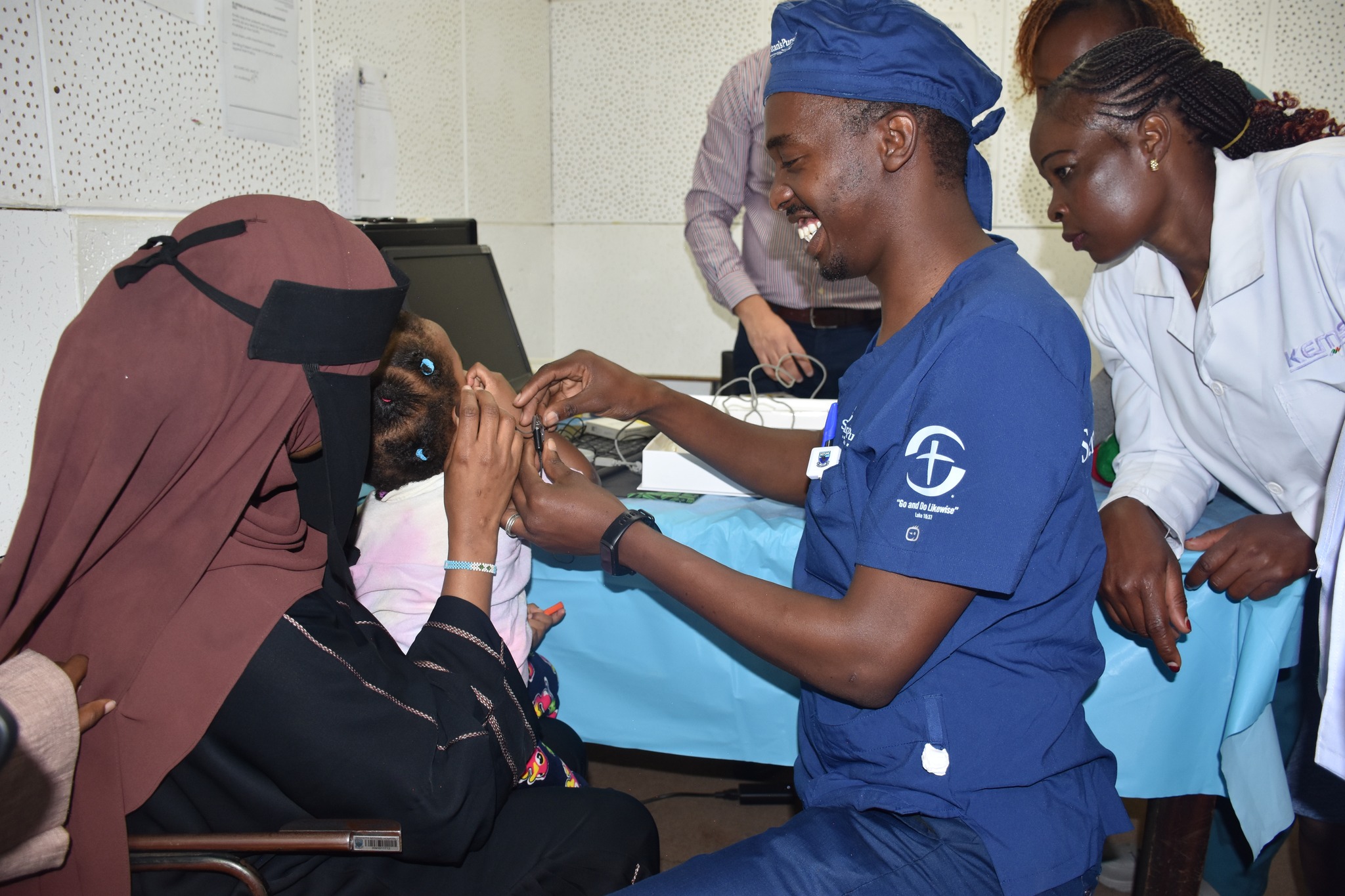
Kenyatta National Hospital (KNH) has reached a significant milestone in paediatric hearing restoration after switching on cochlear implant devices for 50 children who recently underwent surgery at the facility.
The activation phase, which began on January 12, 2026, marks the first time the children are experiencing sound, triggering emotional scenes as families witnessed reactions ranging from shock to smiles, tears, and laughter.
The surgeries were conducted between November 3 and 7, 2025, by KNH’s ENT specialists, supported by audiologists and speech therapists.
The initiative was delivered through a collaboration involving the Office of the First Lady, Mama Rachel Ruto, and Morocco’s Princess Lalla Asmaa Foundation, with additional technical support from medical device manufacturer Cochlear.
According to KNH, the children have been under continuous review at ENT clinics since their procedures, where clinicians assessed post-surgical progress before approving device activation.
“Following careful evaluation, our teams were fully satisfied with the progress made by the children and commenced the most emotional and transformative phase: the switch-on and programming of the cochlear devices. This is not just a medical procedure, but the opening of a new world of sound, connection, and possibility for children who have lived in silence,” KNH said in a statement.
As of Monday, 25 devices had been switched on, with the remaining cases scheduled for completion in the coming days.
KNH Acting Chief Executive Officer Richard Lesiyampe said the milestone underscores the hospital’s growing capacity to deliver highly specialised care as Africa’s second-largest referral facility.
“We are home to skilled ENT surgeons, audiologists, speech therapists, nurses, and rehabilitation specialists who work as a multidisciplinary team to ensure long-term success for these children,” Lesiyampe said.
“Since the surgeries happened, our ENT specialists, audiologists, and speech therapists have been closely reviewing the children at our ENT clinics.”
He called upon partners, donors, and benefactors to support efforts to assist more children living with hearing impairment.
Beyond the immediate medical benefits, clinicians say the intervention opens new possibilities for learning, communication, and early childhood development for beneficiaries who would otherwise have limited access to assistive hearing technologies.
“This is not just a medical procedure, but the opening of a new world of sound, connection, and possibility for children who have lived in silence,” KNH stated.
Cochlear implants are electronic devices that stimulate auditory nerves and are often used where traditional hearing aids prove ineffective.
Early implantation, before speech development matures substantially, improves language acquisition outcomes.
KNH said the programme reflects its broader commitment to innovation, equity, and specialised interventions within the public healthcare system.