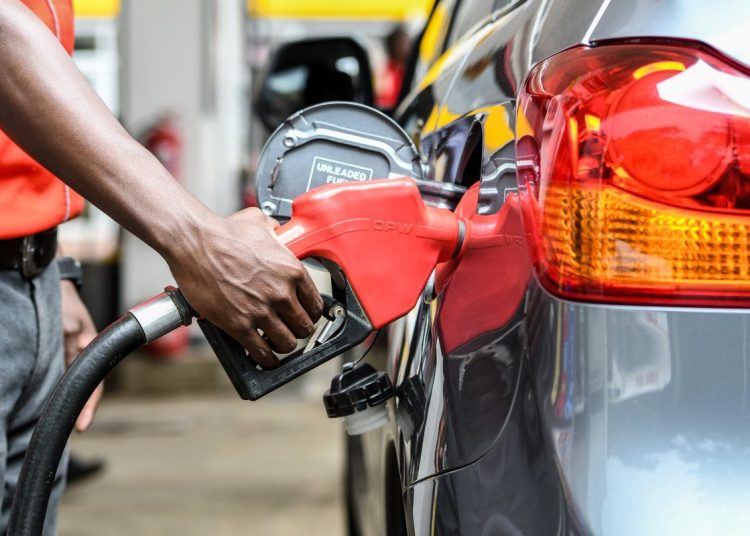
 An attendant at a fuel filling station./FILE
The Energy and Petroleum Regulatory Authority on Wednesday announced fuel prices for the January–February cycle, indicating a marginal drop in pump prices across the country.
"We have calculated the maximum retail prices of petroleum products which will be in force from January 15, 2026 to February 14, 2026,” Epra said.
Under the latest review, the price of super petrol decreased by Sh2 per litre, while diesel and kerosene each dropped by Sh1 per litre.
In Nairobi, super petrol will retail at Sh182.52 per litre, diesel at Sh170.47 and kerosene at Sh153.78.
In Kisumu, motorists will pay Sh182.37 for super petrol, Sh170.68 for diesel and Sh154.03 for kerosene.
Pump prices in Mombasa will stand at Sh179.24 for super petrol, Sh167.19 for diesel and Sh150.49 for kerosene.
In Nakuru, super petrol will retail at Sh181.56 per litre, while diesel and kerosene will sell at Sh169.87 and Sh153.21 respectively.
In Eldoret, super petrol will cost Sh182.38, diesel Sh170.68 and kerosene Sh154.03 per litre.
“The prices are inclusive of the 16 per cent Value Added Tax (VAT) in line with the provisions of the Finance Act 2023, the Tax Laws (Amendment) Act 2024, and the revised rates for excise duty adjusted for inflation as per Legal Notice No. 194 of 2020,” Epra said.
During the previous review in December, motorists in Nairobi paid Sh184.52 for super petrol, Sh171.47 for diesel and Sh154.78 for kerosene.
In Mombasa, pump prices were Sh181.24 for super petrol, Sh168.19 for diesel and Sh151.49 for kerosene.
Super petrol retailed at Sh183.56 in Nakuru, with diesel at Sh170.87 and kerosene at Sh154.21.
In Eldoret, prices stood at Sh184.38 for super petrol, Sh171.68 for diesel and Sh155.03 for kerosene, while Kisumu recorded Sh184.37 for super petrol, Sh171.68 for diesel and Sh155.03 for kerosene.
Epra said Kenya currently imports all its petroleum product requirements in refined form, with the products traded in international markets using a pricing benchmark.
“Further, the trade of petroleum products in the international markets is denominated in United States dollars (USD), and an exchange rate is applied to convert the USD to shillings during the computation of local pump prices,” the Authority said.
According to Epra, the petroleum pricing regulations are designed to cap retail fuel prices for products already in the country, allowing recovery of importation and other prudently incurred costs while ensuring reasonable prices for consumers.
“Epra wishes to assure the public of its continued commitment to the observance of fair competition and the protection of the interests of both consumers and investors in the energy and petroleum sectors.”