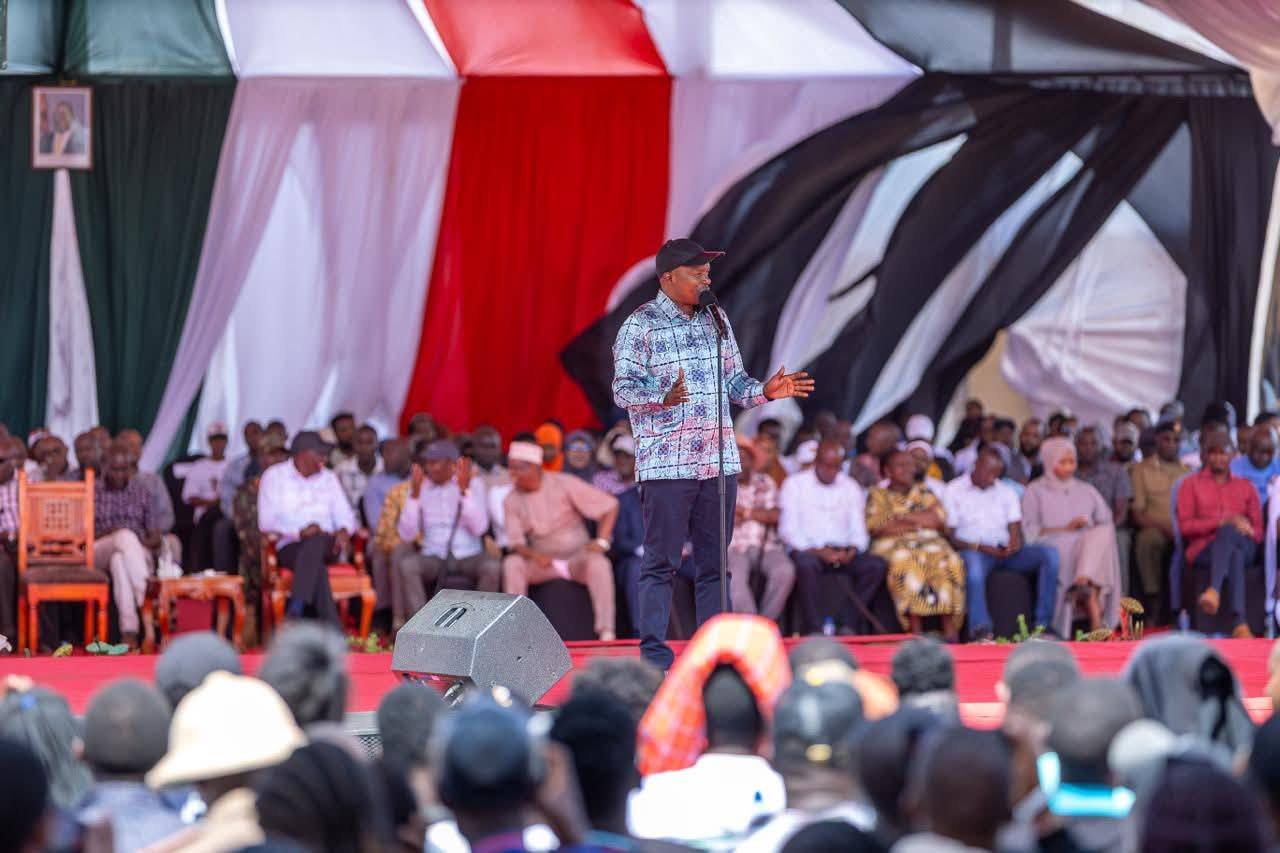
Deputy President Kithure Kindiki has framed the NYOTA youth empowerment programme as a key tool for steering young people away from political exploitation and social unrest, arguing that economic opportunity is the most effective response to youth frustration.
Speaking to beneficiaries of the programme, Kindiki said the government’s focus on enterprise support reflects a deliberate effort to convert Kenya’s youthful population into a driver of stability and growth rather than a source of unrest.
“Young people are a great asset of our country because many countries have an ageing population but ours is young and energetic and willing to work to build our country,” Kindiki said.
He said the administration is fulfilling promises made during the election campaign by rolling out targeted empowerment programmes that provide both capital and institutional backing.
According to the Deputy President, such initiatives are meant to give young people alternatives to political mobilisation that often leads to violence and destruction.
“The President promised to empower the youths during campaigns and through NYOTA programme and other empowerment programmes, he is fulfilling the promise,” Kindiki said.
Under the NYOTA programme, beneficiaries receive Sh50,000 in start-up capital to establish or expand small businesses.
Kindiki acknowledged criticism over the size of the grant but maintained that the funding is intended as seed capital that can unlock entrepreneurship when used responsibly.
“We are giving 50,000 shillings as start-up capital. It will make a huge difference in their businesses,” he said, adding that the government will continue to work with beneficiaries to improve their chances of success.
The Deputy President said Kenya’s youth possess diverse talents across business, academics and sports, and that the state’s role is to create an enabling environment in which those abilities can translate into livelihoods.
He urged young people to view the programme as a stepping stone rather than an entitlement.
Kindiki also took aim at opposition leaders, accusing them of mobilising youth for confrontational politics instead of economic empowerment.
He warned that such approaches undermine both personal progress and national cohesion.
“Our opponents should stop inciting the youth to destroy the country and to attack their rivals instead of supporting them to build better livelihoods,” he said.
He insisted that sustained investment in youth enterprise is central to the government’s development agenda, saying programmes like NYOTA are designed not only to reduce unemployment but also to foster social stability by giving young people a stake in the country’s economic future.