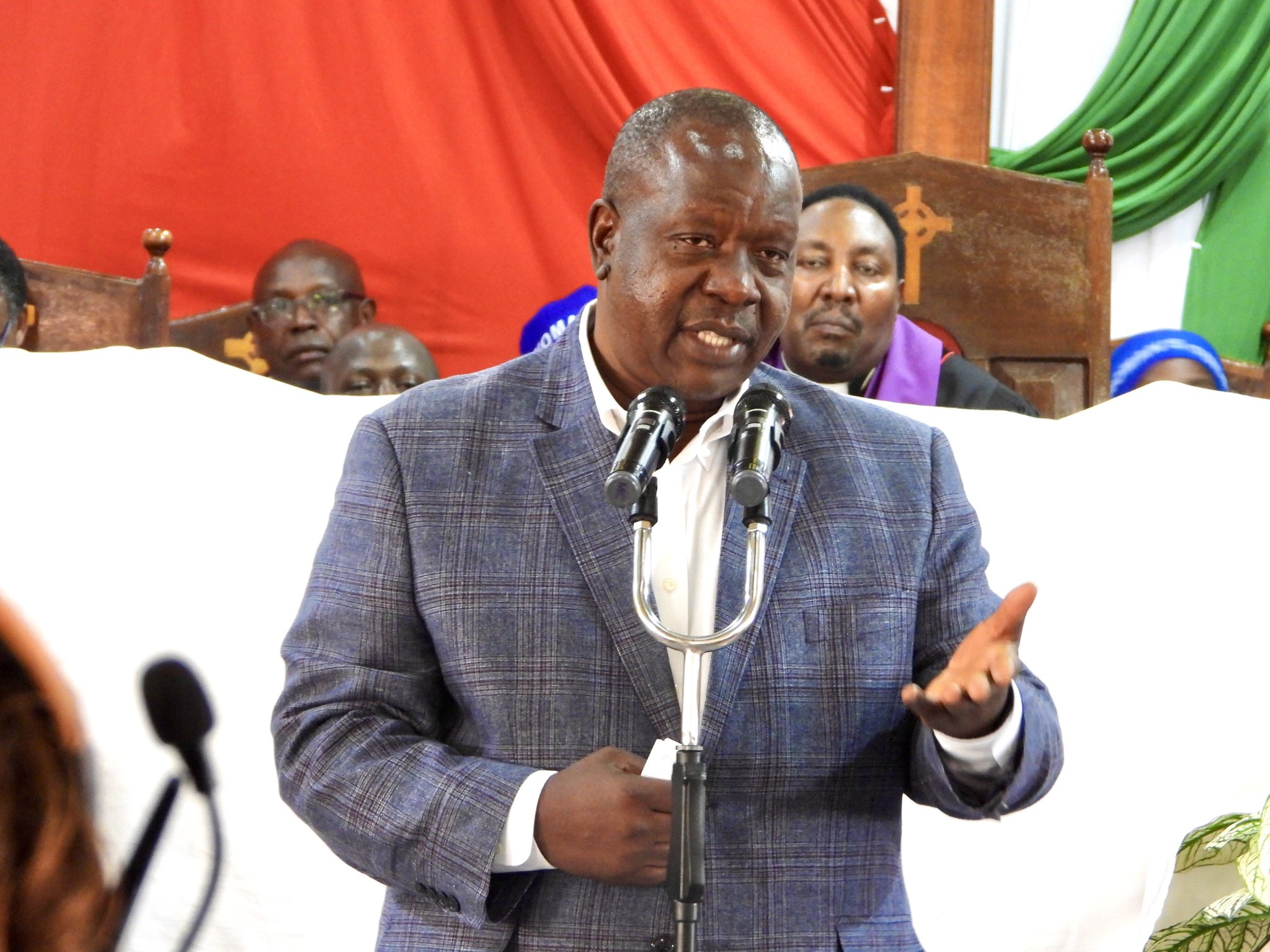
Former Interior Cabinet Secretary Fred Matiang’i has issued a stinging critique of the government’s handling of the education sector, warning that Kenya cannot aspire to global benchmarks such as Singapore while chaos persists in school administration and funding.
In remarks directed at the current administration, Matiang’i called for urgent, inclusive consultations to address what he described as growing confusion and hardship facing parents and learners.
Speaking at PCEA Muguga Parish in Kiambu County, he questioned whether, even within the remaining period of the administration’s term, leaders were willing to take decisive corrective action.
“Even within these months left for this administration, can they have an urgent consultative meeting with critical sector players to save the parents the pain of this madness?” Matiang’i posed.
He argued that resolving the challenges in the education sector requires broad engagement with professionals and stakeholders who directly manage and support schools.
Matiang’i specifically cited school heads, teachers’ unions, parents’ associations and faith-based organisations as essential voices in any reform process.
“Get the professionals, Primary and Secondary schools heads associations, the unions, parents associations, and the faith-based leaders because the church has invested in education,” he said, noting that many schools in Kenya were founded and continue to be supported by religious institutions.
According to the former CS, such consultations would give government leaders a clearer picture of the strain current policies have placed on families and schools.
“Call these leaders to tell you the pain the parents are facing,” he added.
Matiang’i accused the government of presiding over disorder in the education sector, questioning policy decisions that have left parents confused and institutions struggling to cope.
He challenged authorities to account for problems in school placement and funding, particularly reductions in capitation.
“Can we solve the chaos you have created in the education sector?” he asked.
He further questioned the state’s ability to manage core administrative functions in education, arguing that systemic failures undermine Kenya’s development ambitions.
“You can’t place children in school, you are not able to explain why you reduced capitation,” Matiang’i said.
Framing his criticism in comparative terms, Matiang’i dismissed rhetoric about transforming Kenya into a global success story without first fixing foundational systems.
“How are you going to Singapore with such?” he asked, concluding that without urgent reforms, aspirations to match high-performing education systems remain unattainable.
His remarks come against the backdrop of criticism by other opposition leaders over the system used by the government in placing Grade 10 students into schools.
Some, including former Deputy President Rigathi Gachagua, said learners in national schools must be guided by regional balance to ensure fairness.
Speaking on Friday, the DCP leader said local children should be prioritised when placing learners in Grade 10 in schools within their regions, provided they meet the required entry points.
“National schools are very critical because they have a very developed infrastructure, and they attract the best among other children. The issue that I raised, and I must continue raising, is that there must be fairness in the placement of children in national schools,” he said.
The former deputy president noted that while national schools are meant to enjoy equal status regardless of location, the reality on the ground is different.