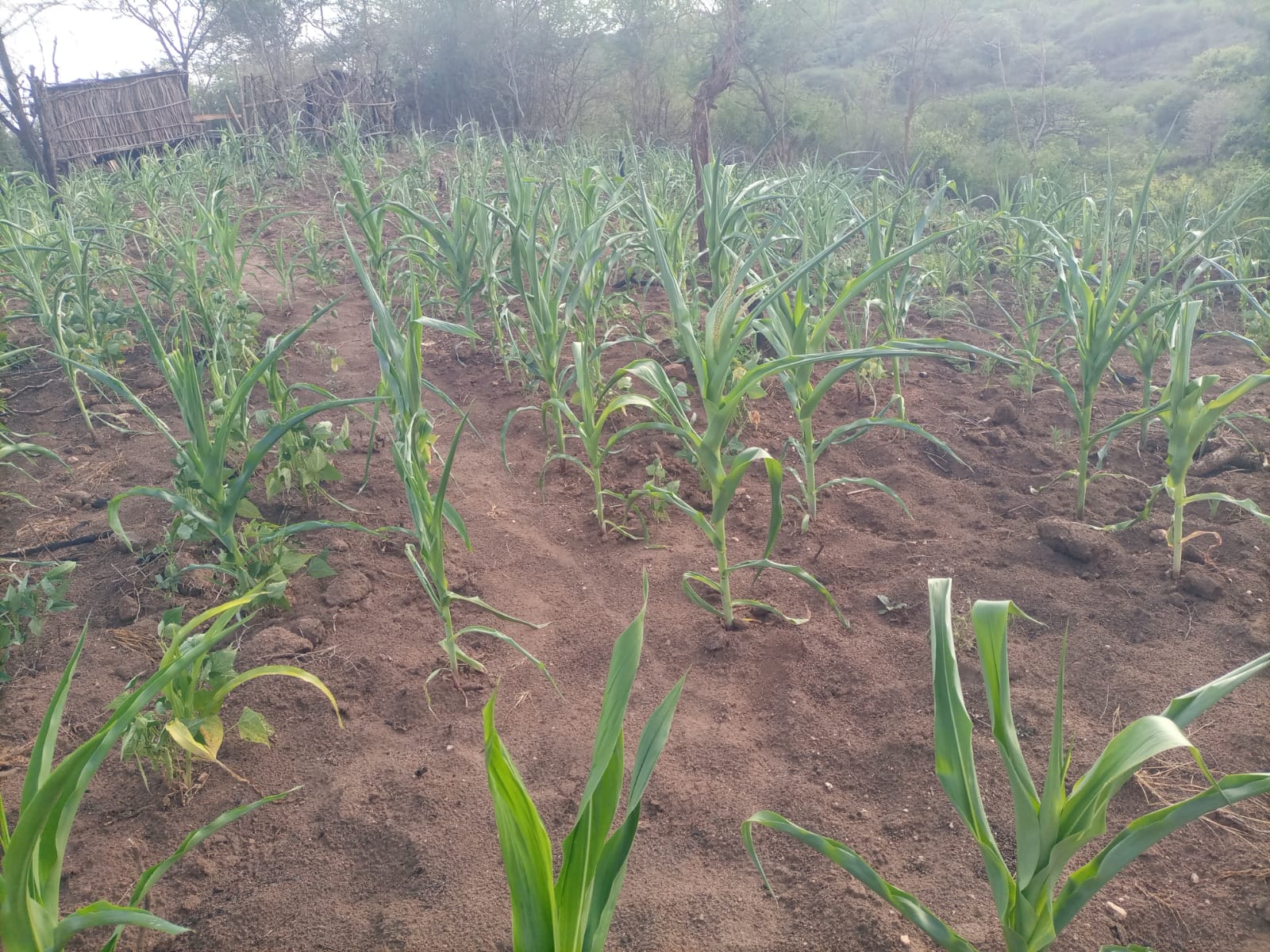
 A withering maize crop due lack of adequate moisture following the failed rainfall in Kitui /MUSEMBI NZENGU
Kitui county is facing a worsening humanitarian crisis as the effects of failed short rains push residents closer to the brink of hunger and hardship.
The October–December 2025 rains, which many had hoped would bring relief, largely failed, leaving behind dry fields, depleted water sources, and struggling families.
A recent survey by the Kitui County Steering Group on drought and food security paints a grim picture: 72 per cent of targeted farmland was planted, yet yields barely reached 10 per cent of long-term averages.
In parts of Kitui South, Kitui East, Mwingi North, Mwingi Central, Kitui Rural, and Mwingi West, crops never germinated at all, leaving fields empty and families without sustenance.
For most residents, the market has become the only source of food, even as prices soar beyond reach.
The report shows that out of a population of over 1.2 million, only about 28,000 households have any food reserves, leaving more than 260,000 households dependent entirely on buying food.
Maize, a staple for many, now retails between Sh55 and Sh70 per kilo, while beans sell for Sh120 to Sh160, prices that strain already tight budgets.
Water scarcity compounds the crisis. Many families are forced to trek long distances to access diminishing water points, and those who can pay face ever-rising costs.
Livestock, the backbone of pastoral livelihoods in Kitui, are also suffering. Cattle, goats, and sheep are emaciated in some areas, while low-quality pasture and water shortages have led to reduced milk production.
Outbreaks of livestock diseases, driven by weakened animals and scarce feed, further threaten household survival and income.
The drought is not just an environmental challenge—it is a daily struggle for life. Families wake each day facing empty fields, parched water sources, and livestock that cannot survive without human intervention.
For farmers who rely on the rains to sustain their homes and communities, the failure of the rain season is a stark reminder of the fragile balance between climate and survival.
Kitui county officials, including Deputy Governor Augustine Kanani and County Commissioner Erastus Mbui, convened stakeholders to review the situation, stressing the urgent need for interventions to protect food security, water access, and livestock health.
But for the families on the ground, the impacts are immediate and deeply felt. Each day without rain threatens crops, livelihoods, and the wellbeing of communities already stretched to their limits.
As Kitui edges closer to alarm stage, the reality is stark: drought has become more than a seasonal setback—it is a threat to survival, reshaping the lives of hundreds of thousands and demanding urgent attention before the hunger and hardship deepen further.