The capture or removal of a sitting head of state is one of the most consequential acts in international politics. It reshapes power at home, alters diplomatic relations, and raises hard questions about sovereignty and international law.
According to published records and analysed information, only a small number of national leaders have ever been captured or forcibly removed in operations involving the United States.
Each case unfolded under different political and military circumstances, but together they offer insight into how power is exercised during moments of global crisis.
Rare and exceptional events
Documented cases show that direct U.S. involvement in the capture or removal of heads of state is rare.
When it happens, it is usually during war, invasion, or severe internal instability. In most instances, the events are followed by long legal, political, and diplomatic disputes.
Nicolás Maduro: an unprecedented modern case
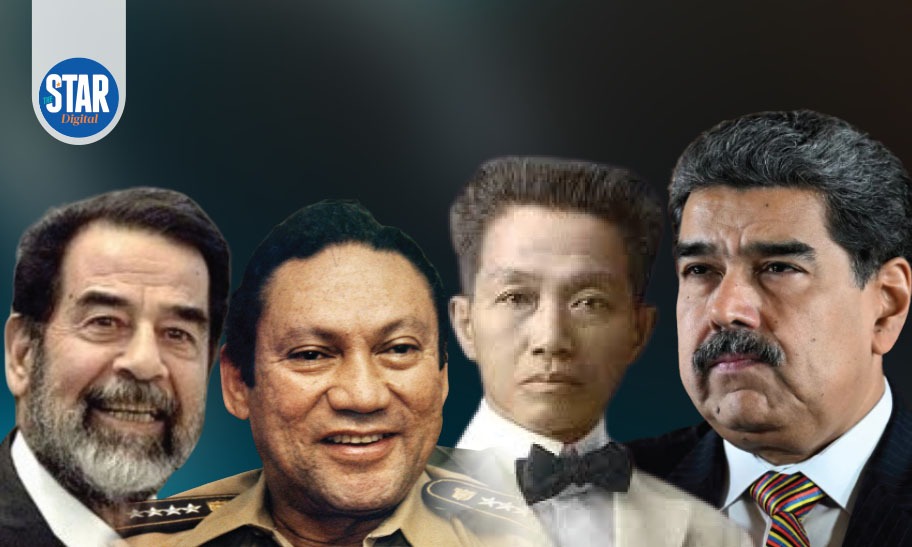
Venezuela’s President Nicolás Maduro was captured by U.S. special forces during a military operation in Caracas in January 2026. He was subsequently taken to the United States to face federal charges.
Analysed information shows that this marked a rare instance of a sitting head of state being directly captured by U.S. forces and transferred to U.S. custody.
The case stood out because it involved a contemporary leader in office at the time of capture, rather than a deposed ruler or a former president.
Manuel Noriega: the Panama invasion
One of the most cited historical cases is that of Manuel Antonio Noriega, Panama’s de facto leader. Noriega was a powerful military ruler accused of drug trafficking and corruption.
Following the U.S. invasion of Panama in December 1989, known as Operation Just Cause, Noriega went into hiding. According to documented records, he surrendered to U.S. forces on January 3, 1990. He was then transported to the United States, where he was tried and convicted on criminal charges.
The Noriega case is often referenced as a clear example of a foreign leader being captured after a full-scale U.S. military intervention.
Saddam Hussein: capture during occupation
Saddam Hussein, Iraq’s long-time president, was captured after the 2003 U.S.-led invasion of Iraq. Published accounts show that he was found on December 13, 2003, during military operations conducted by Iraqi forces with U.S. support.
Although Iraqi authorities carried out the arrest, analysed information confirms that the capture occurred within a U.S.-controlled military context. Saddam Hussein was later tried by Iraqi courts and executed in 2006. His detention followed the collapse of his government and the occupation of Iraq.
Jean-Bertrand Aristide: a contested removal
The case of Haiti’s President Jean-Bertrand Aristide remains one of the most disputed. In February 2004, Haiti was gripped by violent unrest and an armed uprising.
Published records indicate that Aristide was removed from power and flown out of the country with the assistance of U.S. military logistics. Aristide later described the event as a kidnapping by U.S. forces. U.S. officials rejected that claim, stating that he agreed to leave for his own safety.
Analysed information shows that, while the circumstances are contested, there is wide agreement that U.S. military involvement was central to his departure under pressure.
Who does not qualify
Clarifications from published material show that not all high-profile arrests involving the United States meet the threshold of direct capture.
Former Honduran president Juan Orlando Hernández, for example, was extradited to the United States in 2022 on drug and corruption charges. However, his arrest was carried out by Honduran authorities, not U.S. troops.
Similarly, several leaders arrested during conflicts involving NATO or U.S. influence were detained by local governments or international tribunals, rather than by U.S. forces themselves.
The Emilio Aguinaldo question
Emilio Aguinaldo of the Philippines is frequently mentioned in historical discussions. Records confirm that Aguinaldo was captured in 1901 by forces led by a U.S. Army general during the Philippine-American War.
At the time, Aguinaldo was president of the First Philippine Republic, a revolutionary government that had declared independence. However, analysed information shows that the United States did not recognise this republic as a sovereign state.
As a result, historians differ on whether Aguinaldo qualifies as a captured “head of state” in the modern legal sense. He was the leader of a government that claimed sovereignty, but not one that enjoyed international recognition at the time of his capture.
A pattern shaped by power and conflict
Taken together, these cases reveal a consistent pattern. Direct U.S. involvement in the capture or removal of national leaders has occurred mainly during invasions, wars, or state collapse. Each episode triggered long-lasting debates over legality, legitimacy, and the limits of foreign intervention.
Published records and analysed information show that such actions remain exceptional. They also highlight how global power dynamics can override traditional notions of sovereignty during moments of extreme conflict.