After several years of economic turbulence, high inflation, and social unrest, a combination of fiscal tightening, governance reforms, and targeted investment has steadied key sectors and restored a measure of public confidence.
The shilling has stabilised, fuel costs have eased, food imports have been better managed, and private investment, once hesitant, has slowly begun to return.
Infrastructure projects are moving again, youth empowerment schemes are widening their reach, and county governments have regained some planning predictability.
With these foundations in place, the country now faces a pivotal year.
Political promises made over the past two years, as well as new commitments for 2026, could either consolidate the gains or expose lingering gaps in execution.
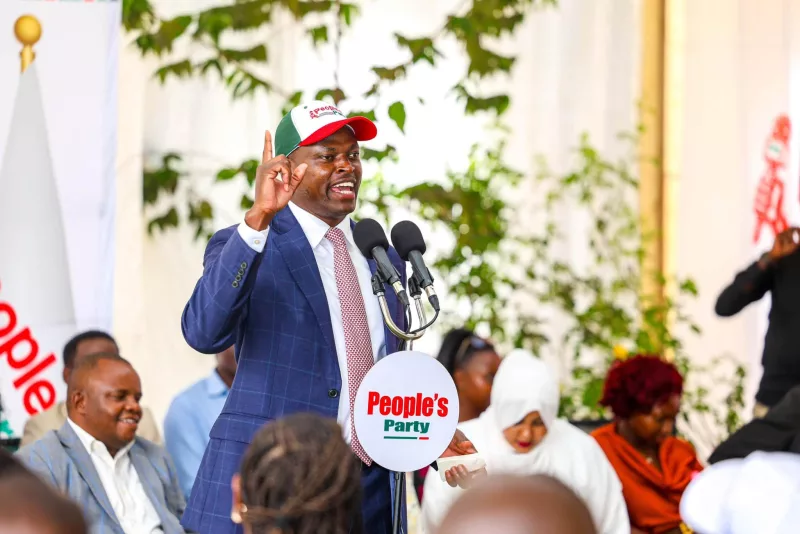
President William Ruto has repeatedly stated that his administration is shifting from crisis management to long-term transformation, most notably through his recent declaration that Kenya must pursue the trajectory of a “First World economy” by 2040, anchored on high-tech industry, agro-industrial expansion, quality urbanisation, and universal digital access.
Against this backdrop, ten major pledges are expected to shape Kenya’s political and economic direction in 2026.
Sovereign wealth and infrastructure funds: recasting national investment
Among the government's most ambitious undertakings are the establishment of a sovereign wealth fund and a dedicated infrastructure fund.
The funds are intended to mobilise state assets while reducing reliance on new borrowing, addressing public concerns over Kenya’s debt levels.
Initial capitalisation is expected from the sale of shares in the Kenya Pipeline Company, a transaction projected to raise up to Sh130 billion.
President Ruto has framed these instruments as long-term financial engines.
"We are building not just for today, but for future generations,” he told investors at a recent briefing.
He has argued that Kenya must no longer rely on commercial loans for projects that can be financed through domestic value extraction and strategic savings.
Economic analysts say that, if implemented with transparency, the funds could support energy, transport, irrigation, and agricultural modernisation without worsening the debt burden. Skepticism remains.
Infrastructure and industrialisation: scaling up for growth
The infrastructure fund is designed to fast-track roads, dams, digital infrastructure, and electricity generation.
One goal is to expand Kenya’s electricity output from roughly 2,300 MW to 10,000 MW, aimed at turning the country into East Africa’s industrial hub and reducing manufacturers’ costs.
Transport Cabinet Secretary Davis Chirchir said: “These projects are not just concrete and steel; they are jobs, opportunities, and livelihoods for our people.”
The ministry is relying on stable macroeconomic conditions to revive delayed roadworks and complete stalled dam projects, key drivers of local employment.
Yet the risk of tendering irregularities persists. Experts note Kenya’s history of inflated contracts, price variations, and corruption in large projects.
The more predictable financial environment of 2025, however, has placed the country in a better position to deliver cleaner project cycles in 2026. The real test will be whether procurement reforms, digital tendering, independent monitoring, and open contracting translate into better execution.
Youth empowerment: A shift toward structured support
Youth empowerment remains a key agenda item.
After the rollout of the Hustler Fund, the government is restructuring ward-level enterprise funding to include training, incubation, and market access.
This shift moves from short-term credit schemes toward long-term economic participation.
“Youth empowerment is more than cash handouts; it’s creating systems that allow young people to thrive,” said Evelyn Wanjiku, a Nairobi-based entrepreneur who has benefited from government-sponsored training.
With the economy stabilising, the government faces pressure to convert political goodwill into sustainable programmes, including access to credit, simplified licensing, creative industry financing, and skills-based placement for technical graduates.
2026 will be a defining year for determining whether these initiatives can reduce youth unemployment, which remains one of Kenya’s most persistent socio-economic challenges.
Civic engagement and public dialogue: A new government attitude
Youth-led protests in 2024-25 highlighted frustrations around governance, policing, taxation, and accountability.
In response, the government has adopted a more consultative posture, engaging civil society groups, professional bodies, religious leaders, and community associations in policy shaping.
Dr Raymond Nyeris, Vice Chair of the Kenya National Commission on Human Rights, said: “They are engaging constructively with the government. That’s an opportunity Kenya cannot afford to miss.”
The challenge will be ensuring that this approach is not a temporary reaction to unrest but an integral part of policymaking. Many Kenyans will watch whether public participation forums are meaningful or symbolic.
National unity and cross-party collaboration
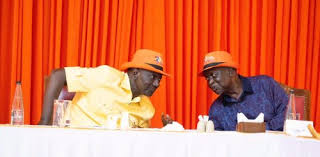
In a rare development, UDA and ODM agreed on a 10-point parliamentary pact covering job creation, education, healthcare, infrastructure, governance, agriculture, and anti-corruption.
Political analysts say such collaboration can convert divisive political energy into productive legislative partnerships.
Political analyst Joseph Mwaura said: “When stability exists, pacts like this can turn into real instruments of change rather than temporary political maneuvering.”
If the pact holds, 2026 could see more predictable parliamentary sessions and faster passage of reforms. If it falters, it may be seen as another short-lived truce in Kenya’s cyclical politics.
Anti-corruption efforts: A test of credibility
Corruption remains a major governance challenge.
Public expectations are high that anti-corruption bodies will use the stable environment to intensify investigations, recover assets, and secure convictions.
The creation of the wealth and infrastructure funds has renewed public concern about protecting billions of shillings.
Davis Malombe, Executive Director of the Kenya Human Rights Commission, emphasised: “Accountability does not pause because the economy is stable. Now is the time to build systems that prevent mismanagement rather than react to it.”
Debt management: A chance to recalibrate
Kenya’s debt burden remains substantial, but 2025’s fiscal consolidation and renegotiated external obligations created space for more sustainable planning.
The government intends to use the wealth and infrastructure funds to reduce exposure to expensive commercial loans.
Economist Stephen Ndegwa said, “A stable economy allows the government to plan strategically. Properly managed, these funds could support infrastructure growth while keeping debt manageable.”
The challenge will be balancing development needs with fiscal discipline in a political environment that often rewards short-term spending.
Devolution and institutional reform
Devolution remains central to Kenya’s governance architecture.
Recent reforms have enhanced counties’ capacity to deliver health, water, and agricultural services.
Improved fund flows in late 2025 allowed counties to resume stalled projects and stabilise essential services.
Machakos Governor Wavinya Wandeti said: “We are finally seeing resources flow more predictably, allowing counties to plan and execute projects that meet local needs.”
2026 will show whether the national government can maintain consistent disbursements, strengthen intergovernmental coordination, and enforce accountability within counties, particularly regarding procurement, health service delivery, and revenue collection.
Youth political participation: Broadening the democratic space
Political inclusion of youth is gaining greater attention.
The government plans to institutionalise youth advisory councils, expand representation in state boards, and integrate youth voices in policy roundtables.
“It’s about turning energy into influence. Now that the country is more stable, we can focus on being part of the solutions, not just observers or protestors," said youth leader Samuel Onyango.
Success will depend on whether opportunities are genuine or tokenistic.
Security and justice reform
Balancing national security with civil liberties remains a challenge.
After tensions between security agencies and civilians, the government is revising the policing framework to emphasise lawful conduct, community policing, and de-escalation techniques.
Inspector General of Police Douglas Kanja said: “Our approach to security is evolving. We aim to maintain peace while respecting the rights of every Kenyan.”
Civil society groups say 2026 will be crucial in determining whether reforms lead to better conduct, fewer abuses, quicker investigations, and stronger faith in the justice system.
Kenya’s stability heading into 2026 provides rare political breathing space.
Infrastructure plans, youth programs, devolution reforms, anti-corruption efforts, and cross-party cooperation present opportunities to rebuild public trust and accelerate development.
However, each promise carries risks if institutions are weak or political will falters.
Ruto's First World aspiration raises the stakes further; it demands consistency, integrity, and discipline across government.
The year ahead will therefore not merely measure ambition, but delivery.