 In Asia, Nepal became the epicentre of a youth-driven political storm - demonstrators stormed public buildings and set parliament on fire.
The global political landscape in 2025 has been marked by a series of electoral disruptions and leadership transitions, as voters across Africa, Latin America and Europe expressed growing demands for accountability, reform and generational renewal.
From economic pressures to governance challenges, similar dynamics emerged across regions.
Long-established political figures faced intensified scrutiny, while administrations previously considered stable encountered mounting public dissatisfaction and organised civic action.
In Malawi, widespread frustration over the rising cost of living culminated in a significant electoral shift.
Against a backdrop of persistent fuel shortages, escalating food prices and an economy strained by debt, voters delivered a decisive verdict at the ballot.
On September 24, President Lazarus Chakwera conceded defeat to former leader Peter Mutharika after securing about 33 per cent of the vote, compared with Mutharika’s approximately 56.8 per cent.
Speaking on national television, Chakwera said: “This outcome is a reflection of your collective will to have a change of government … it is only right that I concede defeat out of respect for your will as citizens and out of respect for the constitution.”
His remarks reflected both personal deference to the electoral process and the extent to which economic hardship had affected public confidence in his administration.
Inflation in Malawi was reported to have exceeded 30 per cent, while shortages of basic commodities such as maize and fertiliser became increasingly common.
Foreign exchange reserves at the central bank declined, and external financial support — previously a critical stabilising factor — diminished.
During Mutharika’s earlier term in office, Malawi recorded periods of economic expansion, with inflation declining from about 24 per cent in 2014 to single-digit levels by 2019.
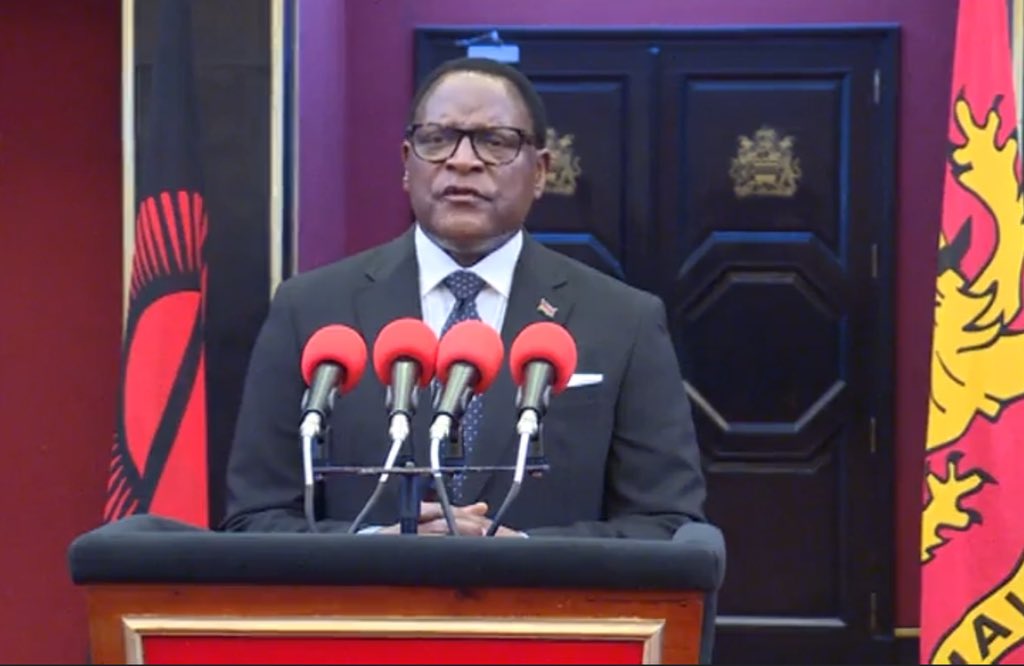 Former Malawian President Lazarus Chakwera/HANDOUT
That period, however, was also characterised by governance controversies, with his administration facing allegations of graft, as well as criticism over nepotism and authoritarian tendencies.
Nevertheless, a substantial portion of the electorate appeared to conclude that a return to Mutharika, despite his age and past controversies, presented a more viable path out of economic difficulty than continued leadership under Chakwera.
“You missed me, right?” Mutharika frequently asked supporters during campaign appearances ahead of his return to power.
When he was sworn in for a second term, Mutharika once again became the oldest Malawian president to assume office, at the age of 80, surpassing his own record set in 2014.
In the Indian Ocean nation of Seychelles, a similarly notable political transition unfolded.
On October 12, Patrick Herminie secured victory in the presidential run-off, defeating incumbent President Wavel Ramkalawan.
Official results showed Herminie garnering 52.7 per cent of the vote, compared with Ramkalawan’s 47.3 per cent.
In his acceptance speech, Herminie pledged broad-based reforms, saying: “I am deeply humbled by the trust the people have placed in me. I will be the president of all Seychellois, and I will work to reduce divisions by ensuring fairness and opportunity for all.”
He committed to addressing the cost of living, strengthening public services and easing social tensions. Ramkalawan formally conceded.
In a conciliatory statement, he remarked: “I leave with a legacy that makes many presidents blush … I hope President Herminie continues to maintain such a level.”
The remarks reflected both acknowledgement of electoral defeat and the scale of change sought by voters. While Seychelles is geographically small, the political moment carried significant weight.
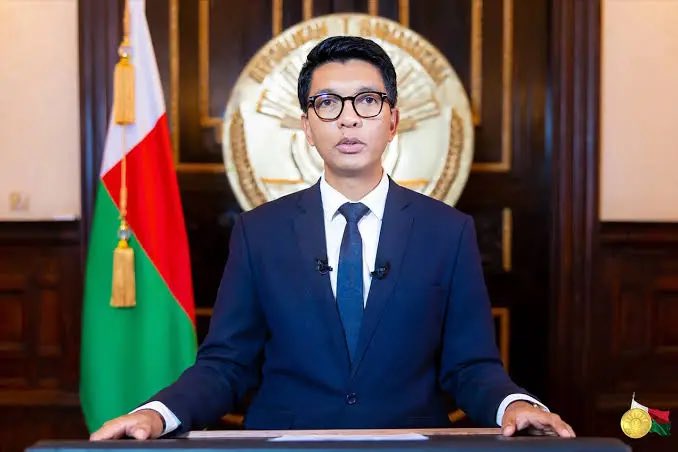 Madagascar's former President Andry Rajoelina has been stripped of his citizenship by the new military regime.
Despite ranking among high-income countries on a per-capita basis, Seychelles has grappled with internal disparities, including social challenges linked to drug abuse, infrastructure pressures and the uneven distribution of economic gains from tourism.
Herminie’s campaign resonated with voters who felt that the country’s visible prosperity masked underlying gaps between everyday realities and political leadership.
Perhaps the most dramatic political disruption of 2025 occurred in Madagascar, where youth-led demonstrations altered the balance of power.
Protests erupted in late September, with large numbers of young people gathering in Antananarivo to protest persistent electricity outages, water shortages and concerns about corruption.
Placards bearing the slogan “We don’t want power, we want lights” captured both literal frustrations over utilities and broader dissatisfaction with governance.
The unrest turned deadly. United Nations estimates placed the death toll between 19 and 22, with many others injured. A key development was the response of elements within the security forces.
CAPSAT, an elite military unit, publicly declared its support for demonstrators.
On October 14, parliament voted to impeach President Andry Rajoelina, and Colonel Michaël Randrianirina, identified as the head of CAPSAT, announced that the military had assumed control.
“We have taken power … this committee … will carry out the work of the presidency,” he said, later indicating that civilians would be involved in a transitional arrangement.
Reports suggested that Rajoelina left Madagascar for France aboard a French military aircraft following his removal, although his precise whereabouts were not officially confirmed.
Subsequently, Prime Minister Herintsalama Rajaonarivelo signed a decree citing laws that resulted in Rajoelina being stripped of Malagasy citizenship.
Rajoelina holds French citizenship, and Malagasy law provides for the loss of citizenship in cases of dual nationality.
Despite the apparent success of the protests, some participants expressed caution. One young activist observed: “We demanded light. We demanded dignity. Now we wonder: did we just light a fire for others to sit in its glow?”
The remark underscored broader concerns that leadership change alone may not guarantee structural reform, particularly when military actors play a central role in transitions.
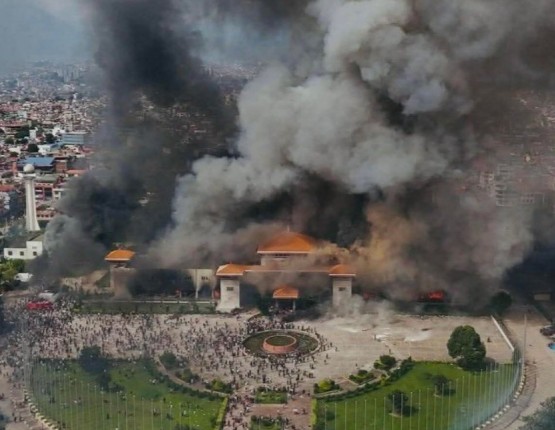 Nepalese parliament on fire on September 9/HANDOUT
In South Asia, Nepal became the scene of intense youth-driven mobilisation.
On September 8 and 9, large-scale protests erupted in Kathmandu following the government’s decision to ban 26 social media platforms — including Facebook, WhatsApp, YouTube and X — citing regulatory concerns.
What began as opposition to digital restrictions quickly expanded into broader demonstrations against corruption, perceived nepotism and elite privilege
Many protesters, identifying as Gen Z, occupied public buildings, damaged property including parliament and residences linked to political figures, and clashed with security personnel. Authorities responded using crowd-control measures.
Reports indicated the use of tear gas, rubber bullets and live ammunition, with at least 19 deaths recorded.
On September 10, Prime Minister KP Sharma Oli announced his resignation, stating that he was stepping down “to facilitate a solution to the problem and to help resolve it politically in accordance with the constitution.”
While celebrations followed his announcement, activists cautioned that deeper systemic issues remained unresolved.
Youth voices featured prominently throughout the demonstrations. Rohan Ansari, a 20-year-old influencer, said: “From now on, the work will be led by the youth. The files of corruption will be exposed.”
The sentiment reflected growing frustration among young Nepalese facing unemployment and limited economic opportunities.
Notably, the developments did not amount to a full institutional collapse. President Ram Chandra Paudel remained in office, and the political change centred on the premiership.
The episode signalled an unwillingness among younger citizens to accept leadership perceived as ineffective or unaccountable.
In Kenya, the influence of youth activism continued to reverberate within government circles.
Two senior officials associated with President William Ruto’s administration exited office following the youth-led protests of June 2024.
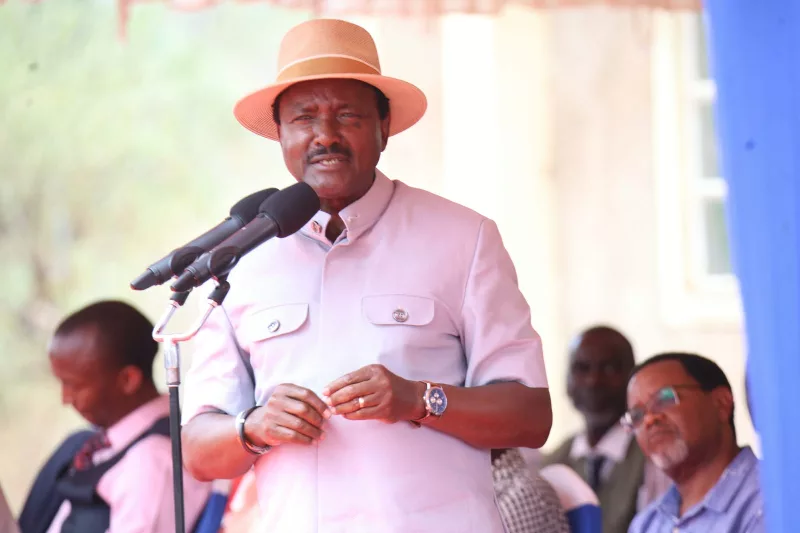
Justin Muturi was removed from his position as Cabinet Secretary for Public Service on March 26 during a broader cabinet reshuffle.
The official explanation cited performance considerations, though Muturi later said he believed his removal was linked to disagreements over financial management.
He further claimed that his son had been detained for several days during the height of the protests and released following presidential intervention.
Muturi also said his security detail was withdrawn and that he was portrayed as opposing the government.
In an interview, he stated: “He is quite a dangerous character. I think Ruto is unfit for the position of President … When I watch him tell members of the Cabinet that he doesn’t want to see corruption in his government, I always wonder — because I know the kind of person he is.”
He additionally said he declined to approve a proposed Sh129 billion airport-related project in Dubai, citing concerns.
Moses Kuria, who served as Senior Economic Adviser, also stepped aside following the Saba Saba protests.
In his resignation remarks, he said the events had “shattered” him.
“Opposition claimed that it was the government behind the looting and violence during the protests, but when I asked the government, they denied it. I did not know who to believe, so I decided to sit on the pedestal where I can be able to see things clearly,” he said.
Kuria said he was returning from an overseas trip at the time and was disturbed by developments unfolding on the streets.
For him, the decision to step aside appeared to reflect a desire for distance from the political tensions rather than a direct policy dispute.
Although the departures did not dominate global headlines, they were seen by observers as indicative of shifting dynamics within the governing coalition.
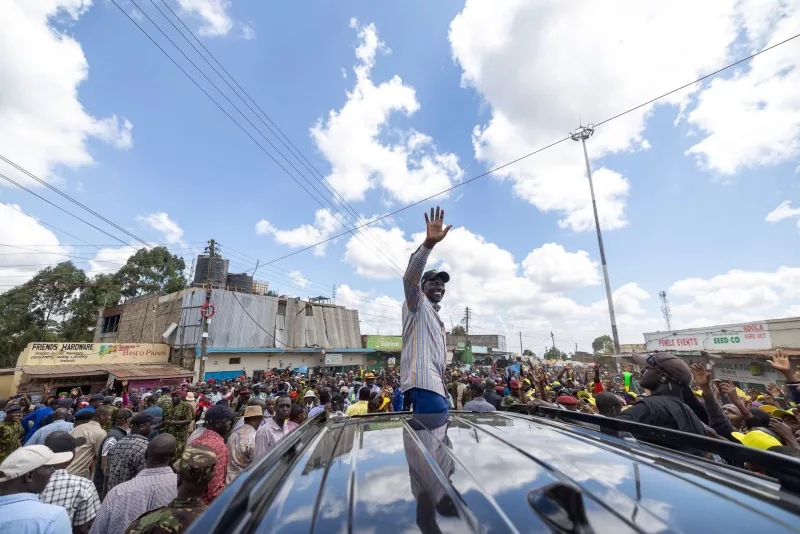
While Kenya’s youth movement did not result in the removal of the presidency, it unsettled established power structures and prompted recalibration within government ranks.
In Europe, political change unfolded largely through institutional processes.
Portugal’s minority government collapsed on March 11 after losing a parliamentary confidence vote.
The outcome followed persistent voter frustration over sluggish economic growth, high borrowing costs and perceived weaknesses in social protection.
Political analysts noted declining tolerance for fragile governing arrangements and increasing demand for effective leadership.
France experienced its own turbulence when the National Assembly rejected the government’s proposed austerity budget on September 8.
The vote triggered the resignation of Prime Minister François Bayrou.
Observers interpreted the rejection as a broader response to economic policies viewed as disconnected from everyday realities.
In the assembly, lawmakers from across ideological lines opposed spending cuts, signalling resistance to austerity measures lacking social cushioning.
In East Asia, Japan witnessed a more gradual political shift.
The ruling Liberal Democratic Party recorded significant losses in July’s upper-house elections, widely interpreted as reflecting public concern over rising living costs, pension reform and intergenerational inequality.
Prime Minister Shigeru Ishiba announced his resignation in early September, acknowledging that the party had lost public confidence.
Opposition parties welcomed the outcome as an opportunity for renewal and enhanced accountability.
Across these diverse contexts, a recurring theme emerged: younger citizens asserting their presence in political life.
Through elections, protests and legislative action, voters conveyed expectations for governance that delivers tangible outcomes.
While leadership changes occurred, the durability of reforms remains uncertain.
In Madagascar, military involvement has raised concerns about future governance arrangements.
In Nepal, the resignation of a prime minister marked a milestone, but longstanding structural challenges persist.
Overall, 2025 stood out as a year in which generational demands reshaped political trajectories.
Across regions, incumbency proved insufficient protection when confronted by a connected and mobilised public insisting on immediate change rather than deferred promises.