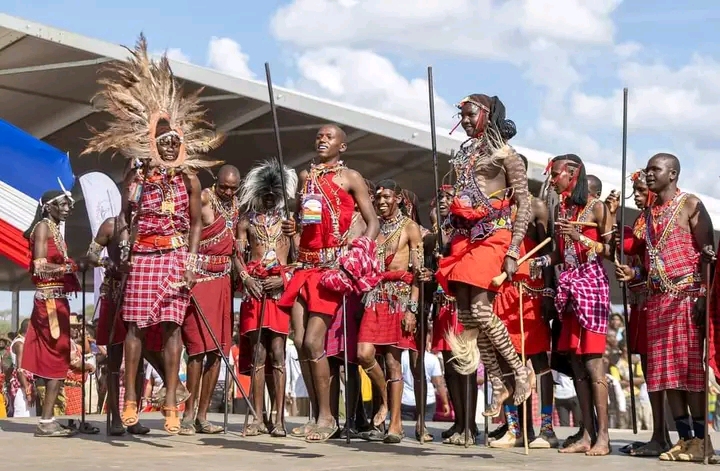
 Maasai dancers entertain people during the Maa Cultural Festival 2025.
Kenya’s cultural calendar in 2025 delivered a vibrant mix of colour, rhythm, and community.
From coastal celebrations to highland gatherings, Kenyans came together to honour heritage and embrace diversity.
It was a year defined by festivals that drew crowds in the tens of thousands, each one offering a space where strangers danced together, families reconnected, and traditions found new life.
The return of several major festivals after years of interruptions created excitement across the country since different communities travelled long distances to take part.
Many events introduced new programmes aimed at young people, while others leaned heavily into traditional music and dance.
By December, the national mood reflected a renewed appetite for cultural expression.
Different organisers spoke of record attendance, local leaders praised the unifying power of shared culture while artists described new opportunities for collaboration.
Vendors across the country said the gatherings kept local economies alive.
The festivals became more than entertainment, becoming a reminder of Kenya’s strength in diversity.
The year began with a burst of energy at the coast.
The Lamu Cultural Festival returned with renewed vigour, drawing Kenyans and international visitors eager to witness Swahili heritage in its most authentic form.
Crowds lined the narrow streets of the old town as traditional dhows cut through the water in the signature sailing competitions.
Drummers, poets, and artisans filled seafront spaces with sound and colour while the residents said the festival restored a sense of pride that had been dampened by years of slowed tourism.
Storytelling sessions were among the most crowded activities as young people listened to narratives passed through generations.
Visitors tasted coastal cuisine and learned about Swahili architecture while for many, the festival highlighted the power of cultural knowledge in shaping community identity.
Local organisers said they wanted the 2025 edition to bring the island’s soul back to life.
From the coast, the excitement travelled inland as the Lake Turkana Cultural Festival marked another year of cross community celebration.
What began years ago as a peace building gathering has grown into one of Kenya’s most important cultural showcases.
The 2025 edition proved its value again with communities from Turkana, Marsabit, Samburu, and beyond travelling to Loiyangalani for three days of dance, food, and cultural exchange.
The festival was themed “Celebrating our diversity, strengthening our unity,” a reflection of Marsabit’s ongoing efforts to promote peaceful coexistence, cultural pride, and community resilience in a region often associated with conflict.
Colourful regalia filled the space as community troupes performed traditional dances.
Visitors often said the festival gave them a rare chance to witness unique customs in a single location and many described the experience as an education in Kenya’s northern cultures.
Local leaders continued to emphasise the larger purpose of the gathering. They repeated the core message set years ago.
Speaking during the preparations of the event, Marsabit Governor Mohamud Ali invited both local and international tourists to Loiyangalani to experience what he described as a unique cultural celebration.
“Fourteen communities will converge in Loiyangalani to showcase their culture and heritage. It will be an event of its kind, both day and night,” Ali said.
His words captured the significance of the event in a region that has faced historical tensions.
The festival’s atmosphere of unity offered hope for continued peace.
Beyond music and dance, craft exhibitions gave artisans a platform to display bead work, leather goods, and traditional ornaments.
Visitors purchased items directly from the creators, giving local households much needed income while traders described the festival as one of the most important economic moments of the year.
The cultural spotlight will then shift to the western region as the Maragoli Cultural Festival makes a return after logistical delays in previous years.
The festival, held annually, has long been one of Kenya’s most anticipated cultural gatherings with youth groups performing traditional Isukuti rhythms that echoe across Vihiga County.
Dancers display fast, pulsating movements that draw large crowds and the sound of isukuti creates a sense of belonging that they rarely feel elsewhere.
Cultural historians attend this festivals to document dances, songs, and oral traditions that risk fading over time.
They worked closely with elders, who guide them through rituals and stories.
The collaboration highlights the growing concern about safeguarding intangible heritage in an era of rapid modernisation.
Farther south, the Maa Cultural Festival brought together communities from Kajiado, Narok, Laikipia, and beyond.
The 2025 edition expanded its programme to include educational forums on land preservation, wildlife conservation, and the future of pastoralism.
Representatives from different Maa speaking communities performed dances that celebrated warrior traditions, marriage customs, and age set transitions.
The festival grounds turned into a sea of red as participants adorned traditional shukas and children watched keenly as elders demonstrated bead work patterns and explained the meaning behind colours.
Visitors at the festival were advantaged to understand the cultural depth of the Maasai community and for many, it was a powerful reminder of the value of preserving indigenous knowledge.
The Turkana to Maa cultural corridor gained new attention in 2025 as more festivals highlighted shared challenges and cross community collaboration.
Analysts noted that cultural exchanges were becoming a soft power tool for regional harmony.
Community groups also used the gatherings to discuss common economic issues, including climate impact on livelihoods and while the discussions were informal, they demonstrated the important role festivals play beyond entertainment.
In Nairobi, the annual Koroga Festival adopted new themes in 2025, blending urban lifestyle with African cultural heritage.
Though known primarily for music, organisers infused the festival with cultural installations that celebrated Kenyan art, fashion, and food.
Designers showcased garments inspired by different communities and chefs offered dishes from across the country.
Visual artists created pieces that explored identity and modern Kenyan storytelling.
The festival attracted a younger audience with many attendees appreciating an event that honoured culture while still embracing contemporary creativity.
Tech companies also used the event to showcase digital tools for preserving heritage.
Virtual reality experiences allowed visitors to explore traditional homesteads and interact with digital recreations of historic artefacts.
Though experimental, the technology hinted at new possibilities for engaging young people in cultural education.
In central Kenya, the Kikuyu Cultural Festival returned with strong attendance.
The festival featured Mugithi performances, traditional craft exhibitions, and heritage storytelling sessions.
Families visited together, emphasising the communal nature of cultural preservation while the organisers used the event to encourage younger generations to learn traditional songs and proverbs.
The Ngemi Cultural Festival on the other hand emerged as one of the most unifying events in Kenya in 2025, drawing thousands from across the country to celebrate heritage, music and community spirit.
Held in Embu County, the festival showcased traditional practices while embracing modern artistic expression, creating a space where Kenyans of all ages and backgrounds connected.
This year’s edition featured vibrant performances, indigenous foods, craft exhibitions and storytelling sessions that highlighted the rich traditions of the Embu people.
However, what stood out most was the festival’s ability to bring different communities together.
Visitors travelled from Nairobi, Mombasa, Kisumu and beyond, turning the event into a national celebration.
Organisers said the goal was to deepen cultural pride while strengthening unity; “We wanted a festival where everyone feels at home. Ngemi is about identity, belonging and shared joy.”
Hotels and markets recorded a surge in activity as families, youth groups and cultural delegations filled the town.
Many attendees described the festival as refreshing in a year marked by political tension and economic pressure.
With its blend of tradition and inclusivity, Ngemi strengthened national cohesion and set a strong example for cultural events across the country.
Organisers noted that Plans are already underway to expand the 2026 edition, with them promising an even bigger celebration of unity.
In the north eastern region, the Somali Cultural Festival in Garissa highlighted poetry, fashion, and traditional cuisine.
The 2025 edition attracted large crowds eager to celebrate Somali heritage within Kenya.
Poets recited verses that reflected themes of identity, unity, and resilience as young designers showcased modern interpretations of Somali attire.
The festival also highlighted the growing interest in preserving indigenous languages.
Linguists held forums discussing the future of Somali, Borana, and other Cushitic languages in Kenya making the participants to agree that cultural festivals provide essential platforms for encouraging language use among younger generations.
In Nakuru County, the Kalenjin Heritage Festival focused on athletic culture and traditional music.
participants demonstrated traditional running rituals and showcased the community’s deep connection to endurance sports.
Choral groups performed songs tied to historic journeys and ceremonies and visitors described the festival as both educational and inspiring.
Elders took the opportunity to speak about discipline, honour, and unity.
Their messages resonated with young people seeking guidance in a modern, fast changing world.
Across Kenya, these festivals collectively painted a picture of a nation rediscovering its cultural heartbeat.
After years of social and economic disruptions, Kenyans used 2025 to reclaim the joy of gathering.
Many events saw more youth participation than ever before, signalling a shift toward generational continuity.
From transport operators to food vendors, many households relied on festival seasons for income while county governments responded by investing more resources into logistics, security, and promotion..
By the end of the year, Kenyans have danced, feasted, sailed, learned, and told stories together.
They celebrated their differences while embracing their shared identity and the festivals reminded the nation that cultural pride is not confined to communities but a national asset.
For many, the gatherings renewed hope and across the country, Kenyans went home with the same feeling.
Culture, in all its colours and rhythms, brought Kenyans together in 2025 and set the tone for the years ahead.