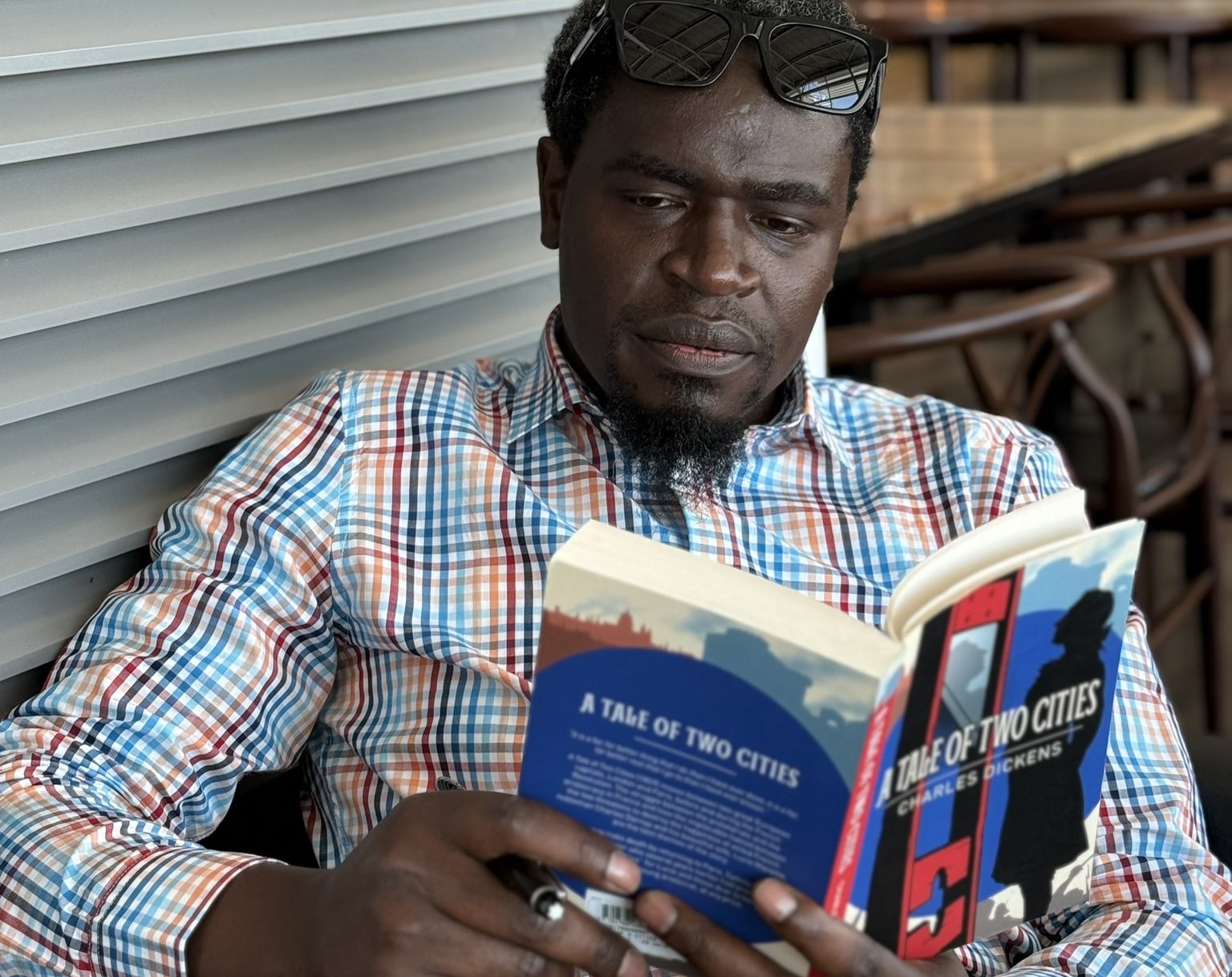
 Senior Counsel Nelson Havi reading 'A tale of two cities'/X
Senior Counsel Nelson Havi has said that ideas drawn from classic books could help inspire change in the country, sparking an online exchange with former Makueni governor Kivutha Kibwana.
Havi made the remarks in a social media post in which he reflected on the value of revisiting old books as a source of new thinking.
He said he had collected several titles and planned to read and write extensively in the coming days, challenging himself to write a chapter of his own book for every chapter he reads.
“To get a new idea, read an old book. I collected some and I purpose to read and write extensively in the coming days: for every chapter I read, I will write a chapter of my book,” Havi stated.
In the same post, Havi added a light-hearted note, referencing a popular online meme, saying those who had found a “perfect macho ya gololi meme” were free to use it.
“I will not bill you,” he joked, in his remark.
Former Makueni governor and constitutional scholar Kivutha Kibwana weighed in on the post, teasing Havi about the book choices while engaging him on the broader idea of learning from past literature.
“Are you re-reading those books, Nelson Havi? A Tale of Two Cities was read at Form 2 those days and Sherlock Holmes was for bedside reading,” Kibwana wrote.
Kibwana went on to suggest that Havi could broaden his literary diet by seeking recommendations from lawyer Miguna Miguna.
“You should ask Miguna Miguna what other diet of books,” he added, before expressing anticipation for Havi’s future writing.
“Waiting to read your Biography. Excellent tasteful shirt. Westlands is waiting,” Kibwana said, ending his comment on a light note.
Responding to Kibwana, Havi clarified that he was indeed revisiting the books, insisting that their relevance had not diminished with time.
“I am re-reading them Mwalimu. The old ideas in them may be what we need to change the country for better,” Havi said.
The exchange quickly attracted attention online, with users weighing in on the role of literature in shaping political and social thought.
Some echoed Havi’s view that classic works often address enduring issues such as leadership, justice, inequality and governance, while others sided with Kibwana’s suggestion that contemporary challenges may require newer perspectives.
User Speech the Brand pushed back against Kibwana’s reference to reading A Tale of Two Cities in Form Two, arguing that exposure to classic books varies widely.
“What do you mean Form Two? I first encountered A Tale of Two Cities when I was 23 years of age. It seems you people were avid readers since your early school days,” highlighting differences in educational and reading backgrounds.
Others used the moment to share their favorite literary works.
Wilson Ugangu cited Alexander Dumas’ The Count of Monte Cristo alongside Charles Dickens’ Great Expectations as books he would gladly return to at any time.
Another user, Johna Kinsman, jokingly remarked on Kibwana’s comment about Havi’s shirt before adding that 'The Count of Monte Cristo' stood out as the only book worth reading purely for entertainment.
Several contributors echoed this enthusiasm.
Annabel Njoki described The Count of Monte Cristo as “an absolute gem,” wishing Havi happy holidays in a light-hearted message.
Jimmy, another user, reflected on his recent reading of 'The Adventures of Sherlock Holmes, A Tale of Two Cities, and Far from the Madding Crowd,' saying classic books offered “phenomenal ideas on writing” that he found lacking in many modern titles.
Overall, the responses underscored a shared appreciation for classic literature, with many users agreeing that older works continue to offer lasting insights into storytelling, ideas and human experience.