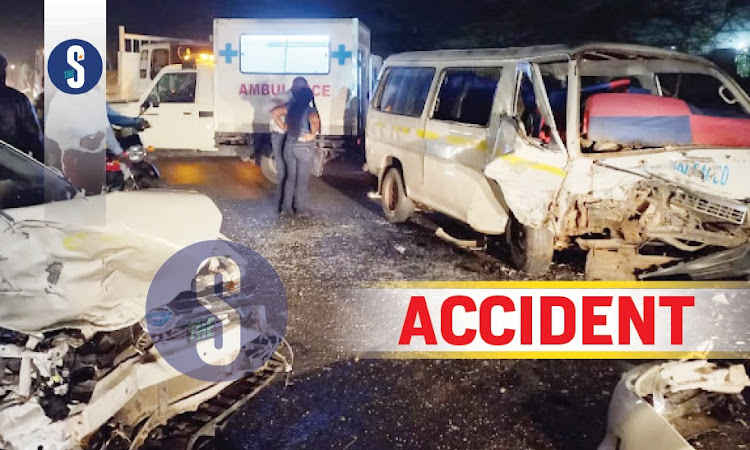
Motorists have been urged to avoid the practice of free wheeling while driving, with the National Transport and Safety Authority (NTSA), warning that it significantly increases the risk of accidents.
Free wheeling, a technique where a driver puts the vehicle in neutral or disengages the clutch to let the car coast without engine power, has long been touted by some drivers as a way to save fuel.
However, road safety authorities stress that the practice is hazardous and compromises control of the vehicle.
“Free wheeling is a dangerous driving practice. Stay in gear for your safety and that of others,” NTSA said.
According the authority, free wheeling leads to the loss of engine braking, a critical mechanism that helps slow down a vehicle without relying solely on the brakes.
In normal driving, engine braking provides additional stopping power, especially on steep descents, reducing the wear and tear on brake components.
When a car is in neutral or coasting, drivers lose this vital support, increasing the likelihood of brake failure or overheating during prolonged braking.
Another major risk associated with free wheeling is reduced control and stability
NTSA note that a vehicle in gear maintains a more predictable response to steering inputs and road conditions.
Coasting in neutral limits the driver’s ability to respond effectively to sudden obstacles, slippery surfaces, or curves.
This is particularly dangerous for heavy vehicles, motorcycles, or cars carrying passengers, where stability is crucial for safe handling.
Additionally, free wheeling can delay reaction times in emergencies.
Being in gear allows a driver to accelerate quickly if needed, such as to avoid a collision or merge safely into traffic.
Free wheeling reduces this immediate response capability, leaving drivers with fewer options to avoid accidents.
Emergency maneuvers, such as sudden lane changes or rapid acceleration to avoid hazards, are compromised when the engine is disengaged.
Road safety authorities in Kenya and globally have issued guidance recommending that drivers remain in gear at all times while driving.
Staying in gear ensures the engine is engaged, providing both braking support and optimal control over the vehicle.
NTSA emphasised that practices like free wheeling are not only unsafe but also illegal in some jurisdictions due to their potential to cause accidents.
Driving instructors further advise that maintaining proper gear usage is a key aspect of defensive driving.
By keeping the car in gear, drivers maintain better speed control, can respond more quickly to road hazards, and minimize the risk of losing control on steep slopes or during sudden maneuvers.
Experts stress that the misconception that free wheeling saves fuel is outdated.
Modern vehicles are designed with fuel-efficient technologies that optimize consumption without compromising safety.
The risks of free wheeling, loss of engine braking, reduced stability, and delayed emergency response, far outweigh any minor fuel-saving benefits.
NTSA has emphasised that responsible driving practices save lives and prevent accidents, not only for the driver but also for passengers, pedestrians, and other road users.
Staying in gear is a simple but crucial step in ensuring safer roads for everyone.