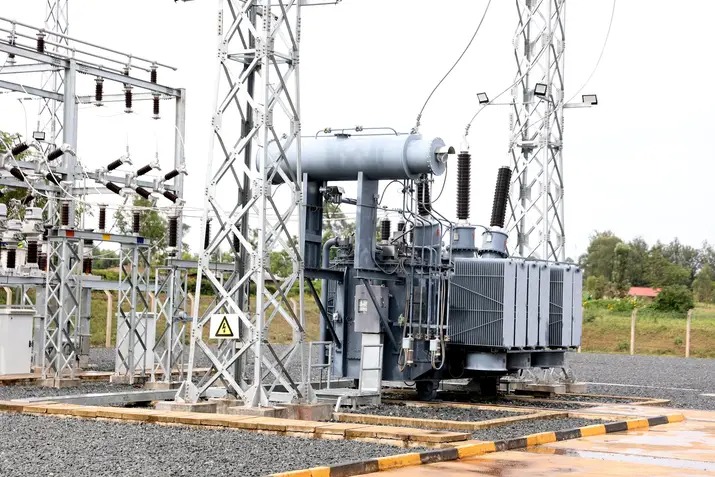
 Power grid/KETRACO FB
The Kenya Electricity Transmission Company Limited (KETRACO) has moved to court to challenge garnishee orders freezing 17 of its bank accounts, warning that enforcement of a multibillion-shilling claim could disrupt critical electricity transmission projects and affect the stability of the national power grid.
The State-owned utility is contesting orders issued following a High Court ruling delivered on December 11, 2025, by Justice Peter Mulwa.
The orders allowed enforcement proceedings in favour of Instalaciones Inabensa S.A., a Spanish contractor linked to the construction of power transmission infrastructure.
Garnishee orders are court-issued directives that allow a decree-holder to recover money owed by attaching funds held by a third party, often banks, on behalf of a judgment debtor.
Once issued, the orders require the banks to freeze and hold the specified sums pending further directions of the court.
In the ruling, Justice Mulwa issued a garnishee order nisi directing the banks to hold all funds standing to the credit of KETRACO in the 17 accounts listed in an amended notice of motion dated March 25, 2024.
"A garnishee order Nisi is hereby issued against the banks, commanding them to hold all funds held to the credit of the judgement Debtor, Ketraco, in the 17 counts specified in the ammended notice of motion dated March 25, 2024, up the aggregate value of Sh195,311,623.18, plus any interest accruing thereon, and not to part with the same pending further orders of this court," he had ruled.
The court noted that garnishee proceedings are governed by Order 23 of the Civil Procedure Rules and require proof of three elements: the existence of a valid and unsatisfied decree, the presence of a third party indebted to the judgment debtor, and an attachable debt.
Justice Mulwa held that the evidence before the court met all the statutory conditions.
“It is incontrovertible that a decree of this court exists and remains wholly unsatisfied,” the judge ruled.
KETRACO has since filed an appeal at the Court of Appeal challenging the decision, while simultaneously seeking a stay of execution before the High Court pending the outcome of the appeal.
Through its advocates, Dennis Ben Mosota and Emmanuel Mumia, the company argues that the garnishee orders are excessive and disproportionate, particularly given its status as a State corporation tasked with managing nationally critical transmission infrastructure.
The utility firm contends that freezing multiple operational accounts in a single sweep risks paralysing its ability to meet contractual obligations, pay staff, and continue ongoing national grid projects.
“If this order is not urgently stayed, the garnishees will be compelled to release the attached funds to the Decree-Holder. This will abruptly halt operations with the potential of plunging the whole country into an electricity blackout for want of electricity transmission with devastating and irreversible ramifications to critical infrastructure and national security,” the court documents state.
They add that execution proceedings should be exercised with restraint where public utilities are involved, so as not to undermine the public interest.
The dispute now places before the Court of Appeal a significant question on how far commercial enforcement can go when it collides with the operations of a national transmission utility that underpins the country’s energy system.