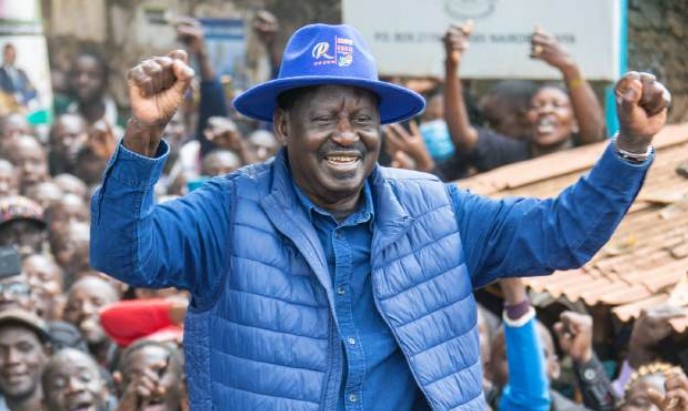
Arguments have been made on the fallen Kenyan political maestro Raila Odinga as a leader whose political imprints into the sands of our time are at best enigmatic.
Yes, it is arguably and factually true that the former Prime Minister is a politician of many exceptional firsts in Kenya. In 1994 he resigned as MP on Ford-Kenya ticket to seek reelection on NDP ticket.
So far, the first and the only time a political leader made such a bold step in Kenya’s history. A lot of times, many political leaders have made bold declarations on podiums but not in act.
Raila took a bold step to enliven his convictions when in the by-elections of 1996 for Lang’ata parliamentary seat; he won the seat back on a different ticket.
Political boldness may not necessarily be expressed through resignations from political seats and contesting by-elections but one lesson any politician would draw from Raila’s feat is boldness of decisions and convictions in pursuit of common good for all Kenyans.
Kenyan leaders from all walks should embrace boldness in decision making on matters that are at the core of our governance.
Our collective foray into the future shall surely not be with the former ODM leader in person but we should carry valour in our hearts even as we collectively deal with our present socioeconomic and political challenges.
In Article 27 of the Constitution, the Supreme Law of the land proclaims equity and non-discrimination in all spheres of our national life.
There is so much progress Kenya has made, notably through devolution to bring governance and government services closer areas that were previously underserved. Raila was an ardent champion of devolution to the point of his passing on.
As the country witnesses this historical moment, mourning and celebrating the life of the departed political titan, leaders must be ready to bear the torch of devolution and even make it better to serve and even bring greater equity and inclusion of Kenyans from all walks.
Raila’s major political decisions were characterised by sobriety, reconciliation and forgiveness more so during Kenya’s most difficult periods when the country threatened to go asunder under the weight of fragile political cleavages.
The year 2007 when the aftermath of contested general election almost irredeemably tore into the Kenyan socioeconomic and political fabric, Raila, unlike what many political leaders of his stature would do, accepted to work with President Mwaki Kibaki in a coalition arrangement which restored sanity into the Kenyan polity.
Perhaps many Kenyans would remember the vividness with which the he supported universal education for all Kenyan children. He believed in education as a great equaliser in the society.
In a virtual public lecture at the University of Nairobi in 2021, Raila underscored his strong belief in education that prepares the youth for the fast-evolving workspace.
This futuristic thinking in skilling of our youth should underlie any current and future reforms in the education sector. There has not been any other time in our recent history that technological evolution is foreshadowing fundamental changes in the workspace.
The World Economic Forum’s report ‘Future of Jobs’ January 2025, projects that an estimated 39 per cent of existing skill sets will be transformed or become outdated between 2025 and 2030.
This anticipated ‘skill instability’ is not all doom and gloom as skill upgrade through training, retraining, reskilling and/or upskilling could help Kenyan youth seize opportunities presented in the evolving work landscape.
With these projected monumental changes in the workplace, our leaders must carry Raila’s futuristic vision even as the country fast-tracks educational reforms to prepare our youth for present and future workplace.
Thinking grand and being strategic was quite outstanding in the former premier’s manifestos for Kenya in some of the recent electioneering campaigns and even in the recent campaigns for African Union chairperson in 2025. Raila in life expressed grand goals for Kenya, which leaders would need to embrace and synergise efforts to achieve.
For instance, in January this year in Tanzania, the former ODM leader underscored his desire to see Africa sufficiently lit up with clean and reliable energy.
Kenya’s rural communities still suffer a disproportionate inadequate access to electricity and thus a majority relies on unsustainable sources of energy, including traditional biomass, according to Ministry of Energy and Petroleum’s plan ‘Kenya National Energy Compact 2025-2030.’
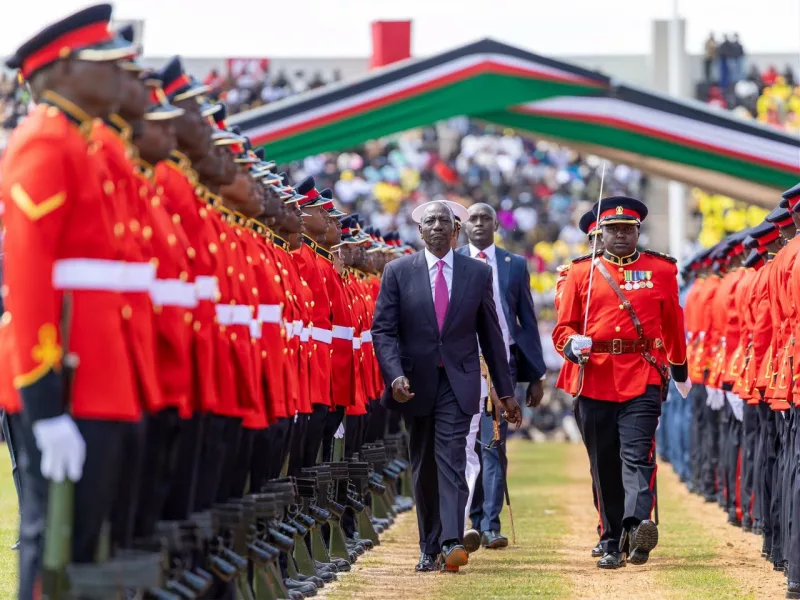
Kenya under President William Ruto is making strides towards universal energy access. In his remarks at Raila’s funeral, Ruto committed to ensure that Kenya realises energy sufficiency. The immense importance of energy sufficiency for Kenya’s cannot be gainsaid and our political leaders need to keep vision alive.
Lastly, it is a great privilege to have shared out living memory with the veteran political leader. In him we Kenyans of all walks of life have learnt of the essence of reliance even in the darkest of hours.
We may be grappling with many issues today, but with resilience we are able to overcome even the severest of torments. We must live to cherish the memories of Raila and build a better society for current and future generation.
The writer is a security expert and political commentator in Nairobi