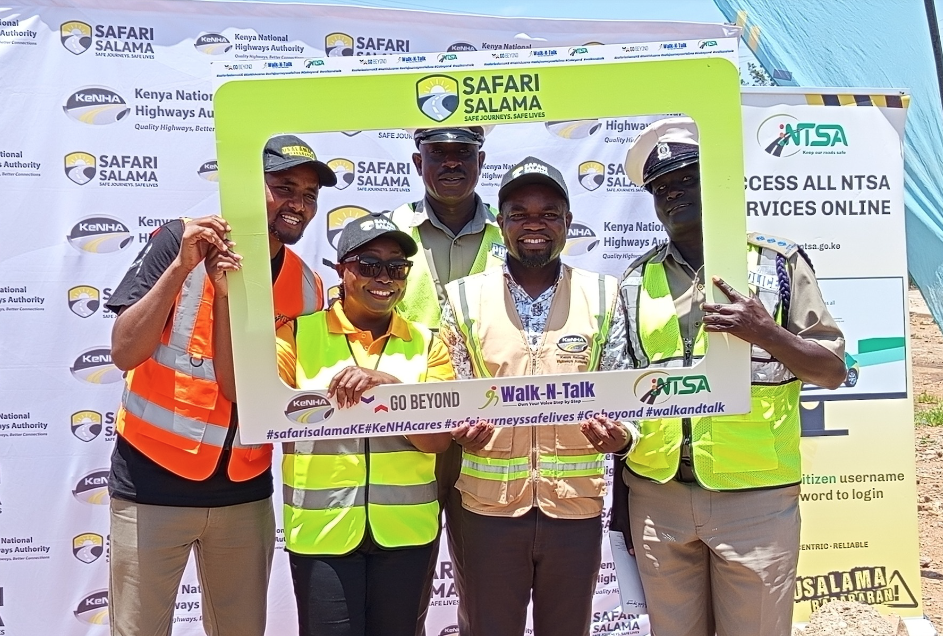
In response to Kenya’s alarming road safety statistics, the Kenya National Highways Authority (KeNHA) has launched a nationwide campaign dubbed “Safari Salama”.
The initiative seeks not only to curb the high number of road accidents across the country but also to promote mental health awareness among all categories of road users — from motorists to pedestrians, cyclists, and public transport operators.
The campaign, announced by KeNHA’s Regional Director Julius Mak’Oderoh, emphasises a dual-pronged approach; improving road safety through infrastructure and engineering, and addressing the behavioural and mental health challenges that impact road use.
“This initiative is part of our commitment to ensuring safe journeys and saving lives. Road safety goes beyond infrastructure; it involves addressing behavioural challenges and mental health issues that affect road users,” said Mak’Oderoh.
While KeNHA is known for its role in constructing and maintaining the country’s network of Class A, B, and C roads — which form the backbone of Kenya’s transport infrastructure — the agency is now widening its lens to look at the human side of road safety.
In line with this, KeNHA is conducting road safety audits, mapping conflict zones, and identifying danger spots that pose particular risks to users.
These areas will benefit from enhanced safety interventions, including the addition of Non-Motorised Traffic (NMT) infrastructure such as pedestrian walkways, service lanes, footpaths, and safe crossing zones for cyclists and pedestrians.
Mak’Oderoh also stressed the importance of inter-agency collaboration in achieving the goals of Safari Salama.
Key stakeholders include the National Transport and Safety Authority (NTSA), the Kenya Red Cross, the National Police Service, and critically, the boda boda community, which remains among the most vulnerable and impacted sectors in Kenya’s transport ecosystem.
“We cannot do this alone. Collaboration among all sectors and institutions is key to enhancing the safety of all road users,” he noted.
One of the unique aspects of the Safari Salama campaign is its emphasis on mental health as a critical road safety factor.
In a country where traffic accidents claim thousands of lives annually and injure tens of thousands more, KeNHA’s initiative marks a paradigm shift in public safety discourse.
Daily commuting, long-distance driving, and operating motorcycles in busy towns are stressful activities.
Fatigue, anxiety, depression, and emotional distress are silent yet potent contributors to poor decision-making, slow reaction times, and even aggressive or reckless behaviour behind the wheel.
Promoting mental wellness among drivers and road users is expected to reduce road crashes, foster empathy and patience on the roads, and encourage help-seeking behaviours when one is overwhelmed.
Beyond individuals, transport sector employers also have a crucial role to play.
They can promote mental health through fair work schedules, stress reduction programs, and access to professional counselling — factors that contribute significantly to the overall safety culture on Kenyan roads.
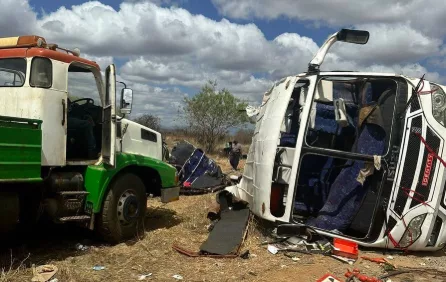
The launch of Safari Salama comes at a time when Kenya continues to grapple with a devastating road safety crisis.
According to NTSA statistics, more than 4,000 people died in road crashes in 2024, a slight improvement from the 5,000 deaths recorded in 2023. Yet, despite this marginal decrease, the problem remains deeply rooted and costly.
The economic burden is staggering. Analysts at the Ministry of Transport estimate that crash-related losses amount to Sh450 billion annually — nearly three per cent of Kenya’s GDP. These losses include hospital bills, lost productivity, emergency responses, and long-term care for those with disabilities.
A preliminary NTSA report for the period between June 2024 and March 2025 painted an even more worrying picture: 3,581 road fatalities, marking a 10 per cent increase compared to the previous year. The same period saw 8,874 serious injuries and 5,620 slight injuries.
An analysis of victims shows that pedestrians remain the most affected, accounting for 1,342 of the deaths, followed by 939 motorcyclists, 604 passengers, 357 pillion riders, 285 drivers, and 54 cyclists.
Further data from January to March 2025 reflects a small but positive trend: road fatalities dropped to 1,139, a 2.5 per cent decrease from the 1,168 deaths recorded in the same period of 2024. Serious injuries also declined by 14.6 per cent, showing that targeted interventions may be starting to yield results.
Still, vulnerable groups remain at the highest risk. Pedestrians, pillion passengers, cyclists, and boda boda operators together made up 76.1 per cent of all traffic deaths in 2025. Among them, pedestrians alone constituted 36.9 per cent of the fatalities.
The high number of crash victims is also placing immense pressure on the public healthcare system. According to a Ministry of Health brief, road injuries cost the ministry Sh46.1 billion annually, with up to 30 per cent of trauma beds in hospitals occupied by road crash victims.
By incorporating mental health education into driver training, workplace policies, and public campaigns, the initiative aims to foster a culture of care, responsibility, and resilience.
The rollout of Safari Salama across Kenya will involve extensive outreach, training, and collaboration with community groups, traffic police, and civil society.
KeNHA envisions a future where road safety is not only about better roads but also about better people — mentally, emotionally, and socially equipped to make the roads safer for all.