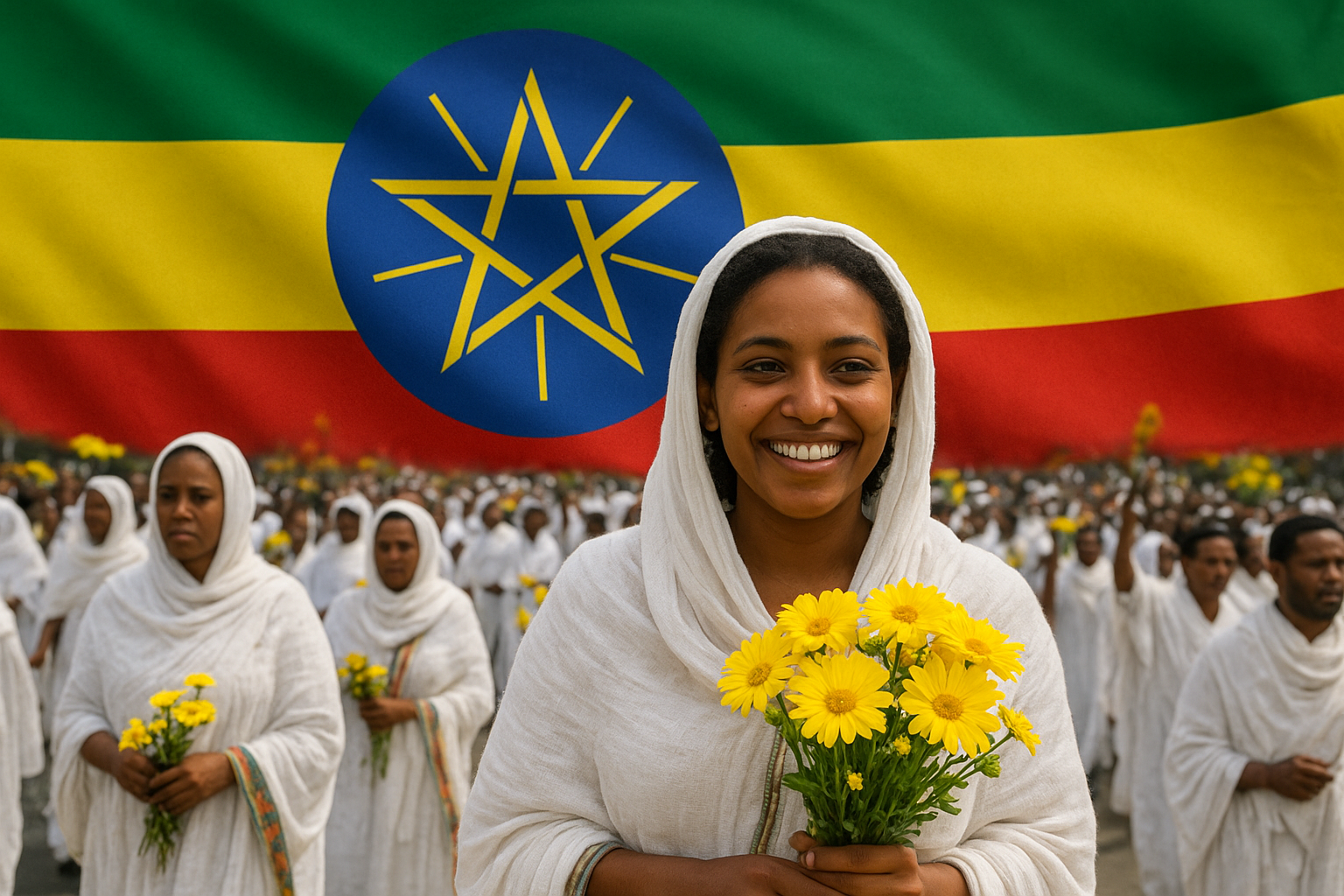
Ethiopia is celebrating the New Year 2018 today, September 11.
Ethiopian New Year, known as Enkutatash, is celebrated annually on September 11, except in leap years when it falls on September 12.
The holiday marks the end of the rainy season in Ethiopia, a country renowned for its rich history and culture.
While the international calendar reads 2025, Ethiopians filled streets, churches, and homes with music, prayer, and family gatherings to mark the turning of the year.
The difference lies in Ethiopia’s unique calendar system.
The Ethiopian calendar is based on the ancient Coptic calendar, and the New Year symbolises a time of renewal and rebirth, coinciding with the blooming of various flowers.
The Ethiopian calendar has 13 months — 12 months of 30 days each and a smaller 13th month, Pagumē, with five or six days in leap years
Ethiopia also counts the years differently. Its calendar is based on a calculation of the Annunciation of Jesus that is seven to eight years later than the calculation used by the Catholic Church in Europe. As a result, Ethiopians mark the passage of time on a different rhythm.
Traditionally, young children participate by gathering flowers and visiting neighborhoods to receive treats like roasted grain in exchange.
In 2018, the celebrations gained additional importance as they marked the reopening of borders between Ethiopia and Eritrea, following a historic peace agreement.
Overall, the Ethiopian New Year reflects both a deep-rooted cultural tradition and a moment of hope and renewal for many.
Although the calendar difference often surprises visitors, Ethiopians view it as a source of cultural pride.
The country has never abandoned its ancient system, even after the Gregorian calendar was introduced in 1582 by Pope Gregory XIII. Ethiopia instead continued to follow the older Julian model, which it still aligns with today.
While smartphones and global media keep Ethiopians aware of the Gregorian date, the local calendar remains dominant in daily life.
School years, official documents, and even airline tickets within the country use the Ethiopian system.