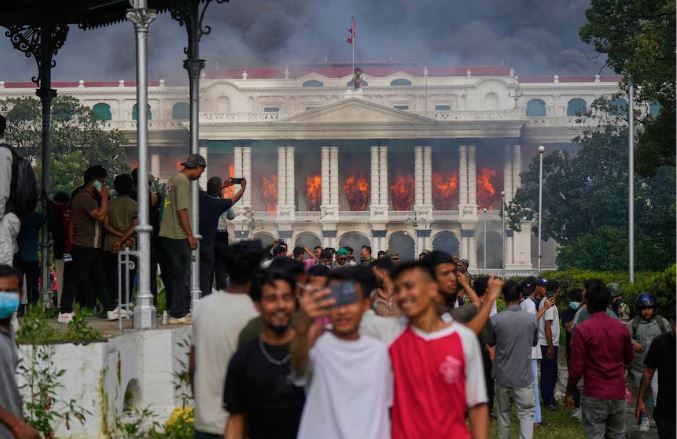
 The Singha Durbar, the seat of Nepal's government's various ministries and offices, was set on fire during a protest over a social media crackdown and corruption./SCREENGRAB
Nepal has been rocked by a youth-led uprising that began as a reaction to a government social media ban but quickly swelled into a wider movement against corruption, nepotism, and lack of opportunities.
The “Gen Z protests,” led largely by young Nepalis, have left at least 19 people dead, hundreds injured, and forced the resignation of Prime Minister K.P. Sharma Oli.
FROM SOCIAL MEDIA BAN TO STREETS ON FIRE
The immediate spark was a September 4 order blocking 26 social media platforms, including Facebook, WhatsApp, Instagram, YouTube, X, LinkedIn, and Reddit.
Only TikTok and Viber were spared after agreeing to register locally. Authorities defended the move as an effort to fight misinformation and cybercrime, but critics described it as outright censorship.
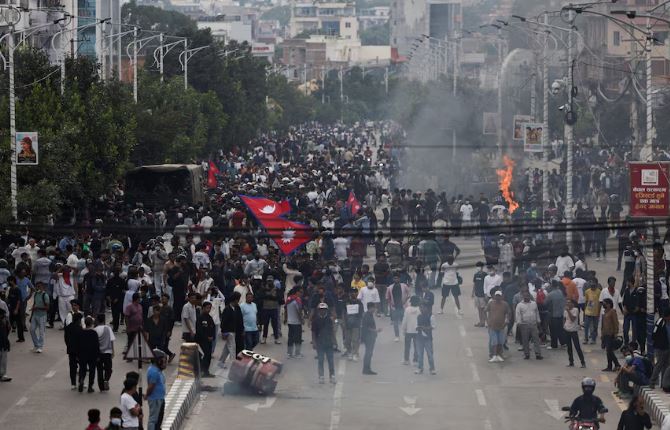 Demonstrators gather near the parliament on Monday./SCREENGRAB
In Kathmandu and other major cities—Itahari, Biratnagar, Bharatpur, and Pokhara—thousands marched, chanting slogans and demanding accountability.
Demonstrators stormed the Parliament compound and set fire to parts of the Singha Durbar government complex. Police and security forces fired tear gas, rubber bullets, and live ammunition to disperse crowds.
The violence left at least 19 people dead and hundreds more wounded.
“What started as celebrations quickly turned into violence,” reported ABC correspondent Meghna Bali.
ANGER OVER CORRUPTION AND “NEPO KIDS”
Protesters said the ban symbolised broader frustrations that had been building for years.
Social media had recently amplified anger over the lavish lifestyles of politicians’ children, popularly called “nepo kids.”
Viral posts contrasted their wealth with the country’s economic struggles, including a per capita income of just US $1,400.
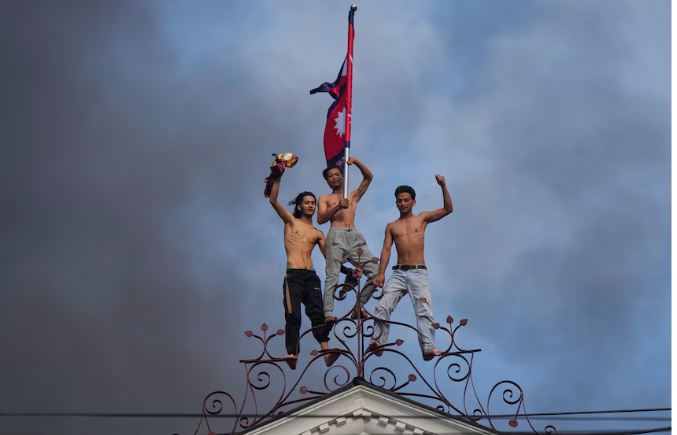 Protesters say the current government is corrupt./SCREENGRAB
Analysts say the protests mark a generational shift, with younger Nepalis demanding transparency, fairness, and recognition in a political system long dominated by elites.
POLITICAL FALLOUT AND MILITARY INTERVENTION
The crisis triggered major political resignations. Prime Minister Oli stepped down on September 9 under growing pressure.
Home Affairs Minister Ramesh Lekhak also resigned, citing moral accountability after security forces were accused of excessive violence.
For the first time in years, the Nepali army was deployed to restore order. Soldiers patrolled Kathmandu, enforced curfews, and evacuated ministers from their homes under threat from angry crowds.
Helicopters hovered over the capital as authorities tried to reassert control.
Flights in and out of Kathmandu were briefly suspended, and schools and businesses remained shuttered as tensions flared.
Despite the government’s reversal of the social media ban, protests have continued, underscoring the scale of discontent.
Demonstrators insist their demands go far beyond internet access—they want a break with corruption, nepotism, and economic stagnation.
The events have underscored the power of a digitally connected generation, showing that while platforms can be switched off, public anger cannot.
For many young Nepalis, this moment is not just about resistingcensorship but about reclaiming their future.