City lawyer Mathew Kyalo Mbobu./FILE
Kenyans are reeling from the shocking murder of prominent lawyer Mathew Kyalo Mbobu, who was gunned down in Karen, Nairobi, on the evening of September 9, 2025.
Police said gunmen shattered his car’s windshield before shooting him at least three times in the chin. The assailants, who were riding on a motorcycle, sped off after the attack.
The incident happened around 5:30 pm while Mbobu was caught in traffic. Witnesses and police confirmed the shooting but said the motive remains unclear.
Mbobu’s death has left a huge gap in Kenya’s legal and governance circles.
Who was Lawyer Mathew Kyalo Mbobu?
His career spanned nearly three decades, during which he served as an advocate, academic, and governance leader.
He previously chaired the Political Parties Dispute Tribunal (PPDT), where he presided over high-stakes nomination disputes and intra-party wrangles.
The tribunal, established under the Political Parties Act of 2011, plays a critical role in resolving disputes arising from party primaries, coalition agreements, and internal contests.
He was active in the 2017 elections at the PPDT.
As chair, Mbobu earned respect for steering the tribunal through tense election seasons, offering aggrieved aspirants a fair legal avenue to challenge contested nominations.
His leadership was widely credited with strengthening the tribunal’s credibility as a pillar of Kenya’s democratic process.
Beyond his tribunal work, Mbobu was a Senior Partner at Kyalo & Associates Advocates, a firm specialising in commercial litigation, arbitration, and corporate law.
He also left a lasting imprint in academia. He lectured at the University of Nairobi School of Law, the Kenya School of Law training hundreds of students in law, governance, and dispute resolution.
Mbobu’s expertise extended into corporate governance. He served as a Board Member of the Institute of Directors Kenya and chaired Quest Holdings Limited and Core Capital Group Limited.
He was also a celebrated author. His book, The Law and Practice of Evidence in Kenya, first published in 2011 and updated in 2016, remains a cornerstone text in the study and practice of evidence law.
The 411-page volume covers key principles such as admissibility, burden of proof, witness testimony, confessions, and documentary evidence.
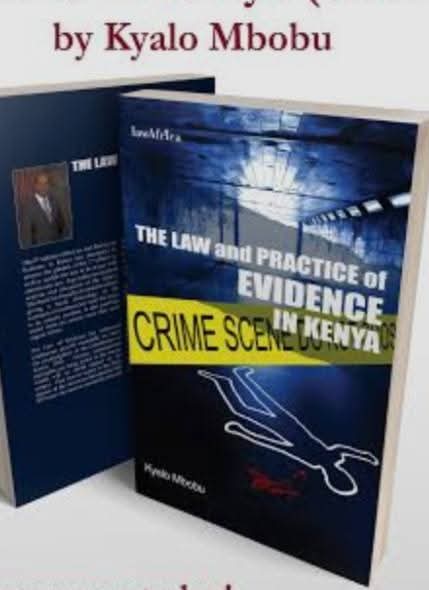
The book, widely used in law schools, simplified complex legal concepts and became an essential reference for advocates, judges, and students alike.
Legal scholars have hailed it as one of the most comprehensive and accessible works on evidence law in Kenya.
Through his practice, teaching, and writing, Mbobu cemented his place as a thought leader in Kenya’s legal fraternity.
His sudden death marks not only a personal tragedy for his family and colleagues but also a loss for the wider legal and governance community.
Police have launched investigations and promised to pursue the killer