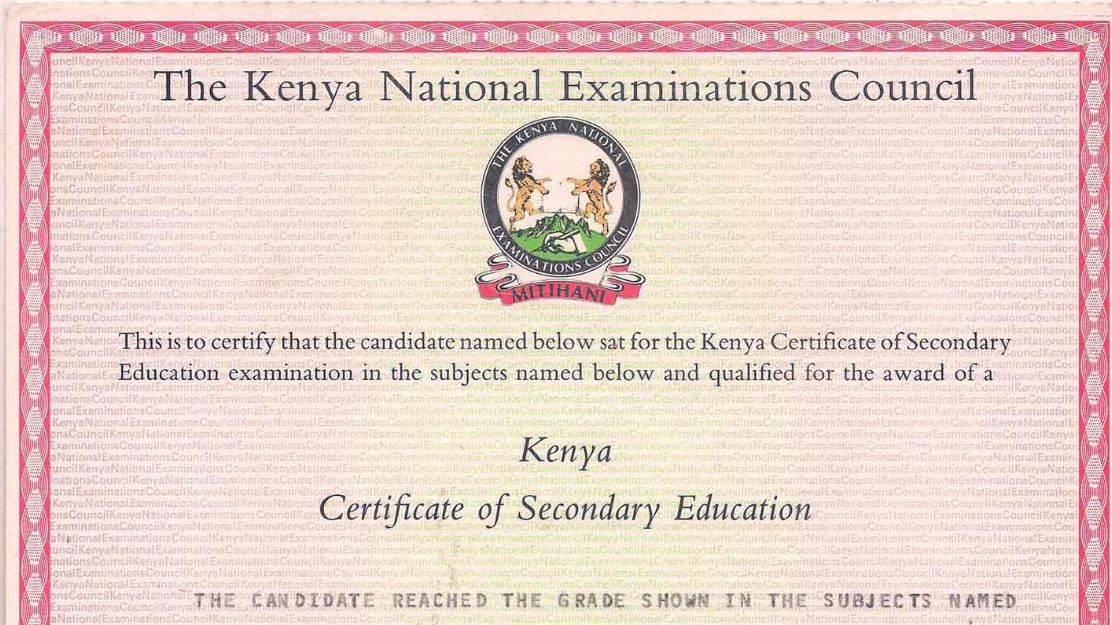
For decades, replacing a lost or damaged Kenya Certificate of Primary Education (KCPE) or Kenya Certificate of Secondary Education (KCSE) certificate was a frustrating and complex process for many Kenyans.
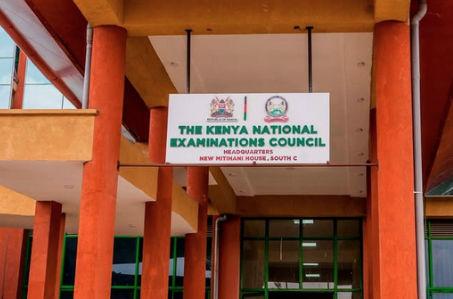
These essential documents, issued by the Kenya National Examinations Council (KNEC), serve as proof of educational achievement and are often required for job applications, enrollment in higher education institutions, and even travel or visa processing.
The loss or destruction of these certificates could derail career plans, delay admissions, or result in missed opportunities altogether.
In the past, individuals who misplaced or damaged their KCPE or KCSE certificates were not eligible for a replacement.
Instead, they had to settle for a statement of results, which, although officially recognised by KNEC, often carried less weight in the eyes of some employers and institutions.
This limited solution became a source of anxiety and inconvenience for many.
The manual application process for such statements was equally burdensome—requiring physical visits to KNEC offices, long queues, and extended waiting periods that could stretch into months.
Applicants were required to submit several documents including a police abstract, a sworn affidavit, and a letter from the school they attended—many of which involved separate trips to different government offices.
Even then, the possibility of rejection due to missing or mismatched information was high.
The inefficiency and lack of transparency in the process bred frustration, with some Kenyans suspecting corruption or favoritism influencing who got help more quickly.
These challenges had real-life consequences. Academic certificates are often prerequisites for employment or further education.
A missing certificate could mean losing a job opportunity, being denied admission to a college, or failing to qualify for a scholarship.
The KCSE certificate, in particular, is required for entrance to tertiary institutions in Kenya such as universities and colleges.
With so much depending on a single document, the inability to replace it created a major obstacle in many people’s lives.
However, KNEC has made strides to modernise and simplify this crucial process.
In a bid to improve service delivery and eliminate the need for physical visits, the Council unveiled the Query Management Information System (QMIS)—an online portal that allows applicants to apply for certificate replacements from anywhere in the country.
“Do not get stuck on issues with your lost certificate. Our Query Management Information System (QMIS) portal provides a convenient way to go about it,” KNEC stated when launching the system.
The QMIS platform has automated the entire certificate replacement process, ensuring transparency and speed, and eliminating the need for endless visits to KNEC offices.
To apply for a replacement certificate, applicants must now register an account on the QMIS portal at https://qmis.knec.ac.ke
Creating an account requires basic personal details such as full name, phone number, email address, and postal address.
Once registered, applicants can log in, fill out the lost certificate application form, and upload the required documents.
The required documents for a replacement include: A copy of the lost certificate or result slip, a legal affidavit from an advocate of the High Court of Kenya, a confirmation letter from the Registrar of Persons verifying the applicant's identity, an original police abstract reporting the loss or damage, photocopies of identification documents (ID, passport, or birth certificate depending on age) and a recent colored passport-size photo.
If names have changed, legal documents such as a marriage certificate or gazette notice must be provided.
Once the application is submitted, the system generates a unique Paybill number and account number, sent via SMS, for the applicant to make payment through M-Pesa.
The fee for replacing a certificate is Sh5,220, inclusive of VAT. After successful payment, KNEC begins processing the application, with a turnaround time of approximately 15 working days.
If an application is rejected—usually due to mismatched or incomplete information—applicants are allowed to correct the errors and reapply.
They must first delete the old application and upload the correct documents before resubmitting.
KNEC emphasises that the names and exam details entered in the application must match exactly with those on the original certificate.
Once the replacement certificate is ready, KNEC notifies the applicant through the contact details provided during registration. Collection is done in person at KNEC offices.
Adults must present valid national identification, while minors must be accompanied by a parent or legal guardian who must provide their ID and the child’s birth certificate.
Failure to collect the certificate within two years of issuance will result in it being disposed of, and no refund will be given.
KNEC issues certificates not only for KCPE and KCSE, but also for post-secondary qualifications such as Technical and Vocational Education and Training (TVET), Business, and Teacher Training College (TTC) exams.
The same QMIS portal is used for certificate replacement across all categories.
This shift to a digital platform has greatly improved service delivery and user experience.
What was once a stressful and confusing process is now more accessible, faster, and user-friendly.
While challenges such as Internet access and digital literacy still affect some applicants, KNEC’s move to automate the replacement process has been seen as a significant step toward efficiency and accountability in public service.