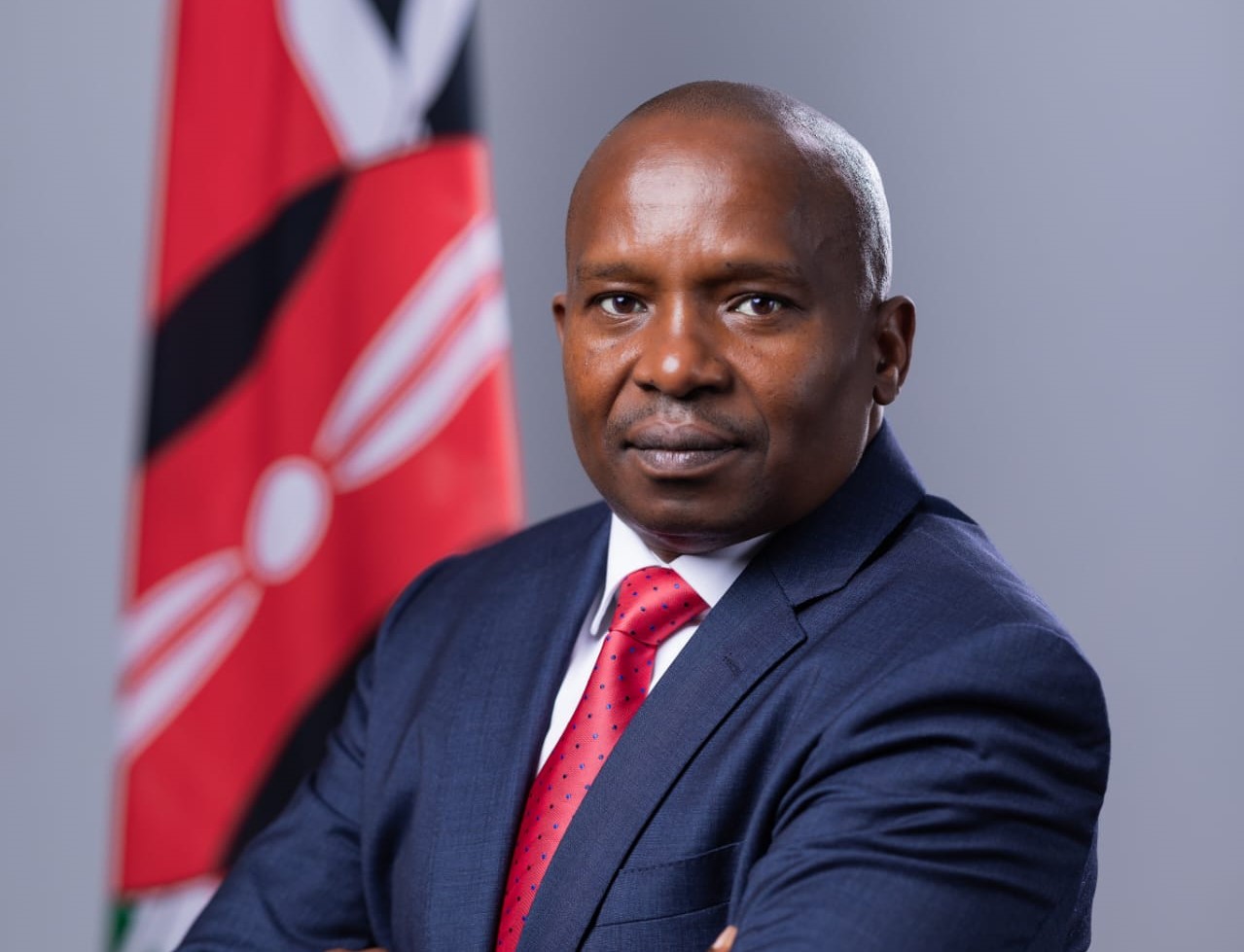
 Deputy President Kithure Kindiki
In Kenya’s ever-noisy political theatre, where soundbites often matter more than substance, one man has steadily defied the script – Prof Kithure Kindiki, the Deputy President.
His story is not one of bombastic campaigns, street drama or populist promises and outbursts. The journey has been a quiet march with firm, well-thought-out steps.
The narrative of 53-year-old began deep in forgotten Kenya, under a leaking roof in a mud-walled classroom in Irunduni village.
In Tharaka, where goats drink from muddy ponds and rain is a rumour more than a predictable rhythm, young Kindiki walked to school barefoot.
Schools such as Kathanga, Kathandeni, Kiairanthi, Gakuyu and Gatiriku, now making headlines for their dilapidated state, were the cradles of his formation. These were not symbols of shame, but fortresses of discipline.
“We are not ashamed of the schools we studied in,” Kindiki once remarked. “They taught us more than arithmetic. They taught us endurance, and that is what counts.”
For Kindiki, the dust never blurred the vision. Instead, he focused. While the walls were cracked, his resolve was whole and solid. The hunger he felt wasn’t just for food, it was for knowledge. It was for meaning. And it was for escape, not from the land, but from the limitations imposed upon it.
By Standard 8, he had emerged tops in Meru District with straight As. It was not just his brilliance, it was diligence. It was faith and family, too.
The son of a Methodist preacher and a housewife, Kindiki grew up in a family of nine where all siblings would go on to earn at least a Master’s degree, five of them becoming professors. In a place where Form 4 was considered a pinnacle, their academic achievements were nothing short of revolutionary.
From Moi University, where he graduated top of his law class, Kindiki secured a scholarship to further his studies in South Africa.
At the University of Pretoria, Kindiki completed his PhD in International Law in less than three years, the shortest time in the institution’s century-long history. And he did it while being newly married, teaching part time, and living on a shoestring budget.
His brilliance never detached him from his roots. He sent money home. He visited often. And when his name started appearing in international legal circles, from The Hague to Lusaka, from Washington, DC, to Rio de Janeiro, Brazil, he remained grounded.
CONSCIENCE VS COMFORT
In 2008, Kindiki was appointed Secretary for Cohesion in the Ministry of Justice. He resigned after 100 days. Why? Because the political elite were dragging their feet on resettling Internally Displaced Persons after the 2007-08 post-election violence.
“Even my minister was not concerned,” he said at the time. “I couldn’t be part of the deception.”
Most politicians crave entry into government. Kindiki, then in his 30s, walked out of it on principle.
His legal journey took an unexpected turn when he joined William Ruto’s defence team at the International Criminal Court in The Hague. Ruto, impressed by the young scholar’s clarity, logic and conviction, nudged him toward elective politics.
In 2013, Kindiki vied for the Tharaka-Nithi Senate seat and secured an overwhelming 94 per cent of the vote. He quickly rose to Senate Majority leader, leapfrogging seasoned political giants like Kiraitu Murungi, Mutahi Kagwe, and James Orengo. He rose to Senate deputy speaker in 2017 before his removal in 2020 for links to President William Ruto – then Uhuru Kenyatta’s deputy.
Observers were stunned. Who was this quiet man with a bookish demeanour commanding such respect?
“He was the calm in a stormy chamber,” former Speaker Kenneth Lusaka once said. “Kindiki didn’t shout. He reasoned. And when he reasoned, even the loudest senators paused to listen.”
THE PRICE OF PRINCIPLE
In 2020, however, when Jubilee’s internal rift widened between then President Uhuru Kenyatta and the Ruto, Kindiki was cornered.
He was told to sign a document confirming participation in a State House meeting that had resolved to remove the pro-Ruto Senate leadership. Kindiki did not attend.
When Speaker Lusaka informed him of the consequence of non-cooperation, removal as Deputy Speaker, Kindiki’s response was swift, “Sir, I did not attend such a meeting. I cannot sign a lie.” And so, the Senate removed him.
But in his forced departure, he gained something rarer than high office, moral authority. Even the senators who voted him out respected him for his stand. His final speech on the Senate floor that day was one for the history books:
“This is not about me. This is a theatre of petty, vindictive politics, while the country bleeds from a collapsing economy and a ravaging pandemic.”
He walked away, not bitter, but free.
SILENT RETREAT
For two years, Kindiki retreated from elective politics. The spotlight dimmed but behind the scenes, he remained close to Ruto. Strategizing. Advising. Thinking.
On that night of long knives, he was passed over in favour of Rigathi Gachagua, though Ruto’s circle wanted him to be running matter.
Later he was appointed Interior CS and successfully silenced the guns in then banditry-shackled North Rift region.
Gachagua, however, was impeached after falling out with Ruto.
And then, in a political twist no pundit had fully anticipated, President Ruto tapped Kindiki to be the second in command, replacing the man who had been chosen DP over him.
When he took the oath of office on November 1, 2024, the quiet Moi University don, and law professor who turned his back on power and walked out on power rather than lie, stood out.
NEW KIND OF DEPUTY
Since assuming office, Kindiki has rewritten the political playbook. His approach is not adversarial, it is thoughtful, informative. He speaks less and does more.
One of his first official visits was to Taita Taveta, a marginalised region with little electoral value. It was a symbolic break from his predecessor’s tribal arithmetic. It was a statement, “Every Kenyan counts,” he once said.
The DP has become a calming influence in government, often stepping in during moments of national anxiety, thwarting imminent strikes and crises.
He avoids chest-thumping. Instead, he leans on legal logic, technical data and that moral compass that has guided him since the dusty paths of Irunduni village.
THARAKA SCHOOLS
When Citizen TV aired a prime-time exposé of the poor state of some Tharaka Nithi schools, critics rushed to frame it as a stain on Kindiki’s record, naturally reflecting badly on Ruto.
Those who knew his story, however, did not consider the images of dilapidated schools to be a scandal. They were a mirror. They were the DP’s classroom, his beginning.
“Let them show the mud walls,” he once said. “That’s where I come from. That’s where thousands of our children still dream. And if I made it out, they can too.”
Rather than deny the problem, he mobilised development partners, private investors and state agencies to upgrade the schools. He didn’t issue self-serving, defensive press releases. He convened meetings to upgrade schools.
Because Kindiki is not in government to perform. He is there to transform.
LITERATURE AND LEGACY
A former classmate once wrote, “Some people gallop into destiny with fanfare. Others, like Kindiki, rise like a seed, quietly, in the dark, until the world sees the bloom.”
And that is precisely what makes the DP such a fascinating paradox in Kenyan politics.
He is a reader and earlier said he enjoys Shakespeare, Robert Greene, Chinua Achebe, John Mason and Ngugi wa Thiong’o.
He reads between midnight and 2 am. His speeches are laced with biblical references and classical metaphors. Even as DP, he remains a scholar.
“Reading,” he once said, “is the food of the mind. And just as the body needs grooming, the mind needs reading.”
He embodies the words of philosopher Alexander Maclaren: “The silent energy of purpose presses his fortunes onward with a motion as slow and inevitable as a glacier.”
In rewriting the political playbook, Kindiki invites targeted segments of population, women, youth, small traders, artists to his residence to hear ‘the real story’ and get raw feedback.
THE FUTURE?
So where does the road lead from here?
Some whisper that Kindiki one day may seek the presidency. Others say he may return to academia. Some believe he is content being what some call the brains behind the Ruto presidency.
Whatever the future holds, one thing is certain: his presence in Kenyan politics is not an accident. It is the culmination of faith, resilience, scholarship, and moral courage.
From mud walls to Mandela moments. From the dusty paths of Tharaka to the decision-making tables of the republic.
Kindiki’s story is not just the story of one man but the story of a generation. A generation that learnt under leaking roofs but dreamt beyond them.