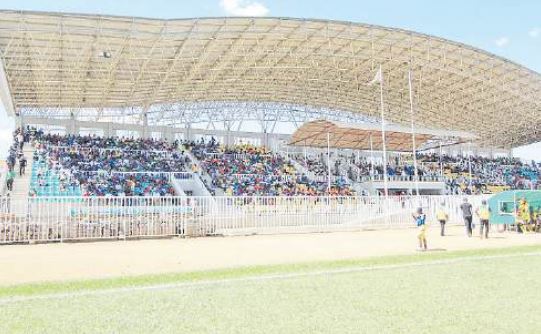
 Bukhungu Stadium during a tournament./FILE
Stadium construction is still marred by incidents of irregularities in procurement and poor management, costing taxpayers billions, a new audit report has found.
A review of Sports Kenya accounts by Auditor General Nancy Gathungu has uncovered infractions in the projects, raising questions about misuse of funds and abuse of attendant laws.
The report, covering the financial year ending June 30, 2024, highlights multiple breaches of procurement laws, stalled projects, and questionable expenditures totalling billions of shillings.
The Auditor General says taxpayers have received little value for the Sh6.1 billion spent on incomplete works, of which Sh1.7 billion may effectively go down the drain.
These findings cast a shadow over President William Ruto’s administration, which emphasises its commitment to transparency and accountability in the sports sector.
Whereas the Kenya Kwanza administration has shone in the successful hosting of CHAN 2024 at Kasarani and is ready for a bigger AFCON show at the upcoming Talanta Stadium, the review shows that substantive work remains in other equally important arenas.
The audit report zeroed in on three flagship stadium projects, Kericho Green Stadium, Bukhungu Stadium, and Masinde Muliro-Kanduyi Stadium, where procurement processes were blatantly flouted.
Kericho Green Stadium, which hosted Mashujaa Day celebrations in 2023, was awarded to a contractor at a cost of Sh408 million. However, the audit uncovered glaring anomalies.
Top of the list was pre-engagement before procurement, therefore invalidating the contract.
It emerged that the contractor had already submitted designs and interacted with Sports Kenya on July 19, 2023, weeks before the tender was officially awarded on September 4, 2023.
A letter from the State Department for Public Works dated September 5, 2023, indicated the contractor had achieved 50 per cent progress just a day after signing the contract, suggesting work began illegally.
“It is not practical for the contractor to achieve 50 per cent progress a day after signing the contract unless the contractor had already commenced works before the signing of the contract,” Gathungu said.
The contractor accepted the award on August 11, 2023, three days before the official approval and notification of award was granted on August 14.
Auditors further established that the contractor registered with the National Construction Authority on July 29, 2023, yet had interacted with Sports Kenya on July 19 and submitted designs for the stadium.
“No satisfactory explanation was provided for the anomaly. The management was in breach of the law, and the regularity of the expenditure couldn’t be confirmed,” the report reads.
Similarly, Bukhungu Stadium, which was among the grounds that were designated for the African Nations Championship (CHAN 2024), also had issues.
Phase III works were awarded to a contractor at Sh760 million without a clear memorandum of understanding (MoU) between Sports Kenya and Kakamega County. Sh152 million was paid for the value of works undertaken.
Physical verification revealed incomplete work, unspecified scopes, and potential duplication of efforts, leaving the project behind schedule with no accountability for funds spent.
A physical verification on September last year found the second phase was incomplete; thus, the third phase was behind schedule.
“In the circumstances, the value for money and propriety of the expenditure could not be confirmed,” Gathungu said.
At Masinde Muliro-Kanduyi Stadium, the contract was signed on March 1, 2024, before the contractor accepted the award on March 4, violating the mandatory 14-day standstill period for tender disputes.
The audit concluded that the procurement lacked transparency and fairness, bringing its regularity into disrepute.
The report paints a grim picture of mismanagement across multiple stadium projects, with several stalled despite millions paid to contractors, some for years.
In the list is Kamariny Stadium, which was contracted at Sh287 million in 2016, and only 30 per cent of the work was completed before the project stalled in 2017. The contractor has since vanished.
Phases one and two of Kipchoge Keino Stadium, with 88 per cent and 80 per cent of funds (totalling Sh587 million) being paid, remain incomplete in both phases.
Phase I was abandoned to accommodate AFCON requirements, while Phase II was left in limbo due to “delayed payments.”
“The value for money spent on the project could not be confirmed,” the Auditor General said.
At the Karatu Stadium project, poor workmanship, exposed structural beams and an undug borehole mar the project, despite 83.6 per cent of funds (that is Sh217 million) being disbursed.
Wote Stadium’s story hasn’t changed yet. Relocated without a feasibility study, the project faced cost overruns, unauthorised variations and theft of materials.
Auditors established that only 65.6 per cent of the Sh299 million contract was accounted for. The change of site was instigated by the Makueni government.
Propriety and value for money in Sh302 million paid for Ruringu Stadium could not be confirmed. The project is not complete, and the contractor has not been on site for seven years since commencement.
The Auditor-General flagged recurring issues from previous audits, including unpaid audit fees of Sh7.4 million owed since 2004-05, reflecting disregard for statutory obligations.
INSTANT ANALYSIS
While the report stops short of alleging outright corruption, the patterns of irregularities suggest either gross negligence or deliberate loss of taxpayers’ cash. Sports Kenya’s management has yet to respond publicly to the findings. However, the report sets the stage for corrective actions, including recovery of funds from contractors who abandoned projects and legal action against officials involved in unlawful procurements.