At just 27, Collins Wekesa carries a regret heavier than any missed opportunity or failed job interview. It is not about money, career, or ambition—it is about love. The kind that once lit up lecture halls and earned applause from friends.
The kind he shattered with seven cold words. Speaking in Ruiru, he revealed that his greatest heartbreak is not the relationship he lost, but the brutal way he ended it.
The first time he spoke to her, it was over a forgotten pen during a group discussion in campus. Late afternoon sun spilled through the dusty window, turning her braids into gold threads.
He asked to borrow her pen. She smiled. “Only if you promise to return it.” That small trade was the beginning of everything.
“From then on, we were inseparable,” Wekesa said.
“Everyone on campus knew us—we were the power couple,” he added.
They laughed too loudly in the library, walked hand in hand across the quad, surprised each other with flowers during dull lectures. Friends teased them but secretly envied the effortless way their love seemed to shine. At parties, people clapped when they danced.
“In photos, we leaned into each other like the world outside our bubble didn’t exist,” Wekesa said. “But campus is a bubble—graduation burst it,” he admitted.
Three months later, his girlfriend landed a good job at a reputable firm in Nairobi. She called him immediately, her voice trembling with excitement.
He cheered with her. But when the call ended, silence fell heavy in his one-room bedsitter. His phone lay warm in his hand; his own inbox empty of opportunities.
“A year later, nothing had changed,” Wekesa remarked.
He was still jobless, still waking up each morning to the mocking hum of matatus rushing past, carrying people who had places to be.
His father had always told him a man provides, a man leads. But here he was—financially depending on the same woman who once blushed when he bought her fries with pocket change.
“Every time she paid for my lunch or sent me airtime, it felt like salt on an open wound,” Wekesa said.
“Her success, once a source of pride, became a mirror I hated looking into,” he added.
So he started staying out late. Nights blurred into mornings at dingy clubs where cheap beer dulled the ache of failure.
He did not tell his girlfriend where he went. Sometimes she waited up for him, only to greet him with tired eyes and quiet questions he answered with shrugs.
“Her patience thinned,” Wekesa acknowledged.
He could see it—the way she sighed deeper, the way she stopped asking about his job applications, the way her laughter came less easily around him. And that terrified him, because he could not bear the thought of her leaving.
“So, to protect myself, I decided to break up with her first,” Wekesa confessed.
One afternoon, slouched on his unmade bed, he typed a single line on his phone: I am breaking up with you. No explanations, no goodbyes. Just six words.
“I hit send before I could think too much about it,” he said.
When her calls came in, he stared at the buzzing screen until it stopped. Then he blocked her number. The silence that followed was deafening.
“My insensitivity did not, however, end there,” Wekesa admitted.
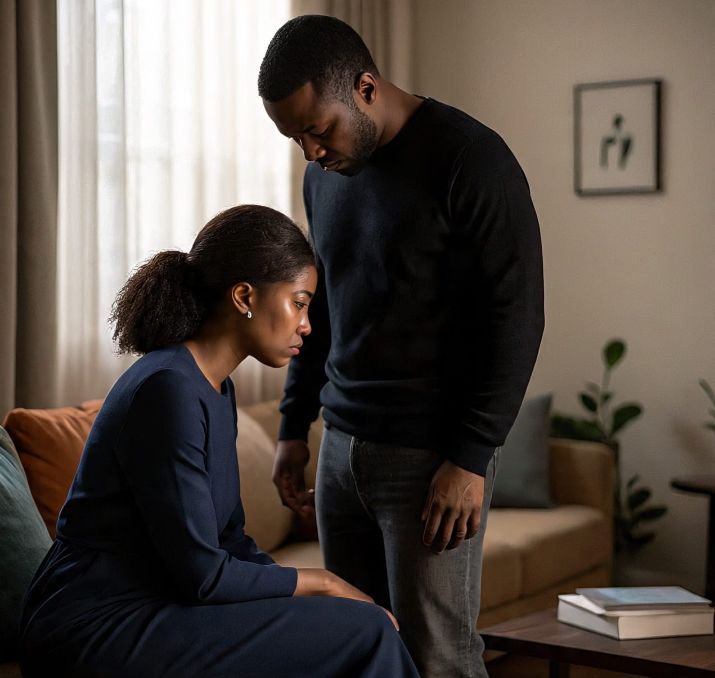
Weeks later, at a friend’s house party, she showed up. She tried to speak to him, her voice trembling with desperation, her eyes wet with questions he refused to answer. Friends watched in awkward silence.
“Pretending to laugh at a joke, I ignored her completely,” Wekesa said.
When she touched his arm, he pulled away as if her hand burned. The humiliation crushed her. That night, she left the party early, her shoulders hunched, her dignity bleeding in the shadows.
“And that was the last time she tried to reach me,” Wekesa remarked.
Years later, he sometimes finds himself back in that memory—the borrowed pen, the sunlight in her hair, her laughter echoing in lecture halls. He scrolls through old photos he should have deleted, seeing the girl who once believed in him more than he believed in himself.
“Even though I was trying to avoid heartbreak on my end, I didn’t just end things. I broke her brutally and carelessly,” he admitted.
Breakups are never easy, but they do not all have to leave scars. Some end in silence, blocked numbers, and shattered hearts; others close with respect, lessons, and even lasting friendship.
In a world where most love stories crash and burn in bitterness, Grace Nyokabi’s ending was different. Speaking from Ruaka, the 30-year-old revealed that, against all odds, her long-term relationship did not explode into drama—it dissolved with mutual respect.
“It was an ending I never saw coming, but one that left me lighter instead of broken,” Nyokabi said.
She always thought her love story would be simple. She met him in the cracked corridors of a high school hosting a music festival.
Both too shy to speak at first, their romance was stitched together by borrowed pens and whispered notes folded into triangles.
“I still remember the long walks we took during holidays beneath Nairobi’s golden dusk,” Nyokabi said. “And for a long time, it was easy,” she added.
They dreamed together, shared chapati in cramped university hostels, and skipped classes to sit under jacaranda trees when they bloomed purple, imagining futures where they would still be side by side.
She loved how he could make her laugh even when she was angry, how he always remembered to buy her roasted maize after evening lectures.
“He adored how I was fearless—a girl who spoke her mind and carved spaces for herself where others saw walls,” Nyokabi said.
However, she would later learn that love is not always constant—it is a river. And rivers change course.
“By the time we turned 27, life had stretched us in ways we hadn’t expected,” she said.
She had become a sharp, ambitious marketing executive in Nairobi’s tech scene. She loved her work—its adrenaline, the pitches, the late nights.
He had discovered peace in quieter things, teaching literature at a small high school, spending afternoons marking essays and nurturing stories out of teenagers who reminded him of who he once was.
“We still loved each other—that was the cruelest part,” Nyokabi said.
Saturday mornings meant shared pancakes in their Westlands apartment. Sundays meant walks in Karura Forest. Their laughter still filled rooms, but beneath that laughter lay a silence neither wanted to name.
“We were becoming strangers in the same relationship,” she said.
She noticed it first. The night she came home flushed with excitement about a major campaign her team had landed, he was half-asleep over a student’s essay. She wanted to celebrate, to talk about growth targets and brand expansion, but he just smiled tiredly.
“The gulf between our energies yawned wide,” Nyokabi said.
He noticed too. When she canceled a trip to his rural home because of a last-minute work crisis, he understood without complaint. “He seemed to know I belonged to a different rhythm now—one that pulsed with deadlines and city lights,” she reflected.
For months, they tried to ignore it. They told themselves love could outlast change. Slowly, their conversations thinned into logistics: Did you buy milk? Don’t forget the rent. The spark was still there but flickered against winds too strong.
One evening, as Nairobi’s rain hammered against their balcony, she broke the silence. “Babe, are we still us?”
He looked at her, eyes soft with the kindness that had first disarmed her a decade ago. “We are,” he said quietly. “But maybe we are not the same us anymore.”
The words hung heavy but rang true. They spoke for hours, voices breaking but never turning bitter. They admitted what they both had known: love alone is not enough if the people inside it have grown into different people.
When the night ended, they held each other one last time. “No shouting, no blame,” Nyokabi said.
“Just gratitude for the years we had shared, and grief for the goodbye we had grown into,” she added.
They had started as high school sweethearts but ended as grown strangers. Though not bound by forever, they are content with the memory of a love that had once been enough.
Breaking up is never easy, but it does not have to be cruel.
According to Justine Mwende, honesty wrapped in kindness is key. Do not ghost, fade, or pick fights just to create an excuse—cowardice wearing disguise.
“If you once cared for this person, respect them enough to give them clarity,” Mwende explained.
Pick the right setting—private, calm, safe. Look them in the eye. Say what you mean without cruelty. “I do not see our futures aligning” is kinder and more truthful than a laundry list of flaws.
“Own your decision—don’t dangle false hope just to soften the blow,” Mwende advised.
Exercise active listening. A breakup is not a monologue. Your partner deserves space to respond, cry, or ask questions. You do not have to fix their pain.
“However, you do have to hold the silence long enough for them to feel heard,” Mwende emphasized.
Drawing boundaries is also crucial. Do not break up and then text as if nothing changed. That keeps wounds open. Be gentle but firm.
“Breakups hurt, but dragging them out is worse,” she said.
The truth is, endings are inevitable. Careers shift, dreams diverge, people grow in different directions. Cruelty is not. The difference between a breakup that haunts and one that heals lies in how it is done: honesty without brutality, clarity without cowardice, kindness without false hope.
To love someone is to hold their heart, even in goodbye. A breakup should not erase laughter once shared or the seasons when two lives intertwined. It should honor them, close the chapter with dignity, and leave both people free to grow without carrying unnecessary wounds.