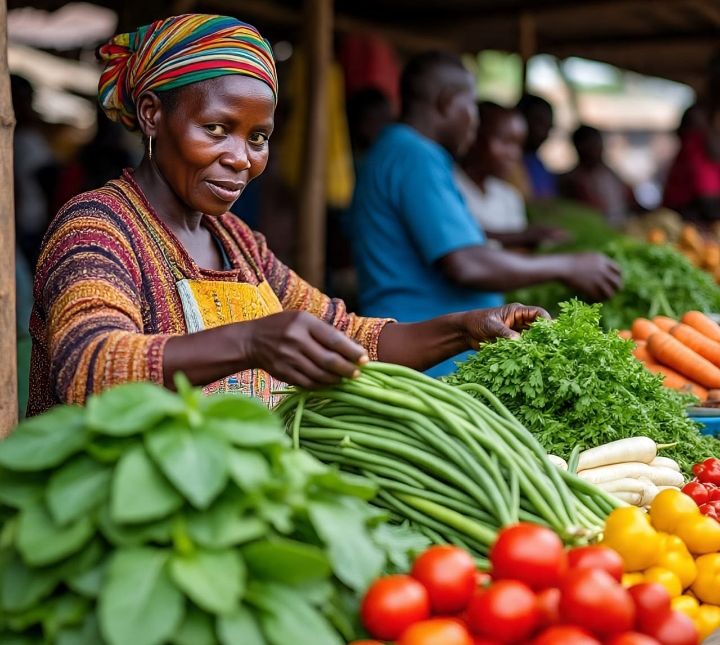
From Githurai to Marikiti, the mama mboga trade is more than a lifeline; it is a story of resilience, reinvention and quiet defiance. For traders like Sheila Wanjiru, vegetables are not just food, but survival, dignity and a future carved from hardship
Amid the chatter of traders and the rattle of handcarts in Githurai market, Wanjiru arranged her vegetables with the quiet pride of a woman who has fought for every coin in her pocket.
At 40, her journey into the mama mboga business reads like a tale of grit stitched together by struggle.
She remembered growing up in a home where the aroma of a full meal was a luxury. Her parents, tired from long days of menial work in the village, counted coins as though they were precious gems.
University was never part of her horizon. Survival was the dream, and even that often felt just out of reach.
“I was the eldest of four children. Going to university just felt selfish because that would mean my siblings would continuously be sent home for school fees arrears,” Wanjiru said.
Fresh out of high school, she had a simple plan, go to Nairobi and look for a job. Having watched her parents struggle in the village, she knew the only way to pave her path to success was in the city.
Feeling fortunate to have secured a house manager’s job at her aunt’s home in Nairobi, she left the village with high hopes.
“At the time, I reasoned that being a hard worker and having familial relations with my boss would make my job a walk in the park,” Wanjiru said.
Within the first month, however, she realised how naïve she had been. From the moment she walked into her aunt’s house, she felt a cold reception.
Chalking it up to the fact that her aunt did not want to show any favouritism, she tried to brush it aside.
“I thought that as long as I did my job diligently, whether or not she liked me would not matter,” Wanjiru explained.
Not only was she overworked, but her salary was constantly delayed. Reasoning that this was the best she could do with a high school education, she tried to keep her head down.
After six months of flimsy excuses about why she had not been paid, Wanjiru reached her boiling point. One morning, she woke up early, packed her bags and left her aunt’s house.
“I had no plan. The only good thing I had going for me was that my best friend had offered to host me till I got a stable job,” Wanjiru said.
Almost slipping into depression because of unemployment, she had an epiphany one night—she could become a mama mboga.
Though raising capital for the business was an uphill battle, nothing wavered her resolve to succeed.
Biting the bullet, she decided to set up a small stall in Githurai market and begin selling vegetables.
“Initially, the business was not easy. Apart from the struggle of getting money for stock, there was also stiff competition,” she said.
Since many people in the market opted for the mama mboga trade, new faces were rarely welcomed. As a newcomer, she bore the brunt of hostility.
From dirty looks thrown her way to whispers that stopped when she passed by, she felt like an intruder in a world that had already decided who belonged.
“There was a time when I found my stall demolished. Showing my fiery side ensured that was the last time they ever tried to sabotage me,” Wanjiru said.
Despite the challenges, she is proud to have weathered the storm.
After 20 years in the trade, she explained that her business has helped her achieve financial stability.
“Through my mama mboga business, I was able to take care of my children’s needs even after my husband succumbed to cancer five years ago,” she said.
While Wanjiru's story reflects a generation of women who fought their way into the trade, a younger, unexpected face is redefining what it means to be a mama mboga today.
In the bustling chaos of Marikiti market, where the cries of traders blend with the rustle of fresh produce, one stall breaks the script.
Amid rows of women balancing baskets and bargains stands Ken Mugambi, a 28-year-old rewriting the rules of who belongs behind piles of cabbages and tomatoes.
In a trade long branded as women’s work, he steps in with quiet defiance, proving that sometimes the most ordinary vegetables can carry the weight of an extraordinary story.
In an interview with The Star, he did not shy away from admitting that vegetable vending was never in his plans.
“Growing up in a cramped rental in Nairobi, I always dreamed of becoming an engineer and building a beautiful home for my mom,” Mugambi said.
So when he qualified for an engineering course at university, he was over the moon.
After countless nights of study, his efforts had finally paid off. Focused solely on being the best engineer, he avoided distractions.
“I remember how often my friends called me the weirdo of our group. My favourite pastime was researching new things about engineering,” Mugambi said.
It was no surprise when he graduated with first-class honours. Confident he had set himself up for success, he looked forward to the next chapter.
Applying to reputable companies, he waited eagerly for responses.
“Initially, I was enthusiastic about applying for several open positions and availing myself for countless interviews,” Mugambi said.
But after months of rejection, his hope dwindled.
With savings steadily depleting, his frustration only grew.
“I could not understand why I could not get a job. Years of struggle to get first-class honours in engineering were going down the drain,” he said.
Engulfed with bitterness and resignation, he finally gave up after three years of trying.
Faced with the reality of sleeping hungry, any job, no matter how small, became a lifeline.
“There was a time I even tried to be a tout. But after I fell on the road trying to board a moving bus, I could not bring myself to go back the following day,” Mugambi said with a laugh.
After several failed attempts to find work, he almost gave up. But during that vulnerable time, it dawned on him that vegetable vending could be an option.
Investing the last of his savings, he rented a stall in Marikiti market.
“After years of my mom forcing me to cut sukuma wiki daily for supper, I thought this was the time to utilise that hard-earned skill,” Mugambi said.
When he informed his friends, they ridiculed him.
Believing vegetable vending was reserved for women, they could not understand his choice.
“Since the onset of my business, my name drastically changed from ‘Ken’ to ‘mama mboga.’ That is the only way my friends chose to address me,” he said.
Aside from ridicule from friends, he also faced criticism from strangers.
Seeing a young man cutting spinach in a basin was a spectacle for some. Many paused at his stall, mocking his masculinity.
“In the beginning, my witty tongue went toe-to-toe with such people. Maturity has now helped me block out their noise and go on with my work,” Mugambi said.
Nevertheless, being a male vegetable vendor has opened unexpected doors. A naturally stylish person, he explained that he does not let the business limit his fashion sense.
Ultimately, he turned his stall into a magnet for young customers, especially women.
“The women in particular have grown my customer base. First drawn to my style, my skill and professionalism make it hard for them not to be loyal customers,” Mugambi said.
Traditionally, “mama mboga” referred to women selling vegetables. Today, young men like Mugambi are stepping behind the stall, proving that the hustle knows no gender.
According to economist Josephine Mwikali, succeeding in the mama mboga business is an art that must be studied and mastered.
Customer service, she said, is vital. Treat customers with respect and build personal connections. Remember their preferences and offer tailored recommendations.
“Many successful mama mbogas remember their customers' favourite produce and even set aside specific items for them,” Mwikali said.
Value-added services are a bonus. Vendors should go beyond selling vegetables by pre-cutting, washing or packaging produce to save customers time.
Hygiene and presentation are also key. Stalls should be clean and organised.
“Consider using branded materials like aprons and display covers to enhance credibility,” Mwikali said.
Unlike in the past when the business was mostly a solo hustle, strategic partnerships now help vendors thrive.
Gone are the days when the mama mboga trade was a lone-wolf affair. Today, smart collaborations are transforming small stalls into thriving enterprises.
“Collaborate with farmers, suppliers and other vendors to ensure a consistent supply of fresh produce and potentially expand your offerings,” Mwikali said.
Though often dismissed as small-scale, proper financial management is what ensures longevity.
“Treat your mama mboga business like a serious enterprise. Keep accurate records, manage finances effectively and explore opportunities for growth,” she said.