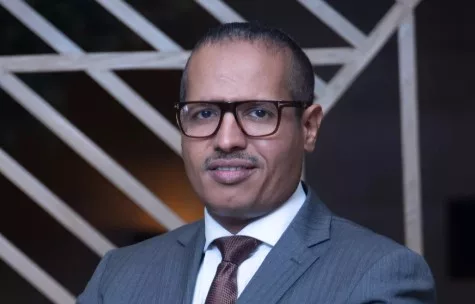
When Nicanor Sabula joined Chavakali Boys in Western Kenya, he had a dream of studying tourism after high school. He took French classes with a dream of working in one of the top international hotels in the country.
Unfortunately, he never got a chance to study tourism at Moi University as he had wished but was instead called to Egerton University to study Environmental Science. Sabula would later navigate his way back into tourism as he told the Star during an interview.
He is currently the Kenya Association of Travel Agents (KATA) CEO and serves as on the boards of the Kenya Federation of Tourism, Association of Eastern and Southern Africa Travel Agents (AESATA), the Association of Kenya Business Events (AKBE) and the African Society of Association Executives (AfSAE).
Briefly describe yourself
I am a passionate, Jesus-loving village boy who came to the city in search of opportunity and never left. My passion lies in connecting people and building vibrant communities bound by shared interests.
Tell us about your journey in tourism and how you ended up as Kenya Association of Travel Agents (KATA) CEO?
My journey in the travel and tourism industry has been long and winding having started at the time I joined Chavakali Boys High School. I studied French in high school with a dream of working in one of the top international hotels in the country.
Unfortunately, I didn’t get a chance to study tourism at Moi University as I had hoped, but was called to Egerton University to study Environmental Science. In campus, I enjoyed studying courses in natural resources management and took a keen interest in environmental and wildlife conservation.
I spent my time as a student leader planting trees on campus and leading clean up exercises along Njoro River and the Nakuru National Park. I graduated I landed at the National Museums of Kenya where I began may career as a volunteer educator.
It is while I was at the NMK that I started working with associations and took a keen interest in conference tourism which paved my way to KATA as the CEO. The rest as they say is history. I found a home and stayed.
KATA is the national umbrella organisation representing the business interests of travel agents in Kenya since 1979. We advocate, educate, represent and connect our members to industry stakeholders. Our mission is to champion and sustain the growth of the travel industry in Kenya.
How demanding is your job?
As CEO, my day-to-day responsibilities include providing strategic leadership and operational management of the association, managing stakeholder relations, engaging in advocacy at both governmental and industry levels and providing oversight of staff and programs. These duties, combined with representing members locally and internationally, make it a high-pressure role that demands strong organisation and adaptability.
You were recently appointed to the Tourism Regulatory Authority (TRA) Board in strategic move for industry growth. What is you role and your plan on this?
It is a great honour to have been appointed by our Cabinet Secretary Rebecca Miano to represent the private sector on the TRA board, alongside my colleague Fred Kaigua from Kenya Association of Tour Operators.
Our role on the board is to provide professional input and ensure the private sector’s voice is heard. Personally, I intend to push for the enforcement of industry standards and advocate for self-regulation. There are many unlicensed players in the industry who flout rules, and we must hold them accountable if we are serious about sustainable growth.
This is not your first time as CEO noting that you served in the position between 2015 to 2019. How different are these two periods?
This is a very good question. I am what is considered a boomerang CEO. I left my role just before the Covid pandemic and returned almost immediately after the pandemic. The joke in the industry is that “I ran away” from the most testing period in the history of the industry. There is a remarked significant difference in the two terms.
Prior to Covid, we never worried about prolonged difficult times-we thought we had built strong, resilient organisations that could withstand economic turmoil. After Covid, we live with the reality that tomorrow could never be the same. Our strategic planning periods are shorter and we are focussing on building reserves that could last at least 4-5 years of another covid like period.
What would you say are some of your biggest achievements to date?
Over the couple few years, we have managed to grow KATA into a fairly strong brand that cannot be ignored both nationally and internationally. We have found our rightful place on the decision-making table and are seriously providing thought leadership and contributing to shaping policy on matters travel and tourism.
We are also building a purpose driven, financially stable organisation that is fully owned by her members. We are among few of our peers who actually own a modern office premises in the country. So, we are proud of the steps we are making.
What are your plans for KATA during this tenure?
The plans are to consolidate KATA’s growth both in terms of membership, broaden our financial base and become a strong advocacy voice in the travel industry. We want to influence policy not only in Kenya but also throughout the continent through the Association of Eastern and Southern Africa Travel Agents (AESATA) that we are privilege to host at our offices.
How do you envision the future of tourism both inbound and outbound?
The future for Kenya is bright. Kenya remains an attractive destination for visitors seeking to come and enjoy the splendour of our natural beauty and warmth of our people. On the other had a growing middle class and increasing disposable income means that a lot of Kenyans are venturing out of our borders for business, leisure, medical and education travel which means growing opportunities for outbound travel. Kenyans are top visitors in several African countries and it is a top source market for travel out of Africa.
How do you see your organisation adapting to changing global trends in tourism, such as sustainability, digital transformation and new market opportunities?
Sustainability is no longer a buzz word. It is the reality we live in. Failing to adapt to these global trends risks isolating us. At KATA, we are at the forefront of ensuring that our members are adapting to the digital transformation, exploring new markets such as Gen Z travellers, solo travellers and increasing family travels.
We have just launched our KATA Cares as part of a broader mandate to support sustainable development and responsible travel. This programme is anchored on three pillars, environmental conservation, social impact and youth empowerment, all designed to drive meaningful change within and beyond the travel industry.
Which are Kenya’s biggest outbound tourism destinations and why?
Interestingly Kenya’s travel destinations have not changed in a long while. Latest statistics show that Kenyans are travelling to London, Dubai, South Africa, India and to the neighbouring countries. Reasons vary but many travel for business, medial and leisure purposes.
What key challenges do you foresee facing the tourism industry in the coming years, and how do you think industry players can address them?
The biggest challenge is going to be increased competition. Many countries have discovered that tourism is a key driver of socio-economic development and are investing heavily in product development and destination marketing and promotion. Unfortunately for Kenya, since tourism has been our economic mainstay for years, we are taking this for granted. We are neither significantly investing in the industry nor creating new products and attractions.
The problem is that the modern traveller is not just seeking to go see wildlife- they are chasing experiences. If we do not leverage our natural attractions to provide this experience, then we will be left behind. Both government and private sector must invest heavily in the industry so that we can retain our competitiveness.
Kenya has a target of hitting at least five million tourists by 2027. Is this achievable? If yes, how best should the country go on driving these numbers?
This is easily achievable and can easily be surpassed. We are currently attracting nearly three million visitors even without serious investments. We have low hanging fruits such a MICE – business tourism-that we can leverage to attract more tourists. Kenya has not scratched the surface when it comes to adventure tourism.
Sport tourism is another area that gives us a competitive edge that we could explore to build the industry. Medical tourism has also emerged as another sector that has high potential given the advancement of our health sector to international standards. We could easily attract more than 10 million tourists if we got serious with our tourism industry.
What opportunities does the African Continental Free Trade Area hold for tourism and how can Kenya align itself to tap them?
AfCFTA facilitates intra-Africa trade and travel making cross border movement easy. With it comes issues such as friendly visa regimes, developing multination tourism corridors and increasing collaboration. Kenya is already ahead with the no-visa policy and readiness to open the skies for more airlines to fly to Kenya.
As a CEO, how do you prioritise employee development and career growth?
One of the things I have done with my team is empower them to be creative and innovative. I work mostly with young people and its a joy when I give them room to be themselves and put to test their skills and knowledge. All I do is guide and offer input into strategic directions.
The outcome is always amazing, they own the programmes, they own the vision of the organisation. We also try to provide them with training opportunities and industry exposure where they can grow their confidence and self assurance.
What are some of the biggest lessons you have learned as a CEO in the tourism industry?
This industry is fluid and very dynamic. It often throws curve balls at any turn of the way. If I could paraphrase Emeke the bird in Chinua Achebe’s Things Fall Apart , I would say since the industry has learned to shoot without missing, we have learned to fly without perching. We are ever ready to tackle any challenge that emerges in the industry.
What advice would you give to someone looking to start a career in tourism?
Welcome to a very dynamic yet rewarding industry. Build a strong understanding of the ecosystem you want to work in, remain nimble and adaptable, invest in continuous learning and networking and identify and a niche where you can add value.