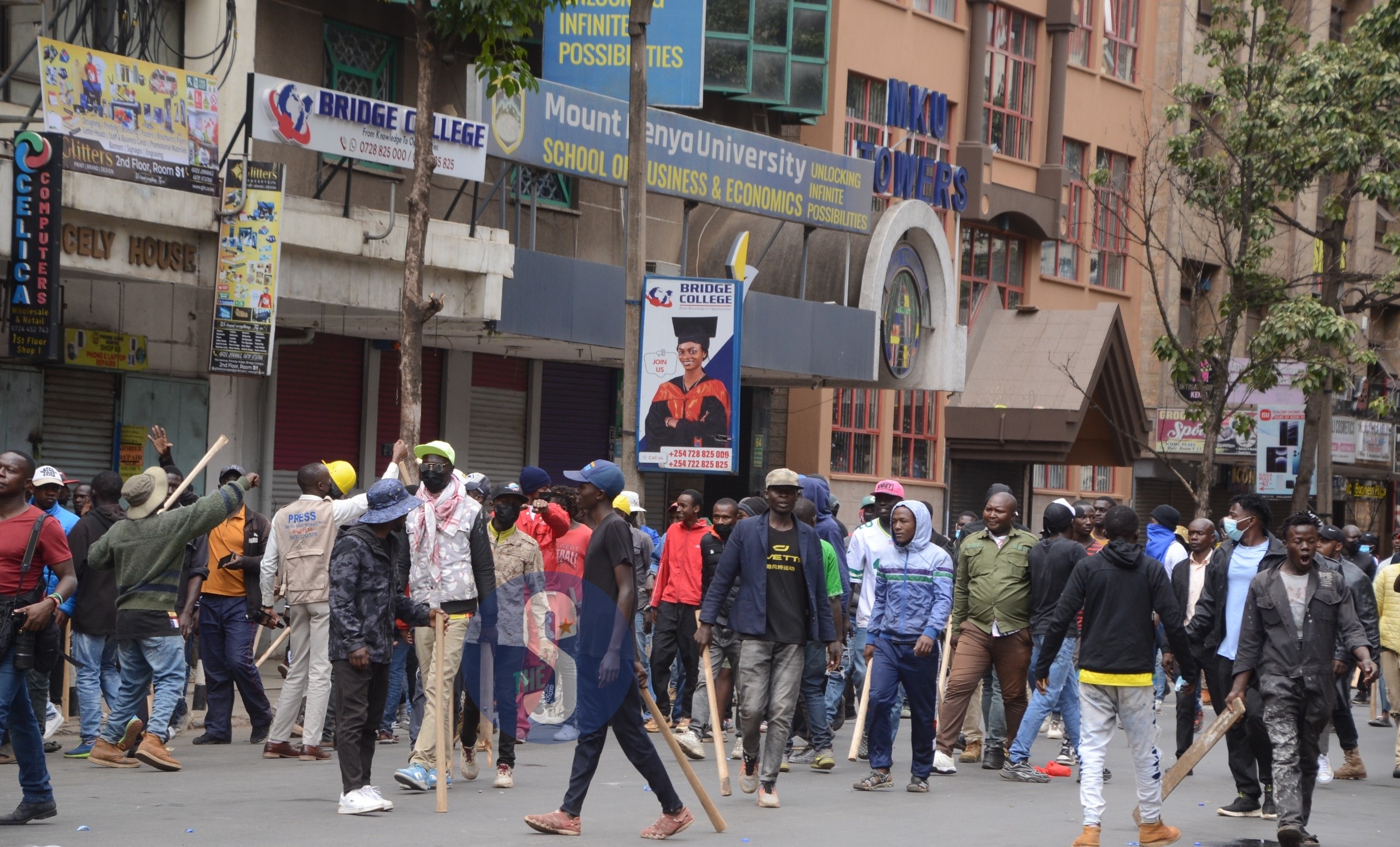
 Suspected goons with rungus during demonstrations over the death of Albert Ojwang, June 17, 2025. /DOUGLAS OKIDDY
A fresh wave of unrest descended upon Nairobi’s Central Business District on Tuesday, sparked by public outrage over the death of blogger and teacher Albert Ojwang’ in the hands of police.
The city, usually a hive of commerce and movement, ground to a halt as shops lay shuttered behind hastily drawn metal grills.
Anxious business owners stood vigil, armed with sticks and steely eyes, warding off potential looters.
The usual chaos of honking matatus gave way to a haunting silence, broken only by the chants of protesters and the sharp crack of teargas canisters exploding in the distance.
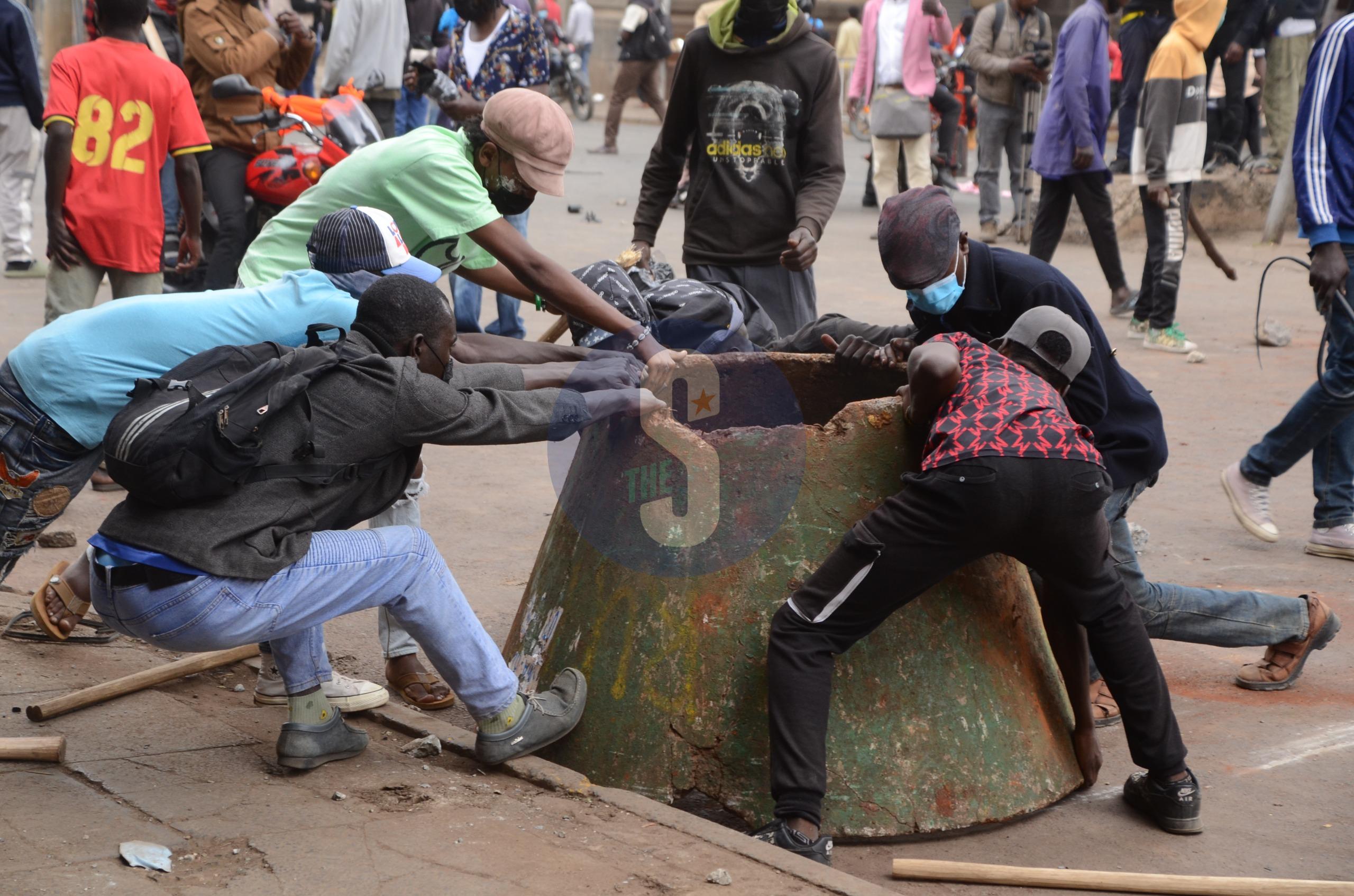 Some of the protestors clear the road during demonstrations over the death of Albert Ojwang on June 17, 2025/DOUGLAS OKIDDY
Police presence was concentrated along the city’s main avenues—Moi Avenue, Kenyatta Street, City Hall Way and Parliament Road—where anti-riot officers fired teargas to disperse protesters in scenes reminiscent of the June 2024 anti-finance bill demonstrations.
The confrontations quickly degenerated into running battles, with protesters hurling stones and chanting slogans condemning police brutality and demanding justice for Ojwang’.
The situation was markedly worse in the backstreets—Luthuli Avenue, River Road, Kirinyaga Road and Latema Road were overrun by a gang of criminals.
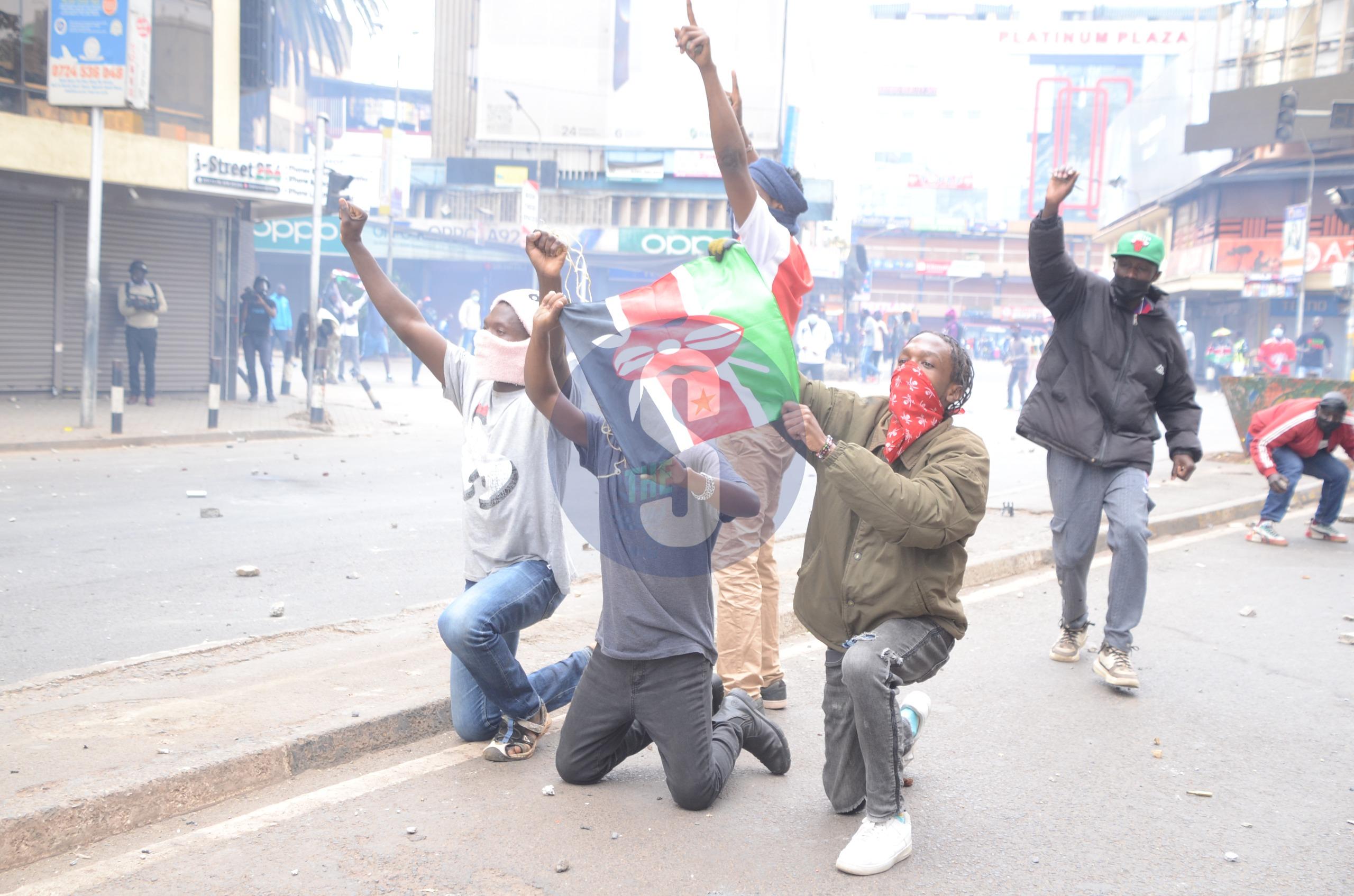 Some of the protesters during demonstrations over the death of Albert Ojwang, on June 17, 2025/DOUGLAS OKIDDY
Pedestrians, many caught off guard while trying to navigate the city on foot due to transport disruptions, found themselves easy targets - many were mugged in broad daylight by emboldened criminals.
Fear gripped the narrow alleys, where screams and the roar of motorbikes pierced the air.
Desperate to escape the escalating mayhem, panicked commuters fled the city atop boda bodas, zigzagging through barricades, smoke and traffic jam at intersections.
The roads in and out of the city remained blocked, or rendered impassable by burning debris, barricades and fear itself.
A group shouted “Ruto tano tena!”. A rival group responded with frenzied chants of “Ruto must go!”
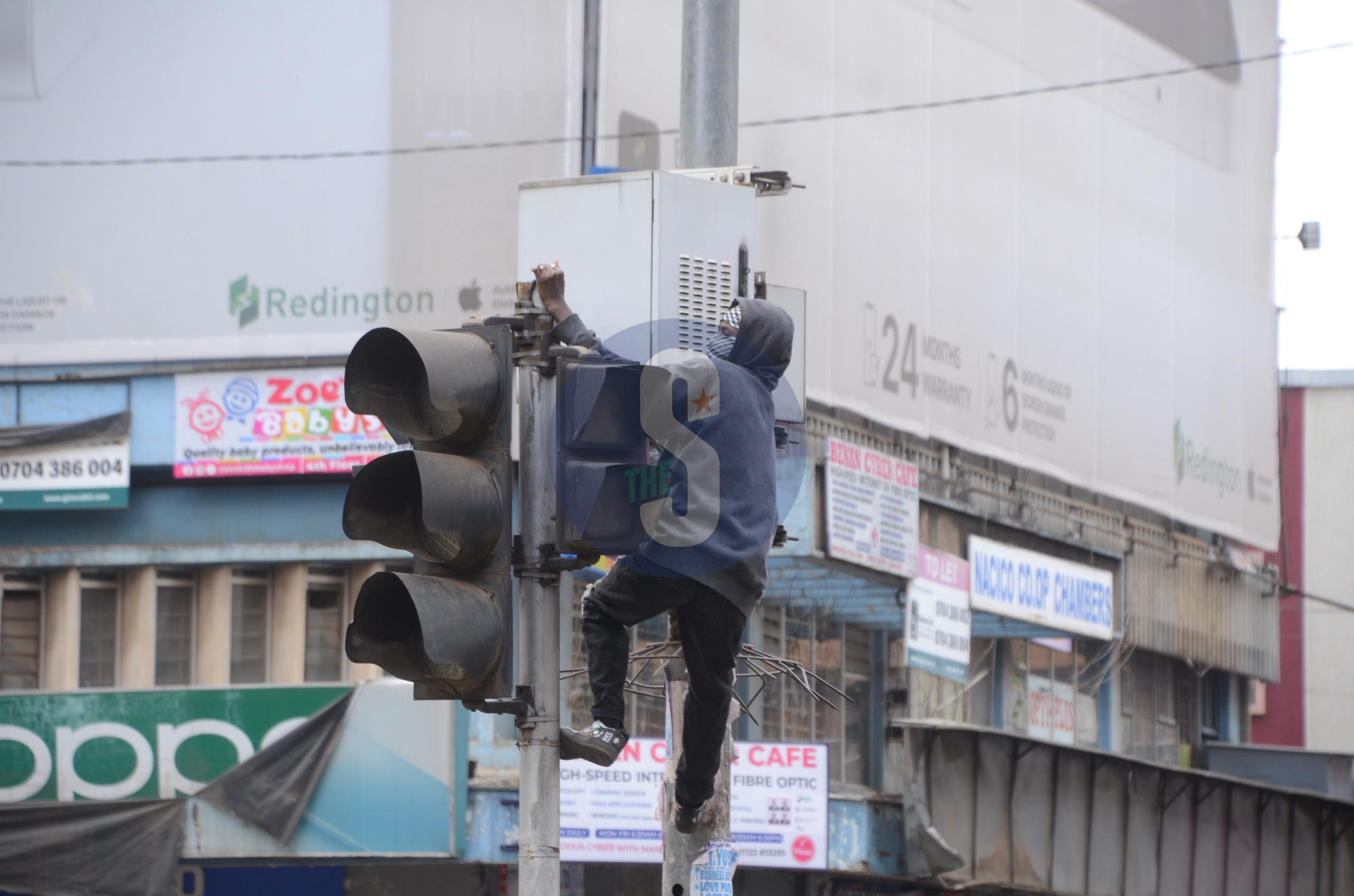 A protester tries to break a streetlights during demonstrations over the death of Albert Ojwang on June 17, 2025. / DOUGLAS OKIDDY
“I cannot be distracted. I’m a man on a mission to transform this country. No amount of noise or propaganda will stop me. I’m willing to pay the price, whatever it is,” Ruto said during the Second Kenya Urban Forum in Naivasha, Nakuru county.
Human rights groups have called for an independent investigation into Ojwang’s death, which occurred in police custody on June 8, hours after he was picked up by DCI officers from his Homa Bay home.
The Independent Policing Oversight Authority (Ipoa) has since confirmed that Ojwang died inside a cell at the Central police station in Nairobi, contrary to earlier police claims that he died in hospital.
Deputy Inspector General of Police Eliud Lagat on Monday bowed to public pressure and stepped aside to allow for impartial investigations into Ojwang's death.
Ojwang was arrested on Lagat's account after he filed a complaint with the DCI that Ojwang' had tarnished his name in an online post.
As dusk approached, teargas still lingered in the air, and the city remained tense as protesters, infiltrated by goons, engaged police in running battles.
Commuters remained uncertain whether order would be restored or whether more turbulence lay ahead.
One of the videos shared online showed prosters carrying the lifeless body of a young man, reportedly shot dead, a grim reminder of scenes witnessed during the anti-finance bill protests that nearly brought Ruto’s government to its knees.
That memory came alive again, raw and raging in the streets of Nairobi—the air was thick with acrid teargas and the scent of smouldering tyres.
Focus now turns to the police on how they will react to the escalating situation.
During the anti-finance bill revolt, with police being accused of using excessive and lethal force.
Reports and investigations revealed that police deployed live ammunition against largely peaceful demonstrators, with at least six deaths captured on video.
Hundreds of individuals were arrested, including journalists and activists and some detainees endured beatings, torture, and confiscation of devices, with several never formally charged.
Ruto labeled the actions as “treasonous” and condemned the storming of Parliament on June 25 as an “invasion” and treason, asserting that the security forces were simply enforcing order against dangerous disruptors.
The President framed the crackdown as necessary to secure the state, defending deployment of military, insisted that there was no choice but to use force and military support.
“I mean, what choice did I have? I have no blood on my hands,” he later stated.
Following the unrest, Ruto made a U-turn and declined to sign the Finance Bill, 2024 and initiated a national dialogue, which gave birth to the broad-based government that incorporated members of the opposition Orange Democratic Movement (ODM).