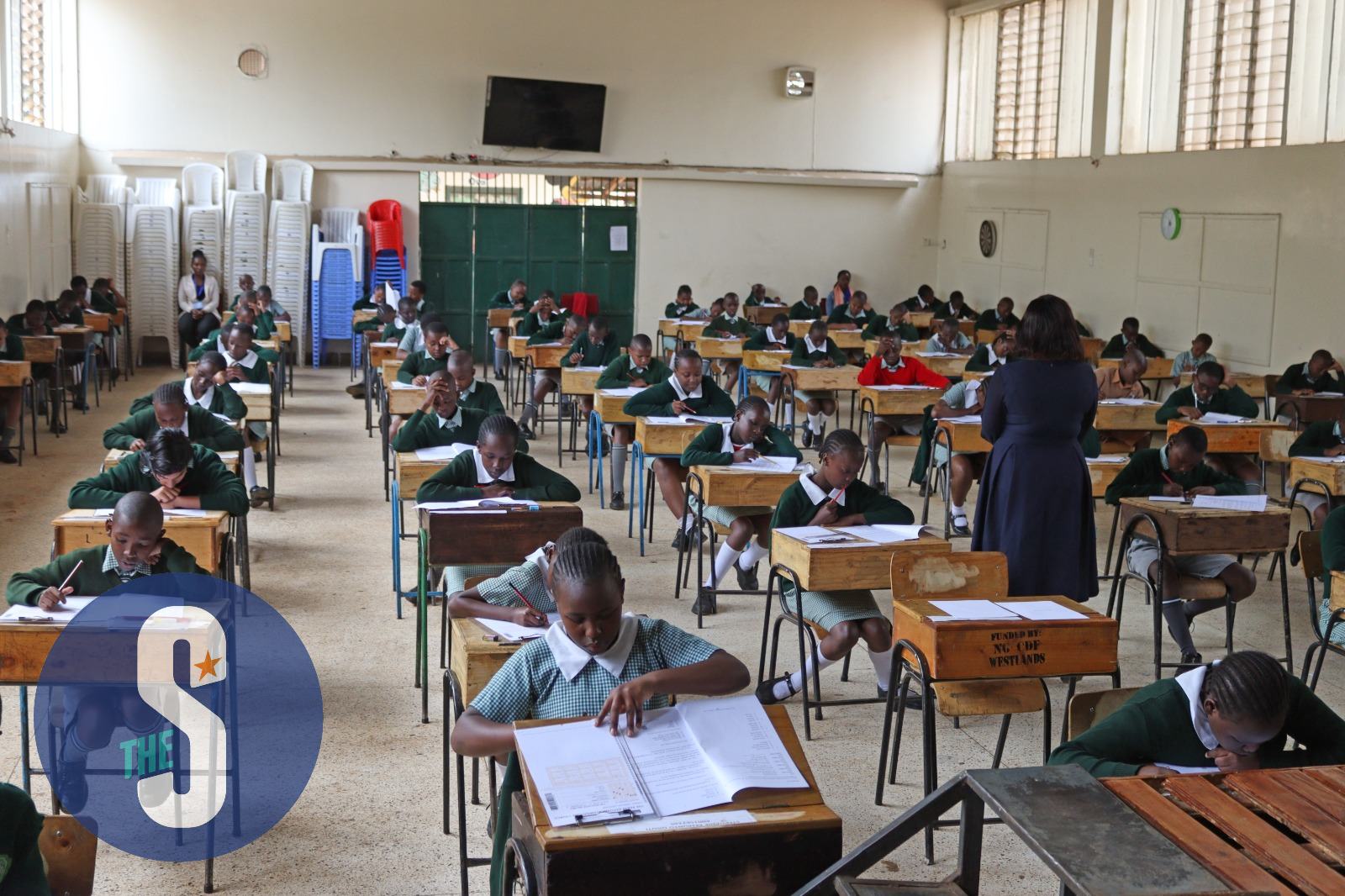
The Kenyan Competency-Based Curriculum (CBC) has introduced a new structure for senior school education, aiming to equip learners with practical skills, knowledge, and values.
Under the CBC system, senior school (Grades 10–12) offers three distinct pathways to cater to students' diverse abilities and career aspirations.
The CBC senior school pathways aim to offer students flexibility, specialisation and career-focused learning.
However, the removal of Mathematics as a core subject has sparked debate among professionals who argue that mathematical literacy is essential for national development.
Senior School Pathways under CBC
Starting January next year, when Grade 9 learners select the senior schools they wish to join, the traditional categorization of national, extra-county, county, and sub-county schools will no longer apply. Instead, selection will be based on the career three pathways offered by each school under CBC.
Arts and Sports Science Pathway: This pathway is ideal for students with talents and interests in creative arts, music, sports, and related fields.
Subjects Include Performing Arts (Music, Theatre, Dance), Visual Arts (Painting, Drawing, Design), Sports Science, Media and Film Studies and Creative Writing
Possible Careers include Artists, Actors, Musicians, Media Personnel (Journalists, Directors, Producers), Athletes, Coaches, and Sports Managers, Writers, Poets, and Film Producers
Social Sciences Pathway: This pathway focuses on humanities, business studies, and languages, preparing students for careers in law, international relations, journalism, and education.
Subjects Include History, Geography, Business Studies, Religious Education, Foreign and Indigenous Languages.
Possible Careers include Lawyers, Economists, Sociologists, Anthropologists, and Historians, Teachers and Professors of Social Sciences, Diplomats and Public Administrators
Science, Technology, Engineering, and Mathematics (STEM) Pathway: Designed for students interested in scientific and technical fields, this pathway includes specializations in Pure Sciences, Technical and Engineering Studies, ICT, and Health Sciences.
Subjects Include Mathematics, Physics, Chemistry, and Biology, Computer Science, Aviation Technology, Geospatial Technology.
Possible Careers include Engineers (Civil, Mechanical, Software), Doctors, Pharmacists, Biotechnologists, IT Specialists, Data Scientists, and Programmers, Researchers in Various Fields of Science
Pathway Selection and Placement in Senior Schools
The government has yet to communicate which pathways specific secondary schools will offer.
Senior schools will declare their available pathways through county directors of education before the selection process begins.
According to draft guidelines, senior schools will be categorized into triple pathway schools (offering all three pathways) and double pathway schools (offering two of the three pathways).
Schools with adequate resources will provide a wider range of learning areas.
Selection Guidelines
Enrolment per senior school is proposed to be capped at 3,000 learners.
At the end of Grade 9, students will undertake the Kenya Junior School Education Assessment (KJSEA), with the first cohort sitting for their exams in October and November this year.
Placement will be based on learners’ pathway choices, subject combinations, performance, school preference (boarding or day), and school capacity.
Triple pathway schools are expected to be highly competitive, admitting top-performing students in the KJSEA.
The Ministry of Education will ensure equity through regional quotas and consideration of whether learners attended public or private junior schools.
How students choose Pathways
Learners select their preferred pathway based on their strengths, interests, and career goals.
Schools are expected to provide career counselling to guide students in making informed choices.
Some institutions may specialize in particular pathways.
Significance of CBC Senior School Pathways.
Encourages specialization and skill-based learning.
Prepares students for higher education and the job market.
Aligns with Kenya Vision 2030 by emphasizing technical and vocational skills.
Expert concerns over dropping Mathematics as a core Subject
The Institution of Engineers of Kenya (IEK) has strongly opposed the government’s decision to remove Mathematics as a compulsory subject under CBC, citing potential negative impacts on Kenya’s workforce and economic sustainability.
According to IEK, a strong foundation in Mathematics is essential for developing the analytical skills necessary for engineering and technical professions.
The organisation emphasized that Mathematics underpins fields such as civil and electrical engineering, artificial intelligence, and renewable energy.
“Mathematics is the language of engineering and technology, underpinning design, optimization, problem-solving, and data analysis across multiple fields,” the IEK stated.
Government’s position on Mathematics
Education Cabinet Secretary Julius Ogamba has defended the decision to make Mathematics optional at the senior secondary level, acknowledging the ongoing debate around the issue.
He clarified that CBC differs significantly from the 8-4-4 system, in which Mathematics was a compulsory subject.
Ogamba explained that CBC resembles the education structure before 8-4-4 when students in Form Three and Four selected subjects aligned with their career aspirations.
He argued that those pursuing careers in arts and humanities should not be required to take Mathematics if it does not align with their career goals.
“In the past, when students transitioned to Form Three, they chose subjects based on their career aspirations. For instance, those pursuing Arts did not have to take Mathematics. CBC is adopting a similar approach,” Ogamba stated.