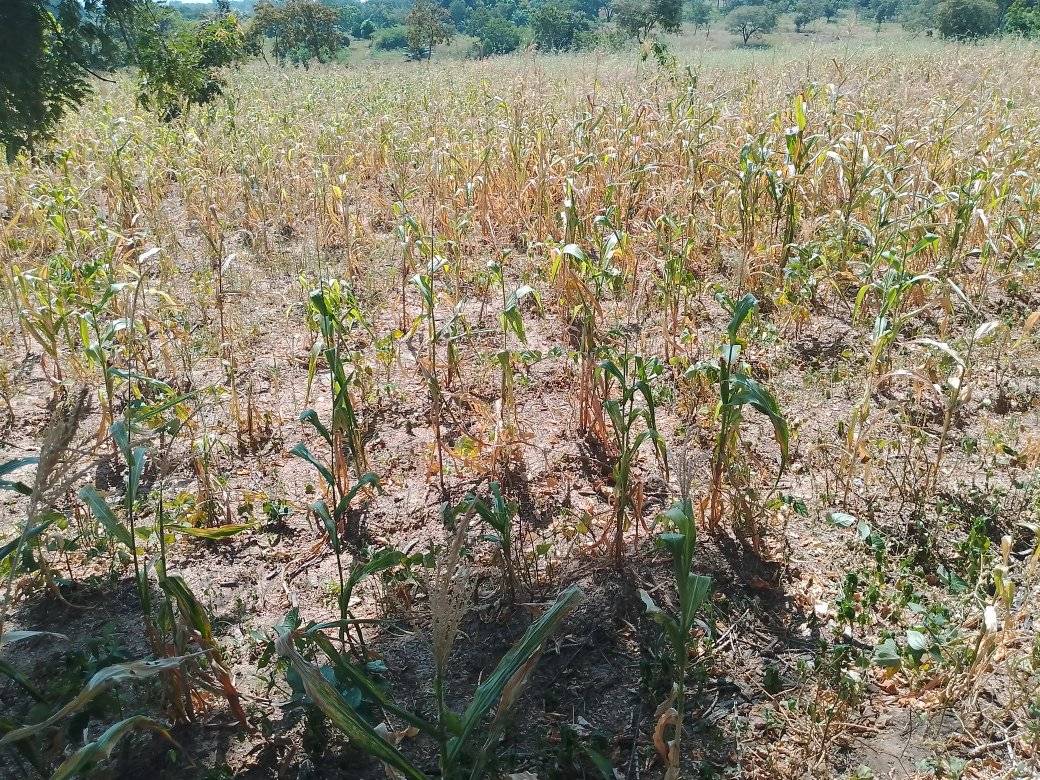
 Wilted crops on a firm in Kiambu county caused by low rainfalls during the October to December 2024 short rains/KNA
A cross-section of farmers in Kiambu have expressed fears over poor harvests this season after the county registered low rains during the months of October to December.
Farmers decried that the short rains predicted to be significantly below average had a delayed onset in October and extended through November and came too late to make meaningful recovery to the already wilted crops.
The harvest season, which typically begins from January all through to March, is anticipated to be poor or even fail in several agricultural areas due to the significantly below-average rainfalls
According to Mbugua Kariuki, a large-scale maize farmer in Githunguri subcounty, he is already counting losses as his crops had already wilted before the start of the rainfalls in mid-December.
“Apart from the paucity of rainfall in December, the rain was not also consistent; this greatly affected the condition of the crop, which left them wilted. Though the rain improved slightly in November, it was, however, too late to meaningfully support crop development,” Mbugua said.
Mbugua further added that he is counting losses of up to Sh 400,000 spent on buying seeds, fertiliser and pesticides. He is therefore urging the government to come up with a plan to help farmers recover from such losses.
Another farmer, Wangiku Kangethe, from Ndeiya subcounty said present weather conditions are worrisome, as crops on his farm were beginning to shrink due to insufficient rainfall and hot weather conditions in the past three weeks.
“I plant beans, which require very minimum rainfall, but when you look at my farm, the leaves are big and green, but there is nothing in the cobs due to lack of rainfall and the hot, hush weather condition,” added Kangethe.
He cited his worry that to meet minimum food needs, households will resort to unsustainable negative coping strategies like skipping meals.
“Some of us basically depend on agriculture to make an income; I am worried that raising school fees and meeting other family needs will be challenges; hence, we will have to make major sacrifices to survive, like skipping meals,” Kangethe cited.
As weather forecasts point to below average precipitation amounts during the March 2025 to May 2025 long rains season, FAO has projected that the number of people affected by severe acute food insecurity will increase to 1.8 million between October 2024 and January 2025, due to the negative impact of dry weather conditions on crops and livestock in Kenya.