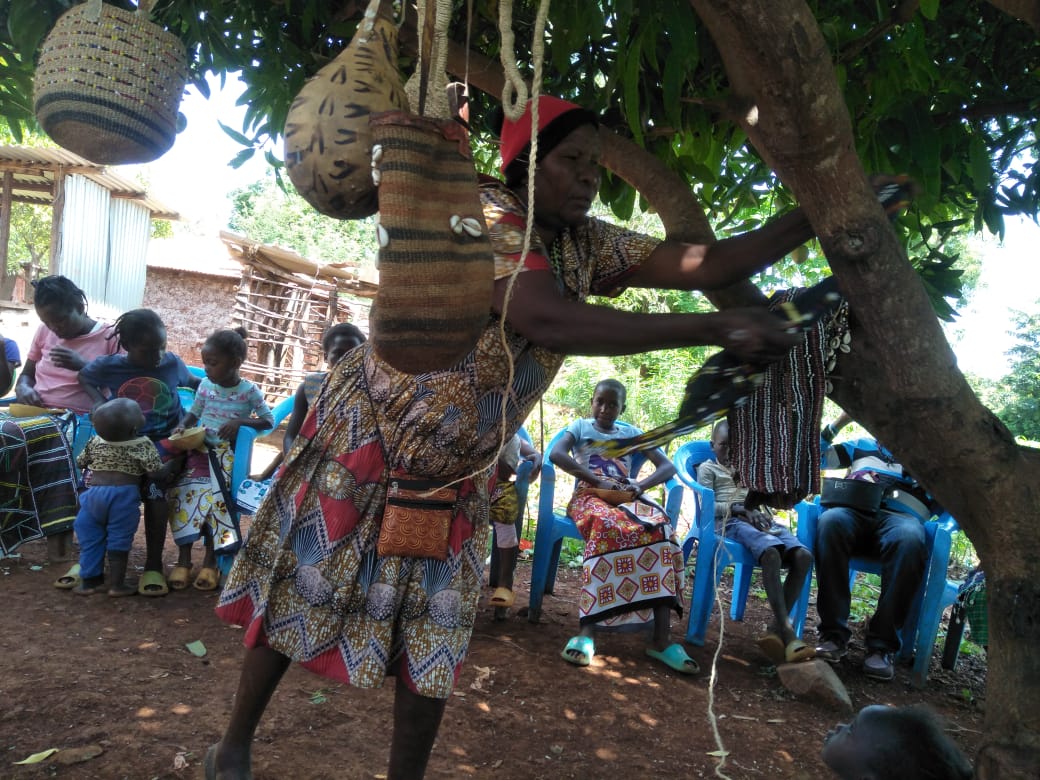
 The “Grandmother’s Bench” is a programme where elders teach younger generations about the Tharaka way of life
Biodiversity conservation advocates in Tharaka Nithi County are calling for the gazettement of sacred sites to ensure their preservation amidst increasing pressures of modernisation.
Simon Mitambo, CEO of the Society for Alternative Learning and Transformation (SALT)—an organisation dedicated to promoting culture and biodiversity preservation—emphasised that the legal recognition of these sacred ecological sites is vital to protect them from encroachment and other harmful activities.
“For now, we have put signs near the sites so that people may identify and avoid trespassing. However, we need more support from the government. We currently have a lawyer and are working on the gazettement of these sites,” he stated.
A sacred site refers to a natural area of cultural or spiritual significance. These often include forests, hills, rocks, water bodies, and green spaces, traditionally preserved through cultural practices and beliefs. Sacred sites play an essential role in Tharaka Nithi’s cultural and spiritual identity.
They host activities such as rituals, oath-taking, rites of passage, and prayers. Historically protected by taboos and rituals, these sites are now increasingly threatened by modernisation, charcoal burning, farming, and diminishing cultural awareness among the youth.
Raised in Tharaka Nithi, near the Mutonga River and the Kijege sacred mountain—home to the famous Kiguru Sacred Spring—Mitambo’s close connection with sacred sites during his childhood deeply shaped his passion for cultural and biodiversity preservation.
Tharaka Nithi is home to 33 sacred sites, including Kiguru, Igogota, Ria Kaindi, Kaguru Kanyi, Nkunguru, Mwambia, Kamacundu, Kagucwa, Jiiga ria Nduga, Kibuka, Manjwiri, Kiigani, Gacoro, Jiiga ria Muruguru, Kaunguni, Kajwaa, Mukumnuthi, Nyungu cia Nkoma, Kiegege, Maragwa, Ikwa, Ururuni, Manyirani, Ndiairi, Mukwarwiga, Kagooni, Gakuuni, Ndiathungu, Igoironi, Cimuria, Kathituni, Gankuru, and Kamukoroko.
Through SALT, Mitambo and the community are working to revive and strengthen their Earth-centred cultural traditions. Initiatives such as the “Grandmother’s Bench”—a programme where elders teach younger generations about the Tharaka way of life—and monthly cultural meetings have significantly rekindled awareness about the importance of sacred sites. “I visited South Africa and was amazed because, despite being one of the most advanced countries on the continent, they have still maintained their cultural heritage. When I returned to Kenya, I decided to start SALT,” Mitambo explained.
“I shared the idea of reviving our culture with the elders, and they were very supportive. They said it was something they had been thinking about for a long time. We agreed to meet every month to discuss and celebrate our culture,” he added. Each sacred site in Tharaka Nithi is associated with a specific clan, although some are shared by all clans.
These shared sites serve as venues for communal rituals, such as praying for rain, seeking blessings, and initiating young boys into adulthood. In Tharaka Nithi, sacred sites are considered deeply powerful. Violating their sanctity is believed to bring misfortune, not only to the individuals involved but also to the custodians of the sites.
Custodians of sacred sites have traditional responsibilities, including conducting ceremonies, ensuring access is restricted to the appropriate individuals (such as elders and spiritual leaders), and preserving the songs, rituals, and practices tied to these sites. “These sites are very holy, and only very old people are allowed in.
Not just anyone can access them. We go there to pray for rain, for the leadership of the community, and for initiation ceremonies for our young boys,” one elder explained. Protecting these sacred sites is crucial, not only for maintaining the cultural heritage and identity of the Tharaka Nithi community but also for conserving the environment that surrounds and constitutes these sites.
By safeguarding these places, the community preserves a connection to their land and traditions, ensuring that future generations inherit a rich cultural and ecological legacy.
The Society for Alternative Learning and Transformation (SALT), a partner of the African Biodiversity Network (ABN), collaborates to restore biocultural diversity in Tharaka Nithi County, Kenya.